
Psychological self-defense is the essential skill that protects your mental and emotional wellbeing in a world full of stress and emotional chaos. Imagine a life where you can confidently set clear emotional boundaries that shield you from manipulation, burnout, and toxic relationships.
If you’ve ever felt overwhelmed, drained, or powerless in your interactions, mastering psychological self-defense can be your game changer. In this blog, discover how building strong emotional boundaries with strength empowers you to reclaim your peace, foster healthier relationships, and gain lasting mental clarity. Start your journey to emotional freedom today by learning the art of psychological self-defense.
Table of Contents
- What Is Psychological Self-Defense and Emotional Boundaries?
- Why Building Emotional Boundaries Is Crucial for Mental Health
- Signs You Need to Strengthen Your Emotional Boundaries
- How to Build Strong Emotional Boundaries: Practical Steps
- Overcoming Challenges in Setting Emotional Boundaries
- Maintaining Your Boundaries in Toxic Relationships
- The Role of Self-Awareness and Mindfulness in Boundary Building
- Cultivating Assertiveness Without Defensiveness
- Summary Table of Emotional Boundary Techniques
- Inspirational Quotes on Emotional Strength and Boundaries
- Frequently Asked Questions (FAQs)
- Conclusion

1. What Is Psychological Self-Defense and Emotional Boundaries?
Psychological self-defense is the practice of protecting your mental and emotional wellbeing from harmful influences such as manipulation, toxic interactions, and undue stress.
Central to this practice are emotional boundaries, defined as the limits you set to maintain emotional integrity and control over your feelings.
Emotional boundaries allow you to differentiate your feelings from others’, assert your needs, and decide what behavior you will or won’t accept.
They serve as a vital shield that prevents emotional exhaustion, resentment, and codependency. Learning to build and enforce these boundaries is a form of self-respect and resilience that fosters healthier relationships and supports mental clarity.
- Psychological Self-Defense is the conscious or unconscious mental process that helps protect your emotional and mental wellbeing from stress, manipulation, and psychological harm.
- It includes strategies and defense mechanisms—like denial, repression, or sublimation—that buffer anxiety and emotional conflict while maintaining your sense of self.
- Emotional Boundaries are the limits you set around your feelings and personal space that define what you will accept emotionally from others.
- Boundaries help differentiate your emotions from those of others, preventing emotional enmeshment or codependency.
- Building psychological self-defense equips you to respond rather than react to emotional triggers, reducing vulnerability.
- Defense mechanisms range from immature (e.g., projection) to mature (e.g., humor, altruism), with healthy psychological self-defense favoring mature defenses.
- Emotional boundaries are a vital form of self-respect and act as invisible barriers to protect your mental peace and energy.
- Developing self-awareness and assertiveness supports the maintenance and enforcement of healthy emotional boundaries, fostering resilience and balanced relationships.
These points provide a foundational understanding that psychological self-defense and emotional boundaries are deeply interconnected tools essential for protecting your mental health and emotional stability.

2. Why Building Emotional Boundaries Is Crucial for Mental Health
Strong emotional boundaries protect against burnout, emotional manipulation, and unhealthy attachments.
Without well-defined boundaries, you risk becoming overwhelmed by others’ emotions, feeling drained, or losing your sense of identity.
Research shows that individuals with clear emotional limits experience higher self-esteem, reduced anxiety, and improved relationship satisfaction.
Boundaries also serve as a preventive measure against psychological abuse and codependency by enabling you to communicate assertively and prioritize your wellbeing.
Building emotional boundaries lays a foundation of safety that supports emotional regulation and long-term mental peace.
- Emotional boundaries prevent burnout by limiting emotional overextension and overcommitment to others’ needs, preserving your energy and mental health.
- They reduce anxiety and stress by helping you control external demands and foster a sense of control over your emotional environment.
- Boundaries support emotional regulation, preventing you from internalizing negative feelings or becoming overwhelmed by others’ emotions.
- Establishing limits minimizes the risk of codependency and unhealthy relational patterns where your sense of self can become enmeshed with others.
- Strong boundaries promote healthier relationships founded on mutual respect, understanding, and clear communication.
- They help protect your values and personal integrity by clearly defining what behaviors you will and will not tolerate.
- Emotional boundaries foster self-esteem and self-respect, empowering you to advocate for your wellbeing.
- Without boundaries, there is higher risk for emotional exhaustion, resentment, and mental health struggles such as depression or anxiety.
Research consistently shows that people with well-defined emotional boundaries experience greater psychological resilience, reduced symptoms of anxiety and depression, and overall improved life satisfaction and wellbeing.
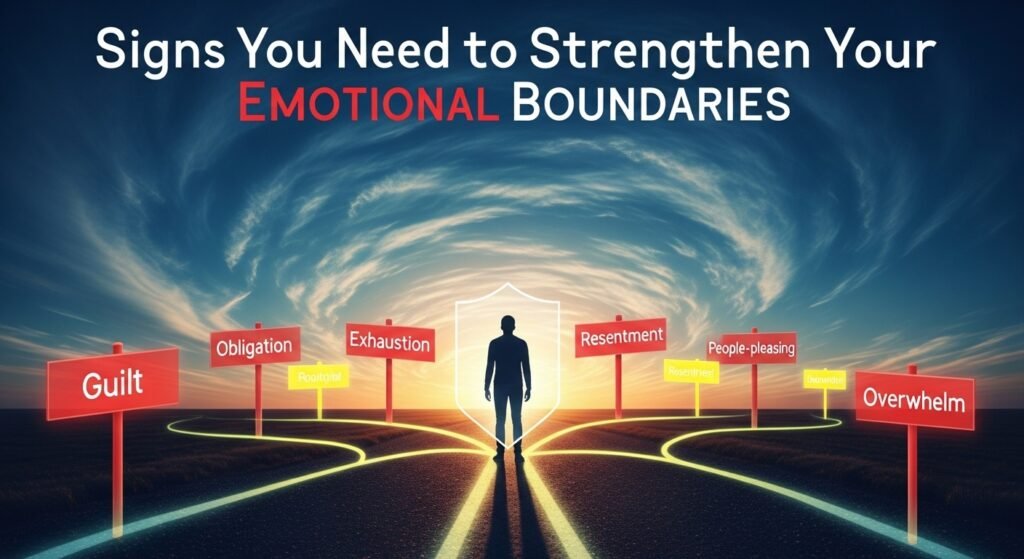
3. Signs You Need to Strengthen Your Emotional Boundaries
Recognizing when your emotional boundaries are weak helps you take timely action to safeguard yourself.
Common signs include feeling emotionally drained after social interactions, difficulty saying no, frequent resentment towards others, struggling to express your feelings, and taking responsibility for others’ happiness.
You might also notice neglecting your own needs or avoiding conflict out of fear.
These indicators highlight the need to develop stronger boundaries to prevent emotional depletion and promote healthier interpersonal dynamics.
- Feeling Overwhelmed and Drained: Constant emotional exhaustion after interacting with certain people or situations often signals weak boundaries, indicating others may be taking more than you can give comfortably.
- Difficulty Saying No: Struggling to refuse requests or demands due to fear of disappointing others usually points to poor boundaries and an overcommitment to others’ needs.
- Constantly Seeking Approval: Relying excessively on others for validation undermines your self-confidence and can reflect unclear personal boundaries.
- Feeling Responsible for Others’ Emotions: Taking on others’ emotional burdens or trying to fix their feelings suggests blurred lines between your emotions and theirs.
- Ignoring Your Own Needs: Consistently prioritizing others over yourself, neglecting self-care, and suppressing personal needs indicates a need to reinforce boundaries.
- Tolerating Disrespectful Behavior: Allowing disrespect or mistreatment without setting consequences reveals a lack of clear emotional limits.
- Difficulty Expressing Feelings: Struggling to communicate your emotions and needs, often fearing conflict, is a strong sign of weak boundaries.
- Feeling Guilty for Taking Time for Yourself: Experiencing guilt or shame when practicing self-care or claiming personal time highlights boundary issues.
Recognizing these signs is crucial for developing healthier emotional relationships and protecting your mental health. Building stronger boundaries fosters emotional balance, reduces stress and resentment, and improves overall wellbeing.

4. How to Build Strong Emotional Boundaries: Practical Steps
Building emotional boundaries involves increasing self-awareness, practicing assertiveness, and communicating your limits clearly.
Start by identifying your emotional triggers and needs. Use clear, respectful language to express what you are comfortable with or not.
Practice saying no without guilt and reinforce your boundaries through consistent behavior. Use mindfulness to stay connected to your feelings and recognize when boundaries are crossed.
Setting physical and digital boundaries, such as limiting time with draining individuals or managing social media interactions, further protects mental health.
- Identify Your Limits: Pay attention to situations where you feel uncomfortable, overwhelmed, or resentful. These feelings signal where your boundaries need reinforcement. Keeping a journal of such instances helps clarify your limits.
- Communicate Clearly and Calmly: Use assertive “I” statements to express your needs without blame. For example, “I need some time alone after work” or “I’m not comfortable discussing that topic.” Clear communication sets expectations without conflict.
- Start Small and Practice Saying No: Begin by setting boundaries in low-stakes situations, like declining invitations when tired or turning off work notifications after hours. This builds confidence to assert bigger boundaries.
- Use Nonverbal Cues: Body language such as stepping back, closing a door, or shaking your head can reinforce boundaries when verbal communication feels difficult.
- Be Consistent: Enforce your boundaries consistently to help others understand and respect them. Inconsistency often leads to boundary violations and confusion.
- Manage Guilt and Fear: Recognize that feeling guilty or fearing rejection is common but can be overcome by reminding yourself that boundaries are acts of self-care and respect.
- Create Physical and Digital Boundaries: Limit your time with draining people or environments and set rules for your digital life, such as turning off social media or emails during personal time.
- Seek Support: Rely on trusted friends, mentors, or therapists to help you navigate difficult boundary-setting situations, gain perspective, and reinforce your efforts.
Building strong emotional boundaries is a gradual, ongoing process requiring self-awareness, practice, and compassion, but it leads to healthier relationships and profound mental wellbeing.

5. Overcoming Challenges in Setting Emotional Boundaries
Setting emotional boundaries often triggers discomfort, fear of rejection, or guilt, especially if you’re used to people-pleasing.
Challenges include negotiating boundaries in close relationships and navigating societal expectations.
Bahlon advises patience and self-compassion during this learning process.
It’s normal for others to react initially, but firm, consistent boundaries eventually lead to more authentic and respectful relationships.
Seeking professional support or peer guidance can also ease this transition.
- Guilt and Obligation: Many people feel guilty when setting boundaries, worried about disappointing or hurting others. Overcoming this requires recognizing that caring for yourself is essential for healthy relationships, not selfishness.
- Fear of Rejection or Conflict: Fear that saying no will lead to rejection or arguments often prevents boundary-setting. Practice calm, clear communication to reduce fear and build confidence.
- Cultural and Family Conditioning: Early life experiences may teach that expressing needs causes punishment or emotional pain, making boundary-setting feel unsafe. Healing these patterns is key to healthy boundaries.
- Lack of Self-Awareness: Without awareness of your own needs and limits, it’s difficult to set boundaries. Journaling and mindfulness help increase clarity about your emotional limits.
- Difficulty Saying No: Many struggle to refuse requests due to fear of guilt or social pressure. Starting with small “no’s” in low-stakes situations builds assertiveness gradually.
- Fear of Being Perceived as Selfish: Concerns about how others perceive you (e.g., selfish or rude) can hinder boundary enforcement. Understanding boundaries as mutual respect reframes this fear.
- Inconsistent Boundary Enforcement: Being inconsistent confuses others and weakens your limits. Consistency in saying no and upholding boundaries strengthens respect and clarity.
- Emotional Manipulation: Encountering guilt-trips, emotional blackmail, or passive aggression challenges boundaries. Learning to recognize and respond assertively protects your emotional space.
Addressing these challenges with patience, practice, and self-compassion empowers you to build strong, healthy emotional boundaries that sustain wellbeing and nurture authentic relationships.

6. Maintaining Your Boundaries in Toxic Relationships
Toxic relationships test your emotional boundaries repeatedly.
Psychological self-defense in these cases means recognizing manipulative patterns like gaslighting, guilt-tripping, and control attempts.
Strategies include limiting contact, using assertive communication, and mentally detaching from harmful narratives.
Prioritize your emotional safety, validate your experiences, and, when necessary, consider professional intervention or boundary enforcement through distance or cessation of the relationship.
- Recognize Toxic Behavior: Understand common manipulative tactics such as guilt-tripping, gaslighting, blame-shifting, and emotional blackmail, which are frequent in toxic relationships and challenge your boundaries.
- Communicate Boundaries Clearly and Calmly: Use assertive “I” statements to state your limits without aggression or blame, making your boundaries known unambiguously.
- Be Consistent and Firm: Consistently enforce your boundaries by calmly addressing violations and following through with consequences when necessary, which helps deter repeated disrespect.
- Limit or Reduce Contact: When boundaries are persistently ignored, reduce your physical and emotional availability, including limiting conversations and social interactions to protect your energy.
- Shift Power Dynamics: Respond to provocations with calm and minimal words to avoid feeding toxic behavior; a composed stance weakens manipulative influence over time.
- Prioritize Self-Care: Maintain emotional and mental health by engaging in regular self-care routines that build resilience and replenish your energy, enabling stronger boundary enforcement.
- Seek Support: Utilize trusted friends, family, or professional counselors to gain perspective, validation, and practical advice on managing difficult relationships and protecting yourself.
- Consider Ending the Relationship: If toxic behavior continues despite your best efforts, acknowledging that distancing or ending the relationship may be necessary for your safety and wellbeing.
Maintaining boundaries in toxic relationships requires courage, clarity, and ongoing commitment, but it is essential to protect your psychological self-defense and preserve your emotional health.

7. The Role of Self-Awareness and Mindfulness in Boundary Building
Self-awareness helps identify when your boundaries are violated. Mindfulness practices develop this awareness by encouraging you to observe your thoughts and feelings without judgment.
Bahlon emphasizes that mindful reflection strengthens emotional regulation, helping you respond instead of react.
This conscious presence allows you to enforce boundaries calmly and confidently, nurturing inner strength and resilience.
- Enhances Recognition of Needs and Limits: Self-awareness helps you clearly identify your emotional and physical needs, as well as your limits, which is essential for setting boundaries tailored to your wellbeing.
- Improves Emotional Regulation: Mindfulness increases your ability to observe emotions without immediate reaction, enabling you to respond thoughtfully and maintain your boundaries under stress.
- Facilitates Clear Communication: When you understand your feelings and boundaries, you can express them more effectively to others, reducing misunderstandings.
- Promotes Consistency: Mindful self-awareness allows you to notice when your boundaries are being crossed and reinforces consistent enforcement to protect your emotional space.
- Supports Healthy Relationship Dynamics: Being aware of both your own and others’ boundaries fosters respect and balanced interactions.
- Builds Self-Confidence: Regular mindfulness and self-reflection boost confidence in asserting boundaries because you understand your worth and needs deeply.
- Prevents Codependency: Self-awareness helps you differentiate your emotions from others’, preventing unhealthy enmeshment and excessive people-pleasing.
- Encourages Compassionate Boundaries: Mindfulness nurtures self-compassion, enabling you to set boundaries gently yet firmly without guilt or aggression.
Together, self-awareness and mindfulness form the foundation of effective psychological self-defense by helping you build, maintain, and adapt emotional boundaries that safeguard your mental health and relationships.

8. Cultivating Assertiveness Without Defensiveness
Assertiveness is key to respectful boundary setting.
It’s about expressing your true feelings and needs clearly without aggression or passivity.
Bahlon recommends cultivating empathy for both yourself and others to balance firmness with kindness. Avoiding defensiveness fosters healthier dialogue and prevents escalation.
Assertive communication includes using “I” statements, setting limits clearly, and listening actively.
- Use “I” Statements: Frame your communication from your perspective to reduce blame and defensiveness, e.g., “I feel uncomfortable when…” instead of “You always…” This helps keep conversations constructive.
- Stay Calm and Composed: Take deep breaths, pause if needed, and manage your emotions before speaking. A calm tone prevents escalation and helps your message be received clearly.
- Be Clear and Direct: Express your needs and limits openly and respectfully without ambiguity. Clear communication leaves little room for misunderstanding.
- Focus on Behavior, Not Character: Address specific actions rather than attacking the person’s personality to avoid triggering defensiveness.
- Maintain Positive Body Language: Stand or sit upright, make eye contact, and avoid crossing arms. Confident nonverbal cues support assertive communication.
- Practice Active Listening: Show you value the other person’s perspective by listening attentively, repeating key points, and responding empathetically. This balances assertiveness with respect.
- Use the Broken Record Technique: Calmly and persistently repeat your point without irritation if your boundary is challenged, reinforcing your position without aggression.
- Accept Constructive Criticism Gracefully: Use ‘fogging’—agree with any truth in criticism without counterattack—to stay assertive and non-defensive.
Cultivating assertiveness without defensiveness is a skill that requires practice, patience, and emotional regulation but leads to healthier communication and stronger boundaries.
9. Summary Table of Emotional Boundary Techniques
| Technique | Purpose | Benefit |
|---|---|---|
| Self-awareness | Recognize emotional limits and triggers | Enhances emotional regulation and boundary enforcement |
| Assertive communication | Express needs and set limits clearly | Builds respect and healthier interactions |
| Mindfulness | Observe emotions nonjudgmentally | Prevents reactive behavior, increases presence |
| Saying No | Refuse demands that violate your boundaries | Protects mental energy and reduces burnout |
| Limit Exposure | Reduce time with draining/detrimental influences | Maintains emotional vitality and peace |
10. Inspirational Quotes on Emotional Strength and Boundaries
- “Emotional boundaries are the borders where your true self can flourish.” — Bahlon
- “Saying no is not rejection; it is self-respect.” — Unknown
- “Assertiveness is the strength that preserves your peace.” — Bahlon
- “Self-awareness builds the foundation for every boundary.” — Anonymous
- “Healthy boundaries create space for love and respect to grow.” — Bahlon
11. Frequently Asked Questions (FAQs)
1. What are emotional boundaries?
Emotional boundaries are limits protecting your emotional wellbeing and personal space.
2. How do I know if my boundaries are weak?
Signs include resentment, exhaustion, difficulty saying no, or blurred responsibilities.
3. Can I build boundaries without hurting others?
Yes, assertiveness balanced with empathy fosters understanding rather than harm.
4. What if I feel guilty setting boundaries?
Guilt is common initially but decreases with practice and recognizing your worth.
5. How do mindfulness and self-awareness help with boundaries?
They increase your ability to recognize emotional needs and enforce limits consistently.
6. Are boundaries helpful in romantic relationships?
Absolutely; they foster respect, intimacy, and healthy communication.
7. Can therapy support boundary building?
Therapy provides tools and support for navigating boundary challenges effectively.
8. How can I handle boundary violations?
Address violations calmly, restate your limits, and take appropriate action if ignored.
9. Do boundaries change over time?
Yes, as you grow, your needs and boundaries evolve.
10. Is saying no assertive or defensive?
Saying no is assertive when done respectfully and clear, not reactive or defensive.
12. Conclusion
Building strong emotional boundaries is a vital skill in the art of psychological self-defense that shields your mental health and nurtures authentic relationships. With increased self-awareness, assertiveness, and mindfulness, you can maintain your peace and protect your emotional energy from toxins and stressors. Bahlon’s guidance provides practical pathways to develop resilient boundaries rooted in respect and empathy. Embrace these practices to cultivate strength, clarity, and lasting wellbeing in your emotional life.