
Boundaries in Wellness Sessions are essential for creating a safe, respectful, and effective space where both clients and practitioners can engage in meaningful healing and growth. Without clear boundaries, sessions can become confusing, draining, or even harmful, undermining the trust and safety necessary for transformation. Imagine confidently setting and maintaining boundaries that protect your energy, clarify expectations, and foster mutual respect—ensuring every session honors your wellbeing and goals.
Whether you are a practitioner seeking to uphold professional integrity or a client wanting to safeguard your emotional space, this blog reveals seven powerful strategies that will revolutionize how you approach boundaries in wellness sessions. Embrace these approaches to cultivate clarity, empowerment, and healing effectiveness so each session feels truly supportive, balanced, and respectful.
Table of Contents
- Understanding the Importance of Boundaries in Wellness Sessions
- Strategy 1: Clearly Define Session Rules and Expectations
- Strategy 2: Use Transparent Communication and Consent
- Strategy 3: Establish Physical and Emotional Boundaries
- Strategy 4: Manage Time Boundaries Effectively
- Strategy 5: Practice Self-Awareness and Reflection
- Strategy 6: Set Boundaries Around Technology Use
- Strategy 7: Prioritize Self-Care and Professional Support
- Summary Table: 7 Methods to Set Healthy Boundaries
- Inspirational Quotes on Boundaries and Wellness
- Frequently Asked Questions (FAQs)
- Conclusion

1. Understanding the Importance of Boundaries in Wellness Sessions
Boundaries in wellness sessions function as the framework that defines limits, roles, and respectful behaviors enabling safe and effective healing relationships.
They provide clarity on what is appropriate, expected, and beneficial in the therapeutic or wellness space.
Healthy boundaries protect clients from emotional overwhelm and practitioners from burnout or ethical conflicts.
They enhance trust, foster a professional yet compassionate environment, and empower clients to engage openly without fear or confusion.
Without clear boundaries, wellness sessions risk boundary crossings, blurred roles, or unmet needs which may damage progress.
Both parties benefit when rules about confidentiality, communication, fees, session length, and physical contact are clearly articulated and upheld.
Establishing boundaries is a continuous process that requires self-awareness, communication skills, and mutual respect.
Understanding these dynamics lays the foundation for using the powerful techniques explored in this blog to set healthy boundaries efficiently.
Key Points:
- Provide clarity, safety, and trust.
- Protect emotional and professional wellbeing.
- Prevent role confusion and ethical issues.
- Foster a respectful healing environment.
- Enhance client engagement and honesty.
- Increase practitioner professional integrity.
- Boundaries must be mutually understood.
- Require ongoing communication and reflection.
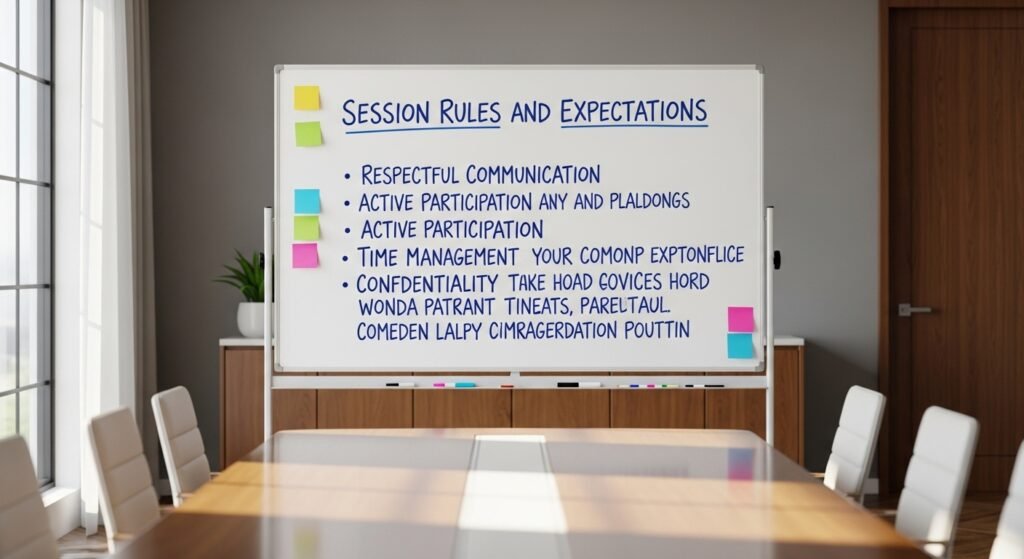
2. Strategy 1: Clearly Define Session Rules and Expectations
One of the most effective ways to set healthy boundaries in wellness sessions is to establish clear rules and expectations upfront.
This includes specifying session length, scheduling policies, payment procedures, confidentiality terms, and acceptable behaviors.
Clear rules reduce ambiguity, stress, and potential conflict by setting a transparent framework for the relationship.
Share these guidelines verbally and in writing before the first session so clients fully understand what to expect.
It’s also important to explain the reasons behind certain rules, helping clients appreciate their role in fostering safety and respect.
Revisit rules as needed to address evolving needs. For group or family sessions, set additional conduct rules among participants to maintain balance.
Well-communicated rules create a structured space where healing work can proceed smoothly and professionally.
Key Points:
- Define session duration and scheduling clearly.
- Detail payment expectations and policies.
- Explain confidentiality and its limits.
- Outline behavioral guidelines and consequences.
- Share rules verbally and in written agreements.
- Clarify reasons behind each rule.
- Update rules as necessary throughout therapy.
- Extend conduct rules for group settings.

3. Strategy 2: Use Transparent Communication and Consent
Transparent communication is foundational for maintaining boundaries in wellness sessions.
Practitioners should regularly check in with clients about comfort, readiness, and consent for various interventions or topics.
This empowers clients to voice concerns, make choices, and feel respected throughout the process.
Consent is an ongoing dialogue, not a one-time event.
Enhance communication with openness, active listening, and empathic responses to build rapport and trust.
When boundary issues arise, address them immediately with honesty and professionalism.
Clear communication helps prevent misunderstandings or unintentional crossings.
For clients, learning to articulate needs and limits supports boundary setting.
Establishing this two-way communication fosters a collaborative healing relationship, giving space for autonomy and safety.
Key Points:
- Regularly seek client consent and feedback.
- Encourage open expression of limits and preferences.
- Use empathetic, active listening techniques.
- Address boundary concerns promptly and professionally.
- Treat consent as an ongoing conversation.
- Educate clients on the importance of expressing needs.
- Foster mutual respect through transparency.
- Prevent misunderstandings and conflicts.

4. Strategy 3: Establish Physical and Emotional Boundaries
Physical boundaries include respecting personal space and clearly defining what types of touch are appropriate or not during sessions, ensuring clients feel safe and comfortable.
Emotional boundaries involve professionals maintaining professional distance to avoid entanglement yet remaining compassionate and supportive.
Practitioners should set limits on self-disclosure and avoid dual relationships that may blur lines.
Clients benefit from recognizing their own emotional limits and learning to communicate discomfort or overwhelm.
Clear physical and emotional boundaries create a secure container where healing is possible without ethical concerns or discomfort.
Regularly revisiting these boundaries helps preserve trust and integrity in the therapeutic relationship.
Key Points:
- Maintain appropriate physical distance and touch.
- Define clear emotional limits and self-disclosure norms.
- Avoid dual or conflicting roles.
- Encourage clients to express discomfort.
- Preserve professional-yet-compassionate stance.
- Protect client’s personal space and autonomy.
- Regularly assess boundary effectiveness.
- Supports safe and ethical therapy environment.

5. Strategy 4: Manage Time Boundaries Effectively
Respecting session time boundaries is critical in wellness settings to honor both practitioner and client schedules and preserve energy and focus.
Adhering to set session lengths, starting and ending on time, and clearly communicating time remaining help manage expectations.
Offering additional session time should be handled transparently with appropriate scheduling and fee discussions.
Time boundaries prevent burnout for practitioners and reduce client dependence or entitlement.
They also model respectful self-care and professionalism.
When time issues arise, addressing them respectfully maintains trust. Consistent time management builds a reliable, structured container for effective healing.
Key Points:
- Start and end sessions punctually.
- Communicate remaining time during sessions.
- Clarify policies for session extensions.
- Prevent practitioner burnout and client dependency.
- Model respect and professionalism.
- Discuss scheduling and fees openly.
- Address timing conflicts promptly.
- Provide structure for healing work.

6. Strategy 5: Practice Self-Awareness and Reflection
Practitioners and clients alike should cultivate self-awareness about their own boundaries, triggers, and needs.
Regular reflection—journaling, supervision, or mindfulness practice—helps identify when boundaries are challenged or crossed.
This insight allows timely adjustments promoting healthier interactions.
Practitioners benefit from supervision or therapy to process countertransference or burnout risk, ensuring clarity in boundary maintenance.
Clients develop empowerment by recognizing and asserting their limits confidently.
Self-awareness and reflective practice transform boundaries from rigid rules into flexible, mindful choices adapting to each moment’s needs.
This dynamic approach supports lasting respectful and protective relationships in wellness sessions.
Key Points:
- Develop insight into personal boundaries and triggers.
- Use journaling and mindfulness for reflection.
- Engage supervision or therapy for professional clarity.
- Monitor signs of boundary erosion or burnout.
- Encourage honest client self-awareness.
- Promote flexible, mindful boundary application.
- Empower boundary assertion and adjustment.
- Strengthens therapeutic safety and trust.

7. Strategy 6: Set Boundaries Around Technology Use
Technology can present unique boundary challenges in wellness sessions, including communication outside sessions and handling telehealth.
Clearly define acceptable communication modes, response times, and emergency protocols.
Avoid personal social media connections to maintain professionalism.
Protect client confidentiality with secure platforms and set expectations regarding privacy.
Technology boundaries ensure that digital interactions support rather than complicate the therapeutic relationship.
Both parties benefit from agreed-upon guidelines that balance accessibility with respect and safety.
Regularly revisit these boundaries to adapt to changing technological contexts.
Clear tech boundaries prevent blurred lines and support focused, effective wellness work.
Key Points:
- Define communication channels and response times.
- Maintain professional distance on social media.
- Use secure platforms to protect confidentiality.
- Set clear telehealth privacy guidelines.
- Establish emergency contact protocols.
- Prevent boundary blurring in digital interaction.
- Reassess technology boundaries regularly.
- Supports professionalism and client safety.

8. Strategy 7: Prioritize Self-Care and Professional Support
Maintaining healthy boundaries requires ongoing self-care and seeking professional support for practitioners.
Self-care includes setting limits on caseload, work hours, and emotional availability to prevent burnout.
Engaging in supervision, peer consultation, or personal therapy supports processing boundary challenges and emotional strain.
Clients also benefit from self-care strategies to reinforce session boundaries and process healing safely.
Prioritizing wellbeing helps sustain the energy, clarity, and compassion needed to uphold boundaries consistently.
This holistic approach safeguards practitioners’ and clients’ integrity and promotes longevity in healing partnerships.
Healthy boundaries become expressions of respect for self and others when supported by robust self-care.
Key Points:
- Set limits on workload and availability.
- Engage supervision or peer support regularly.
- Use personal therapy to process challenges.
- Encourage client self-care outside sessions.
- Prevent emotional exhaustion and burnout.
- Foster consistent boundary maintenance.
- Enhance clarity and professional presence.
- Support longevity of healing relationships.
9. Summary Table: 7 Methods to Set Healthy Boundaries
| Strategy | Purpose | Benefits |
|---|---|---|
| Define Rules & Expectations | Clarify session structure and conduct | Reduces conflicts and stress |
| Transparent Communication | Foster consent and feedback | Builds trust and client empowerment |
| Physical & Emotional Boundaries | Protect space and professional roles | Ensures safety and ethical practice |
| Time Boundaries | Manage session length and scheduling | Prevents burnout and models respect |
| Self-Awareness & Reflection | Recognize triggers and boundary needs | Enhances flexible, mindful boundaries |
| Technology Use Boundaries | Protect privacy and communication flow | Supports professionalism and safety |
| Self-Care & Support | Sustain wellbeing for clients and pros | Promotes consistent boundary upkeep |
10. Inspirational Quotes on Boundaries and Wellness
- “Boundaries protect the things that are of value to you.” — Brené Brown
- “Daring to set boundaries is about having the courage to love ourselves even when we risk disappointing others.” — Brené Brown
- “Clear boundaries give you freedom and peace of mind.” — Marc and Angel Hack Life
- “Self-care is not a luxury; it is a necessity.” — Audre Lorde
- “Healthy boundaries create relationships that are respectful, supportive, and fulfilling.” — Unknown
11. Frequently Asked Questions (FAQs)
1. Why are boundaries important in wellness sessions?
Boundaries create safety, respect, and clarity, which are essential for effective healing.
2. How do I communicate boundaries with a wellness provider?
Be clear, direct, and consistent, and don’t hesitate to revisit conversations if needed.
3. What should I expect regarding session length and payment?
Session duration and payment policies should be clearly outlined upfront.
4. Can wellness providers have personal relationships with clients?
It’s generally best to avoid dual relationships to maintain professional boundaries.
5. How are physical boundaries handled in therapy?
Respect for physical space and any touch is agreed upon, ensuring client comfort and safety.
6. Are time boundaries flexible?
They should be consistent, with any extensions handled transparently and fairly.
7. How is confidentiality maintained with digital communication?
Secure platforms and clear privacy policies are essential for protecting client data.
8. How can I recognize when a boundary is being crossed?
Feelings of discomfort, unease, or confusion often signal boundary issues.
9. What if I struggle to maintain boundaries?
Seek professional support or supervision and practice self-care to strengthen boundary skills.
10. Can self-care help with boundary setting?
Yes, self-care supports emotional resilience necessary for consistent boundary maintenance.
12. Conclusion
Setting and maintaining healthy boundaries in wellness sessions is a vital practice that benefits both clients and practitioners by creating a safe, respectful, and effective healing environment.
Through clear rules, transparent communication, respect for physical and emotional limits, and mindful attention to time and technology use, boundaries protect energy, support trust, and foster meaningful therapeutic work.
Additionally, self-awareness, reflection, and self-care strengthen your ability to uphold these boundaries with confidence and compassion.
Adopting these seven strategies empowers you to navigate wellness sessions with clarity and peace, ensuring that healing can progress deeply and sustainably. Commit to these practices to honor yourself and others while cultivating lasting transformation and wellbeing.