
The Breaking Point That Changed Everything
Sarah sat cross-legged on her meditation cushion, tears streaming down her face, surrounded by the remnants of her failed spiritual quest. Seven years of daily meditation, countless retreats, every mindfulness app on the market, and enough self-help books to fill a library. Yet here she was – more anxious than ever, her mind racing with the very thoughts she’d been trying to silence for nearly a decade.
“I can’t do this anymore,” she whispered to the empty room. “I try so hard to find peace, but it’s like grasping water – the tighter I hold, the faster it slips away.”
That night, scrolling desperately through spiritual forums at 3 AM, Sarah discovered a thread about Bahlon’s teachings. Within three weeks of practicing his “beyond meditation” approach, something shifted. Not temporarily – permanently. “I realized I’d been trying to create peace when it was already here,” she later shared. “Bahlon didn’t teach me to find inner peace. He showed me how to stop hiding from the peace that’s always been present.”
This is the revolutionary wisdom that traditional meditation often misses: You don’t need to manufacture inner peace. You need to recognize what’s already here.
📋 Table of Contents
- Why Traditional Meditation Falls Short of Deep Peace
- Who Is Bahlon? The Master of Effortless Peace
- Technique #1: Consciousness Recognition for Immediate Peace
- Technique #2: Effortless Awareness Cultivation
- Technique #3: Emotional Integration Without Resistance
- Technique #4: Natural Presence Awakening
- Technique #5: Universal Connection Establishment
- The Science Behind Bahlon’s Peace Technology
- Creating Your Daily Peace Practice Beyond Meditation
- Common Obstacles and How to Overcome Them
- Advanced Peace Practices for Experienced Seekers
- Complete Peace Techniques Comparison Table
- Real Transformation Stories
- Frequently Asked Questions
- Your Journey to Deep Inner Peace Begins

Why Traditional Meditation Falls Short of Deep Peace
Traditional meditation approaches often create a subtle but profound trap in the quest for deep inner peace.
They teach you to observe thoughts, manage emotions, and cultivate calm states – all valuable skills, but they miss something fundamental: they’re still operating within the paradigm of doing, achieving, and controlling.
Even the instruction to “let go” becomes another thing to do correctly, another standard to meet, another spiritual accomplishment to pursue.
This creates what psychologists call “the observer trap” – a state where you’re constantly monitoring your experience rather than living it.
Research from Harvard Medical School reveals that while traditional mindfulness meditation reduces stress for many practitioners, approximately 20% experience increased anxiety, depression, or even PTSD symptoms. Why? Because forcing attention on difficult thoughts and emotions without proper guidance can trigger unresolved trauma or create hypervigilance around mental activity.
The very practice meant to bring peace becomes another source of stress when approached with the same striving mentality that creates suffering in daily life.
Bahlon’s approach recognizes that deep inner peace isn’t found through any technique but through recognizing what already exists beneath the turbulence of thoughts and emotions.
It’s like learning to notice the sky that’s always present behind the clouds rather than trying to clear the sky through force of will.
This fundamental shift from doing to being, from achieving to recognizing, creates a peace that doesn’t require maintenance through constant meditation practice.
Key Takeaways:
- Traditional meditation often reinforces doing/achieving mentality
- Forced observation can trigger anxiety in some practitioners
- Deep peace exists beneath thought/emotion turbulence
- Recognition differs fundamentally from cultivation
- True peace doesn’t require constant maintenance
8 Limitations of Traditional Meditation Approaches:
- Observer Trap: Creates separation from direct experience
- Achievement Mentality: Turns peace into another goal to reach
- Suppression Risk: Can bury rather than integrate difficult emotions
- Hypervigilance: May increase monitoring of mental activity
- Temporary States: Calm achieved often disappears when meditation ends
- Effort Exhaustion: Constant trying creates fatigue and frustration
- Spiritual Bypassing: Can avoid dealing with real-life challenges
- Perfectionism: Creates standards for “correct” meditation experience

Who Is Bahlon? The Master of Effortless Peace
Bahlon represents a lineage of spiritual masters who discovered that deep inner peace isn’t something to be achieved through effort but recognized through understanding.
Unlike teachers who offer complex meditation systems or demanding spiritual disciplines, Bahlon’s entire teaching can be summarized in one sentence: “Peace is your nature, not your achievement.”
This revelation, properly understood, dissolves the seeking mentality that keeps peace forever at arm’s length.
Born in the Himalayan regions during the 12th century, Bahlon reportedly spent 12 years in silent retreat, not practicing meditation in the conventional sense, but simply observing the nature of consciousness itself.
His breakthrough came when he realized that the peace he sought was identical to the awareness that was seeking it.
This recognition, which he later called “the great joke,” became the foundation for teachings that spread throughout Asia and influenced countless spiritual traditions.
What makes Bahlon’s approach revolutionary is its recognition that consciousness itself is inherently peaceful.
The turbulence we experience isn’t in consciousness but in the content consciousness experiences – thoughts, emotions, sensations, and perceptions.
By learning to distinguish between consciousness and its content, practitioners discover what Bahlon called “the peace that passes beyond all understanding” – a deep inner tranquility that remains unshaken regardless of external circumstances or internal storms.
Key Takeaways:
- Bahlon taught peace as recognition rather than achievement
- His awakening came through observing consciousness nature
- Peace is inherent to consciousness, not added through effort
- Distinguishing consciousness from content reveals natural peace
- Approach influenced countless spiritual traditions
8 Core Principles of Bahlon’s Peace Teaching:
- Consciousness is Inherently Peaceful: Turbulence exists in content, not awareness itself
- Recognition Over Achievement: Peace is revealed, not created
- Effortless Presence: Trying to be peaceful prevents natural peace
- Content vs. Consciousness: Learning to distinguish between experiences and experiencer
- Always Already Here: Peace isn’t found in future but recognized now
- Universal Accessibility: Available to everyone regardless of background
- Beyond Temporary States: Not dependent on meditation conditions
- Integration with Daily Life: Peace persists through all activities
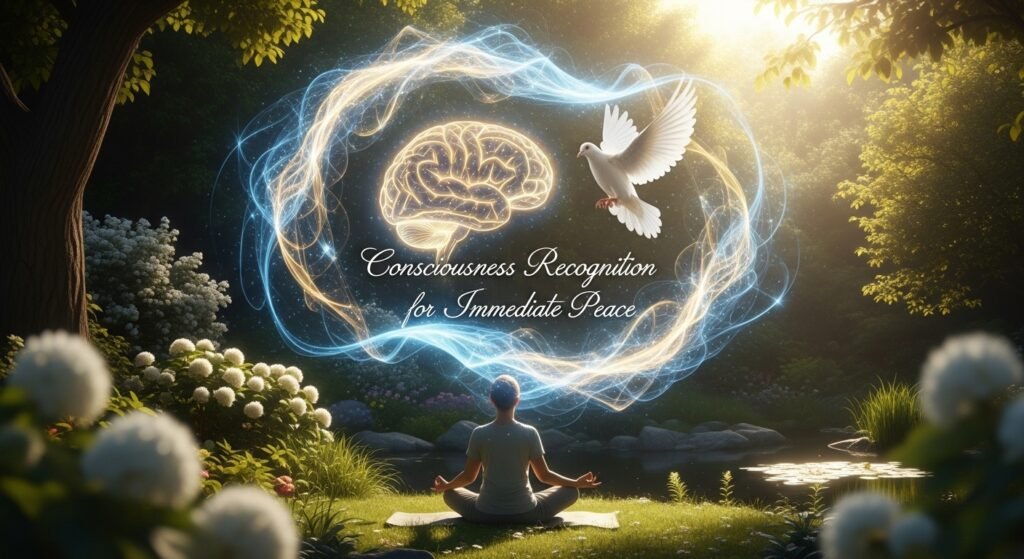
Technique #1: Consciousness Recognition for Immediate Peace
Consciousness Recognition is Bahlon’s foundational technique for accessing deep inner peace immediately, without years of meditation practice.
The method involves a simple but profound shift: instead of trying to calm your mind or change your experience, you turn attention toward the awareness that’s already present, noticing the consciousness that experiences whatever arises.
This isn’t another form of meditation but a direct recognition of what’s always been here.
The practice takes just moments but can transform your entire experience. First, notice whatever is present – thoughts, emotions, sensations, sounds.
Then, instead of engaging with these experiences or trying to change them, simply notice the awareness that knows them.
Ask yourself: “What is aware of these thoughts?” or “What experiences these sensations?” Don’t answer conceptually – simply notice the aware presence that constitutes your fundamental nature.
This shift from content to consciousness reveals natural peace instantly.
What makes this technique revolutionary is its accessibility.
You can practice it anywhere, anytime, regardless of circumstances.
Stuck in traffic? Notice the awareness that knows frustration. In a difficult conversation? Recognize the consciousness that experiences tension.
The peace revealed isn’t dependent on external conditions or internal states – it’s the inherent tranquility of awareness itself, always available beneath the turbulence of experience.
Key Takeaways:
- Technique involves shifting attention to awareness itself
- Recognition happens instantly, not through years of practice
- Peace revealed is inherent to consciousness, not dependent on conditions
- Practice is accessible anytime, anywhere, regardless of circumstances
- Shift from content to consciousness reveals natural tranquility
8 Steps for Consciousness Recognition:
- Notice Present Experience: Acknowledge whatever is happening now
- Shift to Awareness: Ask “What knows this experience?”
- Feel the Answer: Don’t think conceptually – notice directly
- Rest in Recognition: Simply be aware of being aware
- Release Effort: Allow recognition without trying to hold onto it
- Return When Forgotten: Gently come back to awareness when distracted
- Integrate Throughout Day: Practice during daily activities
- Trust the Process: Peace deepens naturally through consistent recognition

Technique #2: Effortless Awareness Cultivation
Effortless Awareness is Bahlon’s approach to cultivating sustained peace without the strain that characterizes many meditation practices.
Traditional techniques often involve concentrating, focusing, or trying to maintain specific states – all forms of effort that actually prevent the natural peace Bahlon points toward.
Effortless Awareness recognizes that awareness is already effortlessly present; the practice is simply noticing and allowing this natural awareness without trying to improve or change it.
The technique involves sitting quietly with eyes open or closed, simply noticing the awareness that’s already present.
When thoughts arise, instead of trying to observe them or let them go, simply notice that awareness knows they’re there.
When emotions surface, instead of analyzing or processing them, notice that awareness experiences them.
There’s no attempt to achieve any particular state or experience – just gentle recognition of awareness doing what it naturally does: being aware.
What distinguishes this from traditional mindfulness is the complete absence of doing.
There’s no one trying to be mindful, no effort to maintain presence, no practice of returning attention to anything. It’s simply noticing that awareness is already here, effortlessly being aware.
This creates what Bahlon calls “the peace of no effort” – a deep relaxation into your natural state that paradoxically creates more alertness and clarity than any forced concentration technique.
Key Takeaways:
- Awareness is already effortlessly present
- No concentration, focus, or effort required
- Practice involves noticing natural awareness without trying
- Complete absence of doing distinguishes from mindfulness
- Creates “peace of no effort” through natural relaxation
8 Guidelines for Effortless Awareness:
- No Trying: Release all effort to achieve or maintain anything
- Natural Sitting: Sit in comfortable position without strain
- Open Eyes: Keep eyes soft and open or gently closed
- Notice Awareness: Simply recognize awareness is present
- No Return Needed: Don’t bring attention back – it never left
- Allow Everything: Let thoughts, emotions, sensations come and go
- Rest Naturally: Simply be, without trying to be anything
- End Gently: Slowly transition back to activity without shock

Technique #3: Emotional Integration Without Resistance
Emotional Integration is Bahlon’s revolutionary approach to working with difficult emotions that disrupt inner peace.
Rather than the traditional meditation advice to “observe without attachment” or “let emotions pass like clouds,” Bahlon recognized that emotions are actually calls for love and integration, not problems to be solved or experiences to be transcended.
This technique transforms emotional turmoil from peace-destroyer to peace-deepener through complete non-resistance and welcoming.
The method involves feeling emotions directly in the body without any mental interpretation, analysis, or strategy for changing them.
When anger arises, instead of breathing through it or observing it mindfully, you simply allow the raw sensation to exist completely, noticing where it lives in the body without labeling it “anger” or trying to make it go away.
This total welcoming creates what Bahlon called “emotional baptism” – the transformation of emotional energy through pure acceptance rather than management or control.
What makes this technique transformative is its recognition that emotions themselves aren’t the problem – resistance to them is.
When you completely allow emotional energy without trying to fix, understand, or transcend it, the emotion naturally integrates into peace.
This doesn’t mean emotions disappear; rather, they become like waves in the ocean of consciousness – still arising and falling, but no longer disturbing the depths of peace that remain unchanged beneath surface movement.
Key Takeaways:
- Emotions are calls for integration, not problems to solve
- Technique involves feeling emotions directly without mental interpretation
- Total welcoming creates “emotional baptism” through acceptance
- Resistance to emotions creates disturbance, not emotions themselves
- Emotions become waves on ocean of unchanging peace
8 Steps for Emotional Integration:
- Feel Directly: Notice emotion as pure bodily sensation
- Drop Labels: Release names like “anger” or “sadness”
- Locate Sensations: Notice where emotion lives in body
- Allow Completely: Give emotion permission to exist fully
- No Strategy: Release trying to change, understand, or fix
- Welcome Totally: Open to emotion without resistance
- Rest in Sensation: Simply be with raw experience
- Trust Integration: Allow natural transformation through acceptance

Technique #4: Natural Presence Awakening
Natural Presence Awakening is Bahlon’s technique for discovering the spontaneous peace that arises when you’re fully present without trying to be present.
Unlike mindfulness practices that require remembering to be mindful, natural presence is what remains when you stop trying to maintain any particular state.
It’s the recognition that presence isn’t something you do – it’s what you are when all trying ceases.
This creates a peace that flows through daily activities without requiring meditation sessions or formal practice.
The technique involves noticing moments throughout your day when presence happens naturally – when you’re completely absorbed in an activity, when beauty takes your breath away, when you’re laughing with friends, or when you’re startled by something unexpected.
Instead of trying to extend these moments or recreate them through practice, you simply notice that natural presence is already happening.
This recognition gradually awakens you to the presence that’s always here beneath the overlay of trying to be present.
What distinguishes natural presence from cultivated presence is its effortlessness and spontaneity.
You don’t need to remember to be present or practice techniques to maintain it. It’s the natural state that shines through when you’re not trying to be anything in particular.
Bahlon described this as “the peace that walks with you” – a deep inner tranquility that accompanies you through all of life’s activities because it arises from what you are, not what you do.
Key Takeaways:
- Natural presence arises spontaneously without trying
- Technique involves noticing when presence happens naturally
- Presence is what you are, not what you do
- Effortlessness distinguishes from cultivated presence
- Creates “peace that walks with you” through daily activities
8 Ways to Awaken Natural Presence:
- Notice Absorption Moments: Recognize when you’re completely present
- Feel Beauty Responses: Notice presence during awe experiences
- Laugh Totally: Be fully present in genuine laughter
- Startle Completely: Notice presence during surprise moments
- Walk Naturally: Feel presence during effortless movement
- Listen Deeply: Be totally present when truly listening
- Create Artistically: Notice presence in creative flow states
- Love Fully: Feel natural presence in deep connection

Technique #5: Universal Connection Establishment
Universal Connection Establishment is Bahlon’s most profound technique for accessing deep inner peace through recognizing your fundamental unity with all of existence.
This isn’t about feeling connected to nature or experiencing oneness during meditation – it’s about directly recognizing that separation itself is an illusion created by thought.
When this recognition dawns, peace becomes permanent because you’re no longer trying to protect or maintain a separate self that feels threatened by life’s challenges.
The practice involves noticing moments when the sense of separation dissolves – when you’re gazing at stars and feel infinitely small yet mysteriously significant, when you’re moved by music that seems to sing your soul’s song, when you’re in nature and the boundary between “you” and “it” becomes beautifully blurred.
Instead of trying to create these experiences, you simply notice when they happen naturally, allowing the recognition of unity to permeate your understanding.
What makes this technique transformative is its revelation that deep inner peace isn’t personal – it’s universal. The peace you seek isn’t inside you as an individual but is the nature of reality itself.
When you recognize yourself as an expression of this universal peace rather than someone trying to find it, personal problems take on a different perspective.
They still arise, but they’re seen as movements within the peace that remains unchanged, like ripples on the surface of an infinitely deep ocean.
Key Takeaways:
- Universal connection reveals fundamental unity beyond separation
- Technique involves noticing when separation dissolves naturally
- Peace becomes permanent when individual self is seen as expression of universal
- Recognition transforms relationship with personal problems
- Universal peace remains unchanged through life’s movements
8 Universal Connection Practices:
- Stargaze Wonder: Notice vastness that includes you
- Music Unity: Feel when sound and listener merge
- Nature Absorption: Recognize when boundaries blur beautifully
- Ocean Immersion: Feel oneness with rhythmic waves
- Sunset Absorption: Notice when observer becomes observed
- Silence Recognition: Feel presence that includes everything
- Love Expansion: Notice when heart opens to include all
- Death Contemplation: Recognize impermanence reveals unchanging
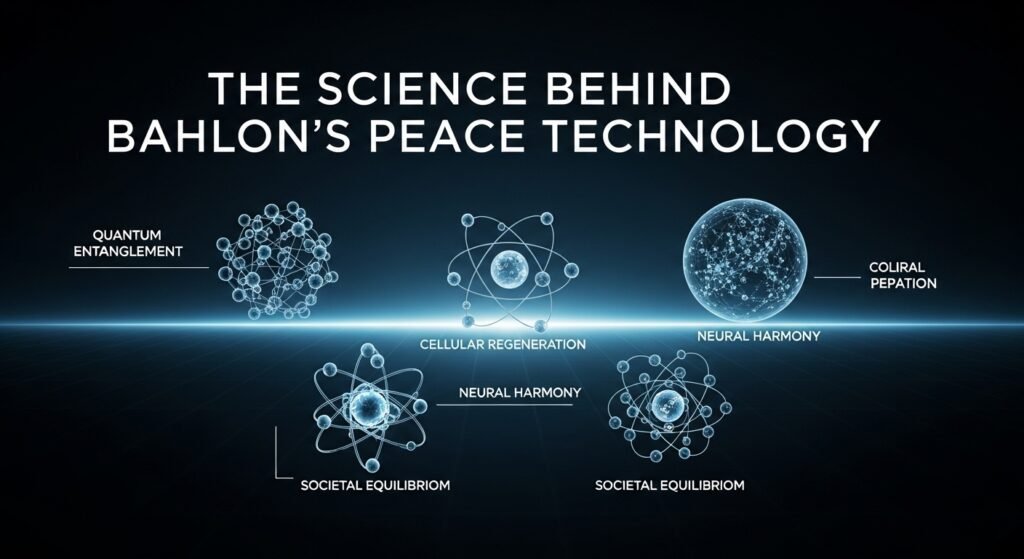
The Science Behind Bahlon’s Peace Technology
Modern neuroscience is beginning to validate Bahlon’s ancient wisdom about deep inner peace.
Research using fMRI technology shows that experiences of unity and non-dual awareness activate different brain regions than traditional meditation practices.
When subjects report feeling “at one with everything,” there’s decreased activity in the default mode network – the brain system associated with self-referential thinking and ego maintenance.
This suggests that Bahlon’s techniques for recognizing universal connection create measurable changes in how the brain processes identity and separation.
Studies on non-dual awareness conducted at universities including Yale and the University of California reveal that practitioners who access what researchers call “awakened awareness” show significantly different neurological patterns than those practicing traditional mindfulness.
Their brains exhibit increased gamma wave coherence across multiple regions, indicating enhanced integration and unity of function.
This neurological signature correlates with reports of profound peace that persists beyond formal practice sessions, supporting Bahlon’s claims about permanent rather than temporary transformation.
Research in quantum consciousness theory provides fascinating parallels to Bahlon’s teachings.
Scientists studying consciousness at the quantum level have discovered that awareness itself appears to be non-local – not confined to individual brains but fundamental to reality itself.
This aligns with Bahlon’s assertion that peace isn’t personal but universal, and that individual consciousness is an expression of consciousness that permeates all of existence.
While science hasn’t “proven” spiritual truths, it’s revealing that Bahlon’s approach maps closely to how consciousness appears to operate at fundamental levels.
Key Takeaways:
- Neuroscience validates unity experiences create different brain patterns
- Non-dual awareness shows increased gamma wave coherence
- Default mode network deactivation correlates with oneness experiences
- Quantum consciousness research supports universal awareness theories
- Neurological changes correspond with reports of permanent peace
8 Scientific Findings Supporting Bahlon’s Methods:
- Non-Dual Brain States: Different neurological patterns than traditional meditation
- Gamma Wave Coherence: Enhanced integration across brain regions
- Default Mode Changes: Reduced self-referential thinking activity
- Persistent Peace Patterns: Neurological signatures continue beyond practice
- Quantum Non-Locality: Consciousness appears fundamental to reality
- Unity Neurochemistry: Distinct brain chemistry during oneness experiences
- Ego Dissolution Markers: Measurable changes in self-identification
- Integration Indicators: Enhanced neural connectivity in advanced practitioners

Creating Your Daily Peace Practice Beyond Meditation
Establishing a daily practice of Bahlon’s techniques requires a fundamentally different approach than traditional meditation routines.
Rather than setting aside specific times to “practice peace,” you weave recognition into the fabric of your daily life.
The most effective approach is choosing one technique that resonates most strongly and integrating it naturally into activities you already do – noticing awareness while showering, feeling emotions fully during conversations, recognizing natural presence while walking, or experiencing universal connection while observing nature.
The key is consistency without strain. Traditional meditation often fails because people struggle to maintain daily practice when life gets busy.
Bahlon’s approach works differently because you’re not adding another task to your to-do list – you’re recognizing what’s already present during activities you already engage in.
This might mean spending 30 seconds noticing awareness before checking email, taking three conscious breaths while recognizing the awareness that knows the breath, or simply pausing to feel whatever emotion is present without trying to change it.
Many practitioners find that morning recognition sets the tone for their entire day.
Upon waking, before getting out of bed, simply notice the awareness that’s already present.
This takes no extra time but establishes peace as the baseline from which your day unfolds.
Evening recognition before sleep allows integration of the day’s experiences while resting in peaceful awareness. Over time, these moments of recognition become as natural as breathing, creating a foundation of deep inner peace that supports all of life’s activities.
Key Takeaways:
- Practice weaves recognition into existing daily activities
- Consistency matters more than duration or formal sessions
- Choose one resonant technique and integrate naturally
- Morning and evening recognition establish peaceful baseline
- Recognition becomes as natural as breathing over time
8 Steps for Daily Peace Integration:
- Morning Recognition: Notice awareness before getting out of bed
- Choose One Technique: Start with the method that feels most natural
- Activity Integration: Practice during existing daily tasks
- Micro-Moments: Use brief recognition throughout the day
- Emotional Opportunities: Feel emotions fully when they arise
- Evening Integration: Recognize awareness before sleep
- Weekly Assessment: Notice peace levels and adjust naturally
- Trust Development: Allow practice to evolve organically

Common Obstacles and How to Overcome Them
Even with Bahlon’s elegant approach, certain obstacles commonly arise that can derail your journey to deep inner peace.
The most pervasive is what practitioners call “the recognition trap” – turning consciousness recognition into another technique to master rather than a simple noticing of what’s already present.
This subtle but powerful obstacle creates a new form of spiritual striving where you’re trying to “get good at” recognizing awareness rather than simply noticing awareness that’s already here.
The solution is recognizing that even this trying happens within awareness itself.
Another significant obstacle is the “emotional overwhelm” that can arise when practicing emotional integration without resistance.
For those with trauma history or intense emotional patterns, complete welcoming of difficult feelings can feel overwhelming or even dangerous.
Bahlon’s approach isn’t about forcing yourself to feel more than you can handle but about gradually building capacity for emotional integration while seeking appropriate support when needed.
The technique works best when practiced gently, allowing emotional processing to unfold naturally rather than pushing for dramatic breakthroughs.
The “comparison confusion” obstacle arises when practitioners compare their experience to others’ descriptions or to their own previous peak experiences.
This creates a subtle rejection of current experience in favor of some imagined “better” state.
The antidote is recognizing that all experiences – including comparison and rejection – arise within the same peaceful awareness.
Even confusion about whether you’re “doing it right” happens within the awareness you’re learning to recognize.
Key Takeaways:
- Recognition trap turns noticing into another technique to master
- Emotional overwhelm requires gentle, gradual approach
- Comparison creates rejection of current experience
- All obstacles arise within same peaceful awareness
- Solution involves recognizing awareness within obstacles themselves
8 Common Obstacles and Solutions:
- Recognition Trap: Solution – Notice that trying also happens within awareness
- Emotional Overwhelm: Solution – Gradual integration with appropriate support
- Comparison Confusion: Solution – Recognize comparison arises in awareness too
- Expectation Disappointment: Solution – Welcome disappointment as experience
- Progress Doubt: Solution – Doubt itself is known by peaceful awareness
- Practice Inconsistency: Solution – Integrate naturally rather than forcing routine
- Intellectual Analysis: Solution – Analysis also happens within awareness
- Special Experience Seeking: Solution – Ordinary experience is equally sacred
Advanced Peace Practices for Experienced Seekers
For those who’ve integrated basic Bahlon techniques and are ready for deeper exploration, advanced practices offer profound transformation possibilities.
These methods aren’t more difficult or complex – in fact, they become increasingly subtle and simple.
The advanced stage involves living continuously as the peace you’ve recognized rather than returning to it during practice sessions.
This creates what Bahlon called “the peace that lives you” – a permanent shift in identity from someone who experiences peace to peace itself experiencing human life.
One advanced practice is “Suffering Transmutation” – the ability to meet intense human experiences (physical pain, emotional devastation, life crises) from the recognition of unchanging peace rather than trying to maintain peaceful states.
This isn’t about becoming emotionless or detached but about discovering that even the most intense human suffering occurs within peace that remains untouched.
Advanced practitioners report that even experiences like grief, physical pain, or existential despair become portals to deeper recognition of unchanging peace.
The most profound advanced practice is “Peace Transmission” – the natural ability to radiate peace to others without conscious effort.
When you’ve stabilized as peace itself rather than someone trying to be peaceful, your very presence becomes calming to others.
This isn’t about becoming a spiritual teacher or healer but about the natural effect that peaceful consciousness has on collective human consciousness.
Your life becomes a blessing to others simply through being authentically yourself.
Key Takeaways:
- Advanced practices become more subtle and simple, not complex
- Involves living continuously as peace rather than experiencing it
- Suffering becomes portal to deeper peace recognition
- Peace transmission happens naturally without effort
- Life becomes blessing through authentic peaceful presence
8 Advanced Peace Practices:
- Continuous Recognition: Live as peace rather than experiencing it
- Suffering Transmutation: Meet intense experiences from peace recognition
- Peace Transmission: Naturally radiate calm without conscious effort
- Collective Consciousness: Recognize peace in others without trying to change them
- Death Integration: Meet mortality from unchanging peaceful awareness
- Relationship Transformation: Allow connections to deepen through shared peace
- Creative Expression: Create from peaceful consciousness rather than for peace
- Service Through Being: Simply existing peacefully serves humanity
📊 Complete Peace Techniques Comparison Table
| Technique | Primary Focus | Practice Time | Difficulty | Immediate Effects | Long-term Results | Best For |
|---|---|---|---|---|---|---|
| Consciousness Recognition | Awareness identification | 30 seconds-5 min | Beginner | Instant peace | Permanent shift | Immediate relief |
| Effortless Awareness | Natural presence | 5-20 min | Intermediate | Deep relaxation | Sustained peace | Daily practice |
| Emotional Integration | Non-resistant feeling | 2-15 min | Intermediate | Emotional release | Freedom from patterns | Difficult emotions |
| Natural Presence | Spontaneous awareness | Throughout day | Advanced | Effortless calm | Peace in activity | Busy lifestyles |
| Universal Connection | Unity recognition | Momentary | Advanced | Expanded perspective | Transcendent peace | Existential questions |
💫 Real Transformation Stories
Michael’s Breakthrough: After 25 years of intensive meditation practice including multiple 30-day silent retreats, Michael still struggled with anxiety and insomnia. “I was the poster child for spiritual striving,” he shares. “The harder I tried to find peace, the more elusive it became.” Discovering Bahlon’s approach was initially frustrating – “How could peace be this simple?” But within weeks of practicing Consciousness Recognition, his anxiety dissolved. “For the first time, peace wasn’t something I achieved during meditation – it was the ground of my entire life.”
Jennifer’s Healing Journey: A trauma survivor who’d tried every therapy modality available, Jennifer found traditional meditation re-triggered her nervous system. “Sitting still and observing my thoughts felt like torture,” she admits. Bahlon’s Emotional Integration technique gave her a completely different approach. “Instead of trying to calm my anxiety, I learned to feel it fully. Paradoxically, the more I allowed it, the less power it had over me.” Today, Jennifer reports experiencing peace she never thought possible – not through transcending her trauma but through integrating it.
David’s Paradox: A successful entrepreneur who’d built his identity on achievement, David approached spiritual practice with the same intensity he brought to business. “I had meditation goals, peace targets, even enlightenment deadlines,” he laughs. Learning Natural Presence Awakening transformed everything. “I discovered that my compulsion to improve myself was actually preventing me from experiencing the peace that was already here. Letting go of trying to be peaceful allowed peace to express itself naturally.” His business success continued, but now it flows from peace rather than striving for it.
❓ Frequently Asked Questions About Deep Inner Peace {#faqs}
Q1: Is Bahlon’s approach compatible with my existing meditation practice?A: Absolutely. These techniques enhance rather than replace existing practices. Many people find that traditional meditation becomes more effective after understanding Bahlon’s principles, while others transition to this more direct approach. The methods work with any spiritual or religious background.
Q2: How long does it take to experience deep inner peace with these techniques?A: Many people experience immediate shifts in perspective, but deep, lasting peace typically unfolds over weeks or months of consistent recognition. The timeline varies based on your background and dedication, but peace begins deepening from your very first conscious recognition of awareness.
Q3: What if I can’t feel or recognize awareness that Bahlon points toward?A: The awareness you’re looking for is what’s looking. It’s not a special feeling but the simple knowing that is always present. If you’re conscious enough to ask the question, you’re already aware. Start by noticing that you know you’re reading these words right now – that’s awareness.
Q4: Can these techniques help with severe anxiety or depression?A: While these practices can support mental health, they’re not substitutes for professional treatment. Many people with anxiety or depression find the techniques helpful, but work with qualified mental health professionals for serious conditions. The practices complement rather than replace therapy or medication.
Q5: Do I need to sit in a particular posture or create special conditions?A: No special conditions required. These techniques work in any position, anywhere, anytime. While quiet environments can be helpful for initial learning, the real practice integrates into daily activities – noticing awareness while walking, working, or interacting with others.
Q6: How do I know if I’m doing the practices correctly?A: There’s no “correct” experience to achieve. If you’re noticing what is present – whether that’s thoughts, emotions, sensations, or awareness itself – you’re doing it perfectly. The goal isn’t a particular state but recognition of what is already here, which includes everything from bliss to boredom.
Q7: What’s the difference between Bahlon’s approach and non-dual teachings?A: Bahlon’s teaching aligns with non-dual wisdom but emphasizes practical application over philosophical complexity. His techniques provide direct pointers to recognition rather than conceptual understanding, making profound non-dual truths accessible through simple, experiential practices.
Q8: Can children or elderly people practice these techniques?A: These approaches are universally accessible. Children often take to them naturally because they haven’t developed complex spiritual concepts. Elderly practitioners appreciate the simplicity and lack of physical demands. The techniques adapt to any age, ability, or background.
Q9: How do I maintain peace when facing real-life challenges like job loss or relationship problems?A: Life challenges become opportunities to deepen recognition. Peace isn’t lost during difficulties – it’s revealed through them. The practices help you meet challenges from peaceful awareness rather than trying to maintain peaceful states. Problems still arise, but they’re met from unchanging peace rather than reactive emotion.
Q10: Is it possible to achieve permanent peace, or will there always be ups and downs?A: Bahlon points toward peace that remains unchanged through all of life’s ups and downs. This doesn’t mean you become emotionless – emotions still arise and fall. But you discover the depths of peace that remain untouched by surface changes. This recognition deepens over time until peace becomes your constant companion regardless of circumstances.
🕊️ Your Journey to Deep Inner Peace Begins Now {#conclusion}
You’ve just discovered a revolutionary approach to inner peace that transcends the limitations of traditional meditation. These five techniques aren’t another spiritual practice to master – they’re direct pointers to the peace that has always been your true nature.
The question isn’t whether you can find deep inner peace, but whether you’re ready to stop overlooking what’s already here.
The beautiful paradox of Bahlon’s teaching: You’ve been searching for something you already are. Like a fish swimming in water while asking where to find the ocean, you’ve been seeking peace while living as peace itself. These techniques simply help you notice what has never been absent.
Your transformation timeline is unique. Some people experience profound shifts within days of practicing consciousness recognition. Others find the recognition dawns gradually over months of gentle noticing. Neither approach is better – both lead to the same discovery: peace isn’t found in the future but recognized now, in this moment, as the awareness that is reading these words.
Start here, start simple:
- Right now, notice the awareness that knows you’re reading this
- Tomorrow morning, spend 30 seconds recognizing awareness before getting out of bed
- This week, practice welcoming one difficult emotion completely instead of trying to change it
- This month, notice moments when presence happens naturally throughout your day
The journey beyond meditation isn’t about becoming someone who has deep inner peace. It’s about recognizing that you already are the peace you’ve been seeking. Every moment offers another opportunity for this recognition. Every experience becomes a doorway to deeper peace when met with awareness rather than resistance.
Remember: You don’t need to maintain peace, achieve peace, or perfect any technique. You simply need to notice the peaceful awareness that is already here, already knowing these words, already being what you are beneath all concepts of who you think you are.
Take the first step. Notice awareness right now. Feel the recognition dawning. Welcome whatever arises in this moment of noticing. This is the beginning of deep inner peace that no circumstance can disturb.
Welcome home to the peace that has always been here. Welcome to life beyond meditation. ✨
Ready to begin your journey beyond meditation? Choose one technique that resonates with you and practice it for just a moment right now. The peace you discover in that moment is the peace that will transform your entire life – not through effort, but through the simple recognition of what has always been true.
Happy recognizing, and enjoy the deep inner peace that follows. 🕊️