
The modern world bombards us with constant noise. Your phone buzzes every few minutes.
Deadlines loom like storm clouds. Your mind races from one worry to the next. Sound familiar?
You’re not alone. Nearly 77% of Americans experience physical symptoms caused by stress, while 73% suffer from psychological symptoms.
But here’s the good news: ancient practices like mindfulness and meditation offer powerful tools to reclaim your peace of mind.
This guide, mindfulness and meditation skill will show you exactly how to use mindfulness techniques to reduce stress, understand the key differences between mindfulness and meditation, and build a sustainable practice that transforms your daily life.
You’ll discover practical methods that work whether you have two minutes or twenty.
Table of Contents
- What is Mindfulness? The Foundation of Inner Peace
- Mindfulness vs Meditation: Understanding the Key Differences
- The 5 Basics of Mindfulness Practice
- Mindfulness Meditation Benefits: What Science Says
- Mindfulness Meditation for Beginners: Your Complete Starter Guide
- Essential Mindfulness Techniques for Daily Life
- Breathing Techniques That Transform Stress
- Body Scan Meditation: Release Physical Tension
- Mindful Eating: Transform Your Relationship with Food
- Walking Meditation: Find Peace in Movement
- Creating Your Personal Mindfulness Routine
- Common Obstacles and How to Overcome Them
- Frequently Asked Questions
What is Mindfulness? The Foundation of Inner Peace {#what-is-mindfulness}
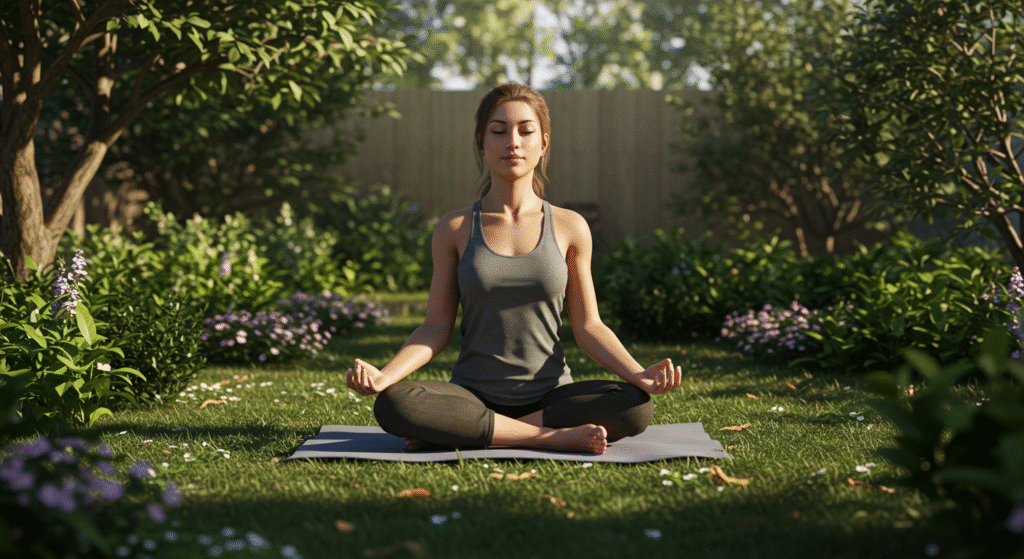
Mindfulness is the practice of paying attention to the present moment without judgment.
Think of it as training your mental spotlight to focus on what’s happening right now, rather than getting lost in past regrets or future anxieties.
Dr. Jon Kabat-Zinn, who brought mindfulness to Western medicine, defines it as “awareness that arises through paying attention, on purpose, in the present moment, non-judgmentally.”
This simple definition packs enormous power.
Core Elements of Mindfulness
Present-Moment Awareness
Your mind naturally wanders. Studies show the average person’s mind drifts 47% of the time. Mindfulness gently guides your attention back to now.
Non-Judgmental Observation
Instead of labeling thoughts as “good” or “bad,” you observe them like clouds passing in the sky. This reduces emotional reactivity and creates space for wisdom.
Intentional Attention
You deliberately choose where to focus your awareness. This strengthens your ability to concentrate and resist distractions.
Mindfulness vs Meditation: Understanding the Key Differences {#mindfulness-vs-meditation}
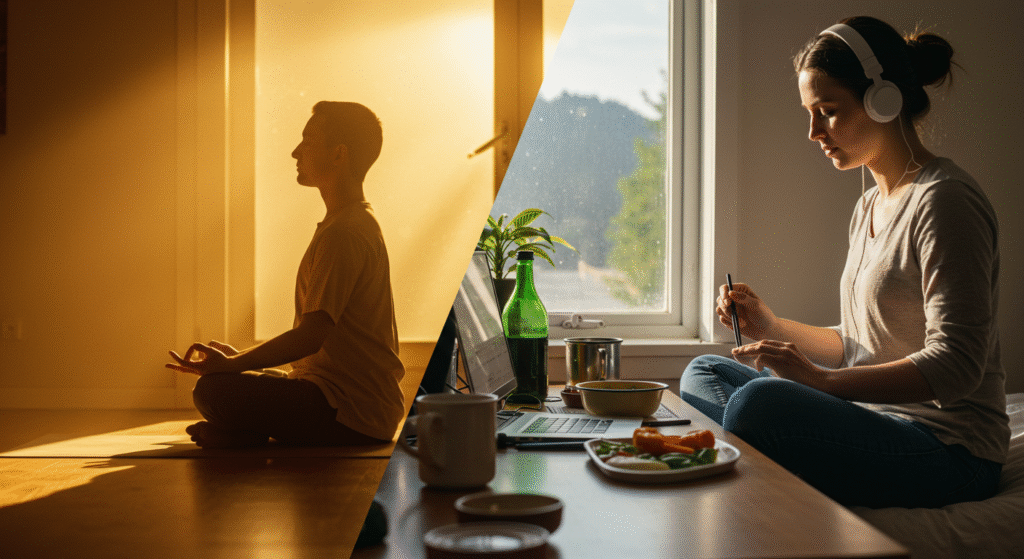
Many people use these terms interchangeably, but they’re actually different concepts. Understanding this distinction helps you choose the right practice for your needs.
| Aspect | Mindfulness | Meditation |
|---|---|---|
| Definition | A way of being aware in daily life | A formal practice with specific techniques |
| Duration | Can be practiced any time, anywhere | Usually has set time periods (5-60+ minutes) |
| Structure | Informal, integrated into activities | Formal, often follows specific steps |
| Purpose | Cultivate present-moment awareness | Develop concentration, insight, or relaxation |
| Examples | Mindful eating, walking, listening | Breathing meditation, body scan, loving-kindness |
When to Use Each Approach
Choose Mindfulness When:
- You want to reduce stress throughout the day
- You’re multitasking but want to stay grounded
- You have limited time for formal practice
- You want to improve relationships and communication
Choose Meditation When:
- You want to develop deeper concentration
- You’re dealing with anxiety or depression
- You have time for structured practice
- You want to explore spiritual dimensions
The 5 Basics of Mindfulness Practice {#5-basics-of-mindfulness}
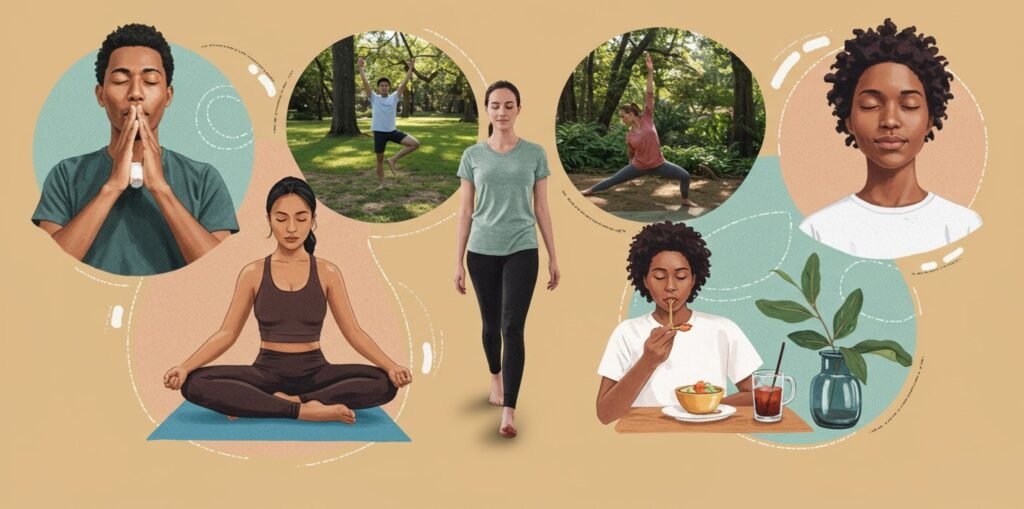
These five fundamentals form the foundation of any successful mindfulness practice. Master these basics, and you’ll have tools that work in any situation.
1. Breath Awareness
Your breath is always available as an anchor to the present moment. It’s happening right now, requiring no special equipment or location.
How to Practice:
- Notice the sensation of breathing without changing it
- Feel air entering and leaving your nostrils
- When your mind wanders, gently return to the breath
- Start with just 30 seconds and gradually increase
2. Body Awareness
Your body constantly sends signals about your emotional state. Tension in your shoulders might signal stress. Butterflies in your stomach might indicate anxiety.
Key Techniques:
- Body scan meditation
- Progressive muscle relaxation
- Mindful stretching
- Posture awareness throughout the day
3. Thought Observation
Rather than being caught up in the content of thoughts, you learn to observe the process of thinking itself. This creates psychological distance from stressful thoughts.
Practice Steps:
- Notice when thoughts arise
- Label them simply as “thinking”
- Avoid analyzing or judging the content
- Return attention to your chosen focus point
4. Emotional Awareness
Emotions aren’t problems to solve but experiences to understand. Mindfulness helps you respond to emotions rather than react automatically.
Development Process:
- Recognize emotions as they arise
- Feel their physical sensations in your body
- Breathe with the emotion without trying to change it
- Choose your response consciously
5. Present-Moment Focus
The present is the only time you can actually influence. Past events are memories. Future events are projections. Real life happens now.
Practical Applications:
- Single-tasking instead of multitasking
- Engaging fully with people during conversations
- Noticing sensory details in your environment
- Returning to “now” when you catch your mind wandering
Mindfulness Meditation Benefits: What Science Says {#mindfulness-meditation-benefits}
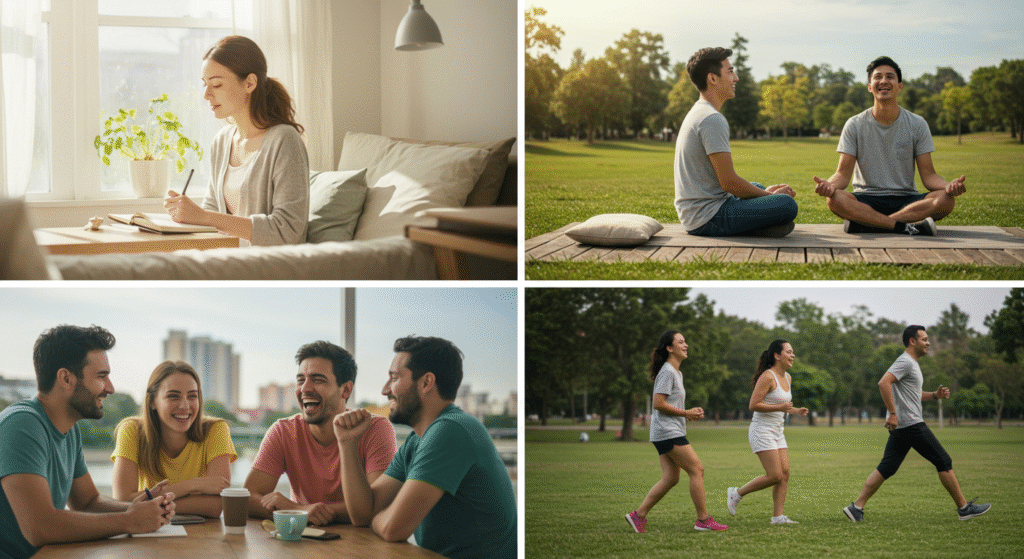
Research has demonstrated that mindfulness meditation offers a host of scientifically supported benefits for both mental and physical well-being.
Studies show that consistent practice can reduce stress levels, enhance focus, and improve emotional regulation.
Additionally, mindfulness has been linked to lower blood pressure, better sleep quality, and even a strengthened immune system.
These findings highlight how integrating mindfulness into daily life can significantly contribute to overall health and resilience.
Research on mindfulness has exploded over the past two decades.
Over 6,000 peer-reviewed studies demonstrate measurable benefits for both mental and physical health.
Mental Health Benefits
Stress Reduction
A meta-analysis of 163 studies found that mindfulness meditation significantly reduces stress markers, including cortisol levels and perceived stress scores.
Anxiety Management
Regular practice reduces activity in the amygdala, your brain’s alarm system, while strengthening the prefrontal cortex responsible for emotional regulation.
Depression Prevention
Mindfulness-Based Cognitive Therapy (MBCT) reduces depression relapse rates by 43% compared to standard treatment alone.

Physical Health Benefits
Improved Immune Function
Studies show mindfulness practitioners have stronger immune responses to vaccines and lower inflammatory markers.
Better Sleep Quality
Sleep disturbances decrease significantly after 8 weeks of mindfulness training, according to research published in JAMA Internal Medicine.
Pain Management
Chronic pain patients report 57% reduction in pain intensity and 40% reduction in pain-related anxiety after mindfulness training.
Cognitive Benefits
Enhanced Focus
Just 8 weeks of practice increases gray matter density in areas associated with attention and sensory processing.
Improved Memory
Working memory capacity improves by an average of 30% in people who complete mindfulness training programs.
Better Decision Making
Mindfulness reduces impulsive reactions and improves thoughtful, values-based decision making.
Mindfulness Meditation for Beginners: Your Complete Starter Guide {#mindfulness-meditation-for-beginners}
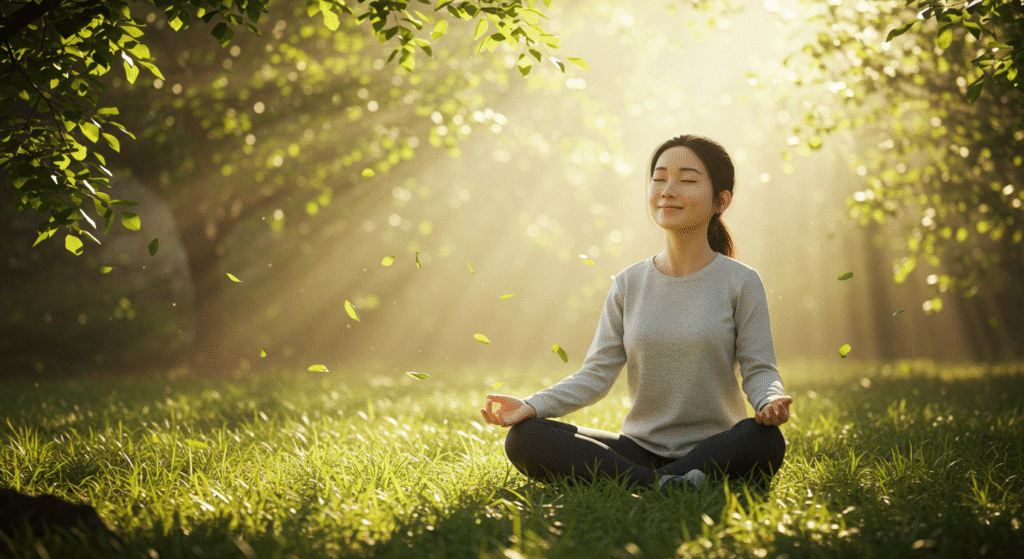
Starting your mindfulness meditation practice can feel overwhelming, but beginning with just a few minutes each day can make a significant difference.
Find a quiet, comfortable space where you can sit without distractions, close your eyes, and focus on your breath.
It’s natural for your mind to wander—when it does, gently guide your attention back to your breathing without judgment.
Consistency is key, and over time, these small moments of mindfulness can lead to profound improvements in your overall well-being.
Starting a mindfulness practice doesn’t require special skills, expensive equipment, or hours of free time. Here’s your step-by-step roadmap to success.
Week 1-2: Building the Habit
Start Small
Begin with just 2-3 minutes daily. Consistency matters more than duration. It’s better to practice 3 minutes every day than 30 minutes once a week.
Choose a Consistent Time
Link your practice to an existing habit. Common choices include:
- Right after waking up
- Before your morning coffee
- During lunch break
- Before bedtime
Find Your Space
You don’t need a meditation room. Any quiet corner works. The same spot each day helps build the routine.
Week 3-4: Expanding Your Practice
Increase Duration Gradually
Add 1-2 minutes each week until you reach 10-15 minutes. This prevents overwhelm and builds sustainable habits.
Experiment with Different Techniques
Try various approaches to find what resonates:
- Breath-focused meditation
- Body scan practice
- Loving-kindness meditation
- Mindful movement
Month 2 and Beyond: Deepening Your Practice
Join a Community
Find local meditation groups or online communities. Social support increases practice consistency by 65%.
Use Guided Resources
Apps like Headspace, Calm, or Insight Timer provide structured programs and variety.
Track Your Progress
Notice changes in stress levels, sleep quality, and emotional reactivity rather than focusing solely on meditation “performance.”

Essential Mindfulness Techniques for Daily Life {#essential-mindfulness-techniques}
Practicing mindfulness in daily life doesn’t require a special setting or schedule; it can be integrated into simple, everyday tasks. Whether you’re eating a meal, walking to work, or washing dishes, mindfulness involves bringing your full attention to the present moment. Focus on your senses—notice the taste and texture of your food, the rhythm of your footsteps, or the warmth of the soapy water on your hands. By cultivating awareness in these small moments, you can transform routine activities into opportunities for calm and clarity.
These practical techniques transform ordinary activities into opportunities for mindfulness practice. You can use them anywhere, anytime.
The STOP Technique
Perfect for moments of high stress or emotional reactivity.
S – Stop what you’re doing
T – Take a breath
O – Observe your thoughts, feelings, and body sensations
P – Proceed with awareness
Mindful Transitions
Use transitions between activities as mindfulness cues.
Examples:
- Three conscious breaths before checking email
- Mindful hand washing between tasks
- Feeling your feet on the ground when walking between rooms
- Pausing before opening your front door
The 5-4-3-2-1 Grounding Technique
Especially helpful for anxiety or panic attacks.
Notice:
- 5 things you can see
- 4 things you can touch
- 3 things you can hear
- 2 things you can smell
- 1 thing you can taste
Mindful Listening
Mindful listening is the practice of fully focusing on the act of hearing without judgment or distraction. It involves giving your complete attention to the sounds around you, whether it is a conversation, the rustle of leaves, or the hum of background noise. By anchoring yourself in the present moment through active listening, you can develop a deeper sense of connection and awareness. This practice encourages patience and openness, fostering more meaningful interactions and a calmer state of mind.
Transform conversations and reduce misunderstandings.
Practice Elements:
- Give full attention to the speaker
- Notice your urge to interrupt or formulate responses
- Listen to tone and emotion, not just words
- Pause before responding
Breathing Techniques That Transform Stress {#breathing-techniques}
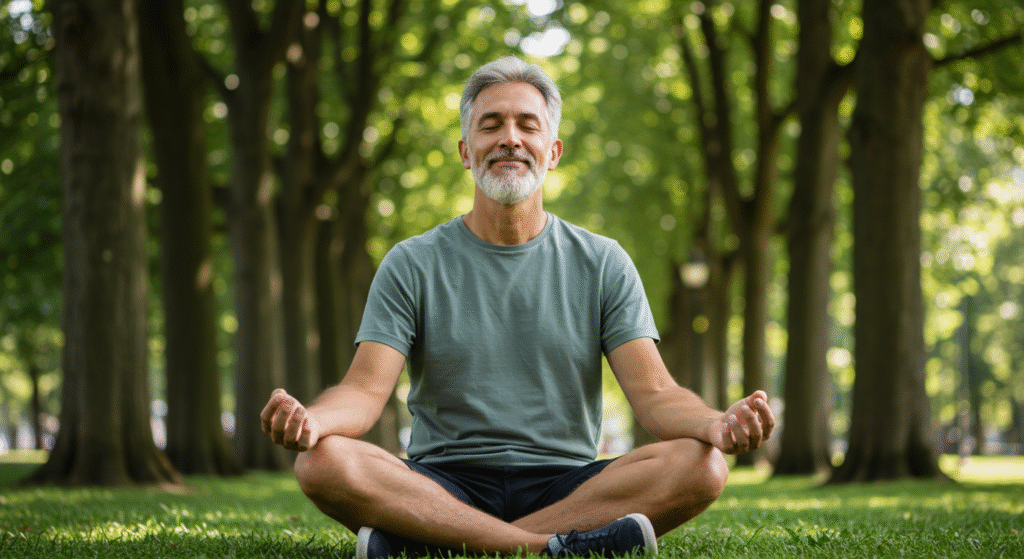
Controlled breathing techniques can significantly reduce stress and promote relaxation.
By focusing on slow, deep breaths, you can activate the parasympathetic nervous system, which helps calm the body and mind.
Techniques such as diaphragmatic breathing or box breathing not only improve focus but also lower heart rate and blood pressure, making them effective tools for managing anxiety and enhancing overall wellness.
Your breath is your most accessible stress-reduction tool. These techniques activate your parasympathetic nervous system, triggering your body’s relaxation response.
4-7-8 Breathing
Developed by Dr. Andrew Weil, this technique works like a natural sedative.
Steps:
- Exhale completely through your mouth
- Close your mouth, inhale through nose for 4 counts
- Hold your breath for 7 counts
- Exhale through mouth for 8 counts
- Repeat 3-4 cycles
Box Breathing
Used by Navy SEALs for stress management in high-pressure situations.
Pattern:
- Inhale for 4 counts
- Hold for 4 counts
- Exhale for 4 counts
- Hold empty for 4 counts
Coherent Breathing
This technique balances your autonomic nervous system.
Method:
- Breathe in for 5 counts
- Breathe out for 5 counts
- Continue for 5-10 minutes
- Aim for 6 breaths per minute
Body Scan Meditation: Release Physical Tension {#body-scan-meditation}
Body scan meditation is a mindfulness practice that involves paying attention to physical sensations in the body, systematically moving your focus from head to toe or vice versa.
This technique helps identify areas of tension or discomfort while promoting relaxation and a sense of grounding.
By consciously bringing awareness to each part of the body, you can release built-up stress and foster a deeper connection between the mind and body.
Body scan meditation helps you develop somatic awareness while releasing stored tension.
It’s particularly effective for people who hold stress physically.
Basic Body Scan Process
Preparation (2 minutes)
- Lie down comfortably or sit with back support
- Close your eyes or soften your gaze
- Take three deep breaths to settle in
The Scan (10-20 minutes)
- Start with your toes, noticing sensations without trying to change anything
- Move slowly up through each body part
- Include often-forgotten areas like your scalp, jaw, and inner organs
- If you notice tension, breathe into that area
Integration (2 minutes)
- Feel your whole body as one unified field of sensation
- Notice the difference between the beginning and end of practice
- Set an intention for carrying this awareness into your day
Advanced Variations
For those looking to deepen their practice, consider incorporating visualizations or guided imagery into your body scan. For example, you might imagine a warm, golden light slowly moving through each part of your body as you scan, bringing relaxation and energy to every area it touches. Alternatively, focus on syncing your breath with the sensations you observe, creating a rhythmic flow that enhances your sense of connection and presence.
Tension Release Scan
- Deliberately tense each muscle group for 5 seconds
- Release and notice the contrast
- Move systematically through your entire body
Emotional Body Scan
- Notice where different emotions live in your body
- Breathe compassion into areas of discomfort
- Develop your emotional-physical awareness vocabulary

Mindful Eating: Transform Your Relationship with Food {#mindful-eating}
Mindful eating is a practice that encourages you to fully engage your senses while choosing, preparing, and consuming food. By slowing down and paying attention to flavors, textures, aromas, and even the sounds of your meals, you can foster a deeper appreciation for the nourishment you receive. This practice not only enhances your enjoyment of food but also helps you recognize physical hunger and fullness cues, promoting healthier eating habits and a balanced relationship with food.
Mindful eating addresses both physical and emotional aspects of your relationship with food. It’s particularly powerful for stress eating and digestive issues.
The Mindful Eating Process
Before Eating
- Check in with your hunger level (1-10 scale)
- Notice emotional states that might influence eating
- Set an intention for nourishing your body
During Eating
- Eat without distractions (no TV, phone, or reading)
- Chew slowly and thoroughly
- Notice flavors, textures, and temperatures
- Pause halfway through to reassess hunger
After Eating
- Notice satisfaction levels
- Observe energy changes in your body
- Appreciate the nourishment you’ve provided yourself
Benefits of Mindful Eating
- Improved digestion and nutrient absorption
- Natural portion control
- Reduced stress eating
- Greater appreciation for food
- Better blood sugar regulation

Walking Meditation: Find Peace in Movement {#walking-meditation}
Walking meditation is a practice that combines the physical benefits of walking with the mental clarity of mindfulness. It involves focusing on each step, the sensation of your feet touching the ground, and the rhythm of your breath as you move. This meditative approach allows you to cultivate a deeper connection with your body and the environment, promoting relaxation and reducing stress. By practicing walking meditation, you can bring awareness to the present moment and transform a simple walk into a calming, intentional experience.
Walking meditation combines mindfulness with gentle physical activity. It’s ideal for people who struggle with seated meditation or need to release energy.
Indoor Walking Practice
Setup
- Find a straight path 10-20 feet long
- Remove shoes if comfortable
- Begin at one end of your path
The Practice
- Walk slower than normal pace
- Feel each component of stepping
- Turn mindfully at each end
- Coordinate with breathing if desired
Outdoor Walking Meditation
Nature Connection
- Choose a quiet natural setting when possible
- Notice sounds, smells, and visual details
- Feel your connection to the earth
- Let nature support your practice
Urban Practice
- Use city walks as mindfulness opportunities
- Focus on physical sensations rather than distractions
- Practice compassion toward other pedestrians
- Find beauty in unexpected places

Creating Your Personal Mindfulness Routine {#personal-mindfulness-routine}
Establishing a personal mindfulness routine begins with setting aside intentional time each day, even if it’s just a few minutes.
Identify a practice that resonates with you, whether it’s focused breathing, mindful walking, or a guided meditation.
Consistency is key, and starting small allows mindfulness to become a sustainable habit.
Over time, you can expand your routine to include various techniques, tailoring it to your needs and lifestyle.
A sustainable practice fits your lifestyle, preferences, and goals. Use this framework to design your personal approach.
Assessment Questions
Time Availability
- How many minutes can you realistically commit daily?
- What time of day feels most sustainable?
- How can you link practice to existing habits?
Stress Patterns
- When do you experience the most stress?
- What physical symptoms do you notice?
- Which situations trigger emotional reactivity?
Learning Style
- Do you prefer guided or silent practice?
- Are you more visual, auditory, or kinesthetic?
- Do you like structure or flexibility?
Sample Routines
The Busy Professional (10 minutes total)
- 3 minutes morning breathing
- Mindful transitions throughout day
- 5 minutes evening body scan
- Weekend longer practice
The Parent (15 minutes total)
- 5 minutes before children wake
- Mindful moments during parenting
- 10 minutes after bedtime routines
- Family mindfulness activities
The Student (20 minutes total)
- 10 minutes morning meditation
- Study break breathing exercises
- Mindful walking between classes
- Evening gratitude practice

Common Obstacles and How to Overcome Them {#common-obstacles}
One common obstacle to maintaining a mindfulness practice is finding the time in a busy schedule.
To overcome this, consider integrating mindfulness into everyday activities rather than viewing it as a separate task.
This could include focusing on your breath while waiting in line, practicing gratitude during a meal, or taking a moment of awareness during transitions between tasks.
By embedding mindfulness into routine actions, it becomes more accessible and sustainable in the long term.
Every practitioner encounters challenges. Here’s how to navigate the most common ones without abandoning your practice.
“I Don’t Have Time”
Reality Check: You probably check your phone for more than 10 minutes daily. Mindfulness can happen during existing activities.
Solutions:
- Start with 2 minutes daily
- Use transition moments
- Practice during routine activities
- Quality over quantity approach
“My Mind Won’t Stop Thinking”
Reality Check: A thinking mind isn’t a failed mind. Noticing thoughts IS mindfulness.
Solutions:
- Expect and accept mental activity
- Use noting technique (“thinking, thinking”)
- Return to focus point without judgment
- Remember: awareness of distraction IS awareness
“I’m Not Doing It Right”
Reality Check: There’s no perfect meditation. If you’re showing up, you’re succeeding.
Solutions:
- Release perfectionist expectations
- Focus on consistency over performance
- Remember every practice is different
- Seek instruction when needed
“I Don’t Feel Different”
Reality Check: Changes often happen gradually and may be noticed by others first.
Solutions:
- Keep a practice journal
- Ask trusted friends about changes they notice
- Focus on process rather than outcomes
- Remember that benefits compound over time
Frequently Asked Questions {#faqs}
How long should I meditate as a beginner?
Start with 2-5 minutes daily. Consistency matters more than duration. Gradually increase by 1-2 minutes weekly until you reach a comfortable length, typically 10-20 minutes.
What’s the difference between mindfulness and meditation?
Mindfulness is a way of paying attention that can be practiced anytime, anywhere. Meditation is a formal practice that often includes mindfulness techniques but has specific structure and timing.
Can I practice mindfulness if I have anxiety or depression?
Yes, but start gently. Research shows mindfulness helps with both conditions. However, if you have severe symptoms, work with a mental health professional who understands mindfulness-based approaches.
Do I need to sit in a specific position?
No. Comfort is most important. You can sit in a chair, on a cushion, lie down, or even practice standing or walking. Find a position that allows alertness without discomfort.
What if I fall asleep during meditation?
This is common, especially when starting or if you’re sleep-deprived. Try practicing at a different time, in a brighter room, or in a more upright position. Some sleepiness is normal as your nervous system relaxes.
Is mindfulness a religious practice?
While mindfulness has roots in Buddhism, secular approaches focus on the practical mental training aspects. You can practice mindfulness regardless of your religious beliefs or lack thereof.
How quickly will I see benefits?
Some people notice changes within days, while others take weeks. Typical timeline: stress reduction (1-2 weeks), improved focus (2-4 weeks), emotional regulation (4-8 weeks), structural brain changes (8+ weeks).
Can children learn mindfulness?
Absolutely. Age-appropriate mindfulness helps children with emotional regulation, attention, and stress management. Many schools now incorporate mindfulness programs.
What’s the best app for beginners?
Popular options include Headspace (structured programs), Calm (variety of content), Insight Timer (large free library), and Ten Percent Happier (skeptic-friendly approach). Try several to find your preference.
Should I practice mindfulness if I have trauma?
Mindfulness can be helpful for trauma recovery, but work with a trauma-informed therapist. Some techniques may initially increase distress as awareness develops. Professional guidance ensures safety and effectiveness.
Final Thought
Your journey toward inner calm doesn’t require perfection—it requires presence. Start where you are, use what works, and remember that every moment offers a fresh opportunity to begin again.
The tools in this guide give you everything needed to reduce stress and cultivate peace. Choose one technique, commit to practicing it for a week, and notice what shifts. Your future self will thank you for taking this first step toward a more mindful, peaceful life.