
Sleep eludes millions of people worldwide, yet the solution often lies in simple, proven techniques that calm both mind and body. When stress grips your thoughts and anxiety keeps you awake, specific mental exercises and relaxation methods can transform your nights from restless battles into peaceful recovery periods.
This comprehensive guide reveals evidence-based strategies that help you fall asleep faster, manage stress-induced insomnia, and develop lasting skills for better rest. You’ll discover practical techniques that work whether you’re dealing with everyday tension or more persistent sleep challenges.
Table of Contents
- Understanding the Sleep-Stress Connection
- Mental Exercises for Sleep That Actually Work
- How to Relax and Sleep When Stressed
- Quick Relaxation Techniques for Anxiety
- Progressive Muscle Relaxation for Deep Rest
- Breathing Techniques That Calm Your Mind
- Visualization Methods for Better Sleep
- Creating the Perfect Sleep Environment
- Cognitive Strategies to Quiet Racing Thoughts
- Building Long-term Relaxation Skills
- Technology and Tools for Sleep Enhancement
- When to Seek Professional Help
Understanding the Sleep-Stress Connection
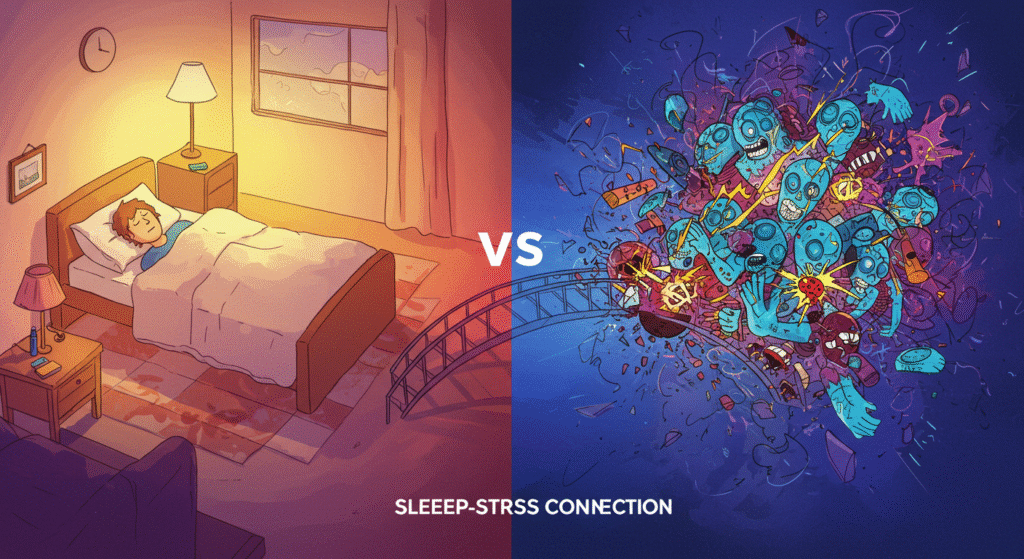
Stress and sleep exist in a complex relationship that affects millions globally. When cortisol levels remain elevated, your brain struggles to shift into the restful state necessary for quality sleep. This creates a frustrating cycle where poor sleep increases stress, which then makes falling asleep even harder.
Research from the American Psychological Association shows that 43% of adults report lying awake at night due to stress. The key lies in breaking this cycle through targeted relaxation techniques for stress that address both the physical and mental components of tension.
Your nervous system operates through two primary modes: sympathetic (fight-or-flight) and parasympathetic (rest-and-digest). Effective sleep preparation requires activating your parasympathetic system while calming the sympathetic response. This transition doesn’t happen automatically—it requires intentional practice.

Mental Exercises for Sleep That Actually Work
Mental exercises for sleep train your brain to shift from active problem-solving mode into a receptive, restful state. These techniques work by redirecting attention away from stressful thoughts and toward calming mental activities.
The 4-7-8 Counting Method
This technique combines breath control with mental focus. Inhale through your nose for 4 counts, hold for 7, then exhale through your mouth for 8. The counting gives your mind a specific task while the breathing pattern naturally slows your heart rate.
Practice this method for at least 3 cycles when you first lie down. Many people report feeling drowsier by the third repetition as their body responds to the extended exhale pattern.
Body Scan Meditation
Start at your toes and mentally “visit” each part of your body, noticing areas of tension and consciously releasing them. This systematic approach helps you become aware of physical stress you might not have noticed while simultaneously promoting relaxation.
The body scan typically takes 10-15 minutes and works especially well for people whose minds tend to race with thoughts about tomorrow’s responsibilities.
Gratitude Reflection
Instead of reviewing problems or planning tomorrow’s tasks, focus on three things you appreciated about your day. This positive mental exercise shifts your emotional state and creates associations between bedtime and pleasant thoughts.
Research published in Applied Psychology: Health and Well-Being found that people who practiced gratitude exercises experienced improved sleep quality within just one week.

How to Relax and Sleep When Stressed
Stress-induced insomnia requires specific strategies that address both immediate tension and underlying concerns. How to relax and sleep when stressed involves creating both physical and mental separation from daytime pressures.
The Worry Window Technique
Set aside 15 minutes earlier in the evening specifically for worrying. Write down your concerns and potential solutions. When worries arise at bedtime, remind yourself that you’ve already addressed these issues and will revisit them during tomorrow’s worry window.
This approach prevents suppression (which often backfires) while creating boundaries around when you engage with stressful thoughts.
Physical Tension Release
Stress manifests physically through muscle tension, particularly in the shoulders, jaw, and forehead. Before attempting sleep, spend 5 minutes consciously releasing these areas:
- Roll your shoulders backward 5 times
- Open and close your jaw gently
- Massage your temples in small circles
- Stretch your neck from side to side
Temperature Regulation
Your body temperature naturally drops as you prepare for sleep, but stress can interfere with this process. Take a warm bath or shower 1-2 hours before bedtime. The subsequent temperature drop signals your brain to begin producing melatonin.
Quick Relaxation Techniques for Anxiety
When anxiety strikes at bedtime, you need quick relaxation techniques for anxiety that work within minutes rather than requiring long-term practice. These methods focus on immediate symptom relief while establishing calmer mental states.
The 5-4-3-2-1 Grounding Technique
This sensory-based method redirects attention from anxious thoughts to your immediate environment:
- Name 5 things you can see
- Identify 4 things you can touch
- Notice 3 things you can hear
- Find 2 things you can smell
- Recognize 1 thing you can taste
This technique typically reduces anxiety symptoms within 2-3 minutes by engaging your senses rather than your worried thoughts.
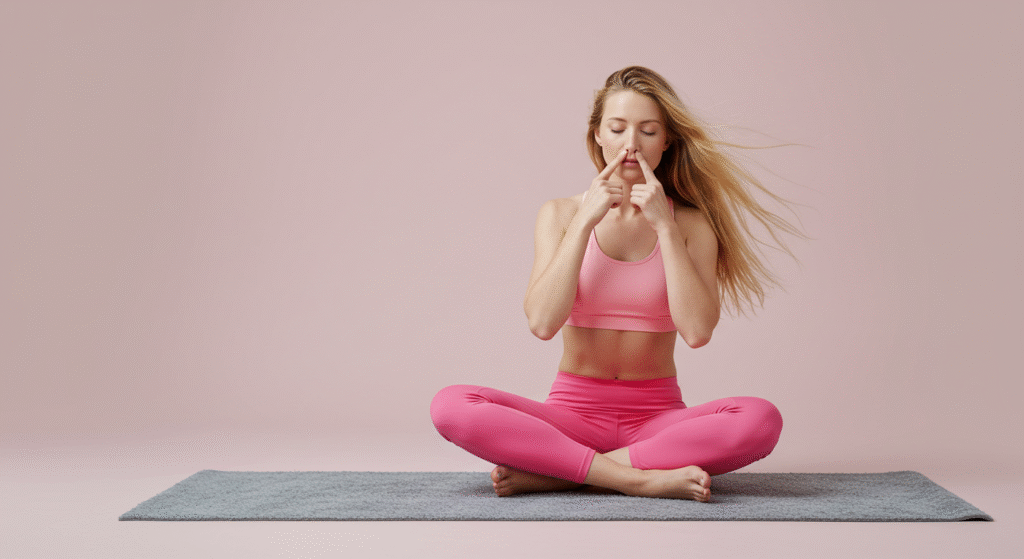
Alternate Nostril Breathing
Close your right nostril with your thumb and inhale through your left nostril for 4 counts. Close your left nostril with your ring finger, release your thumb, and exhale through your right nostril for 4 counts. Continue alternating for 2-3 minutes.
This breathing pattern balances your nervous system and has been shown to reduce anxiety more effectively than standard deep breathing exercises.
The STOP Method
When anxious thoughts spiral, use this acronym:
- Stop what you’re thinking
- Take a deep breath
- Observe your current state without judgment
- Proceed with a chosen relaxation technique
This creates a pause between anxious thoughts and your response, preventing the escalation that often occurs with bedtime anxiety.
Progressive Muscle Relaxation for Deep Rest
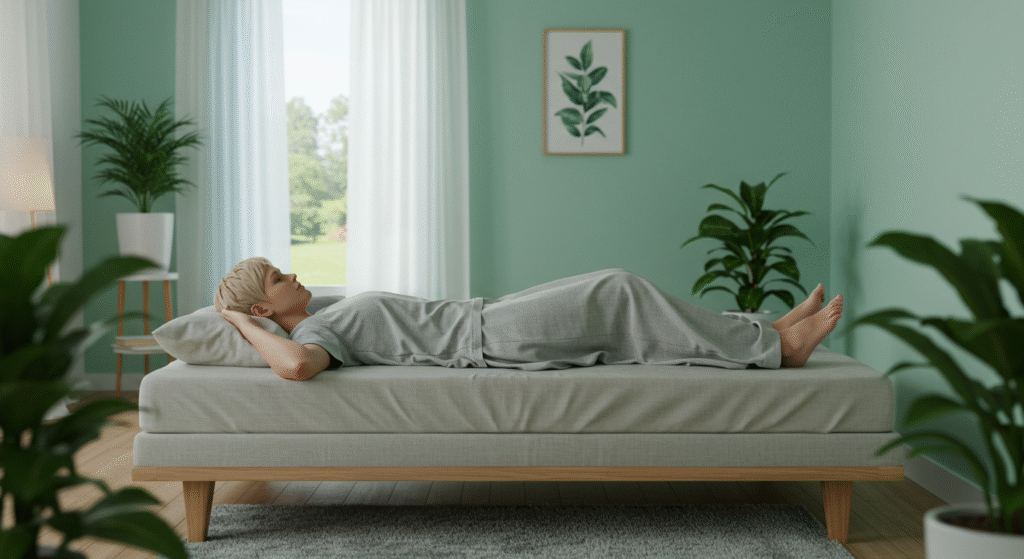
Progressive muscle relaxation (PMR) systematically tenses and releases muscle groups throughout your body. This technique helps you recognize the difference between tension and relaxation while promoting deep physical rest.
Start with your toes, tightening the muscles for 5 seconds, then releasing completely for 10 seconds. Move progressively through your calves, thighs, abdomen, hands, arms, shoulders, and face. The contrast between tension and release helps your body achieve deeper relaxation than simply trying to “relax” without the initial tension.
Research from Harvard Medical School demonstrates that regular PMR practice reduces the time needed to fall asleep by an average of 14 minutes while improving overall sleep quality.
Breathing Techniques That Calm Your Mind
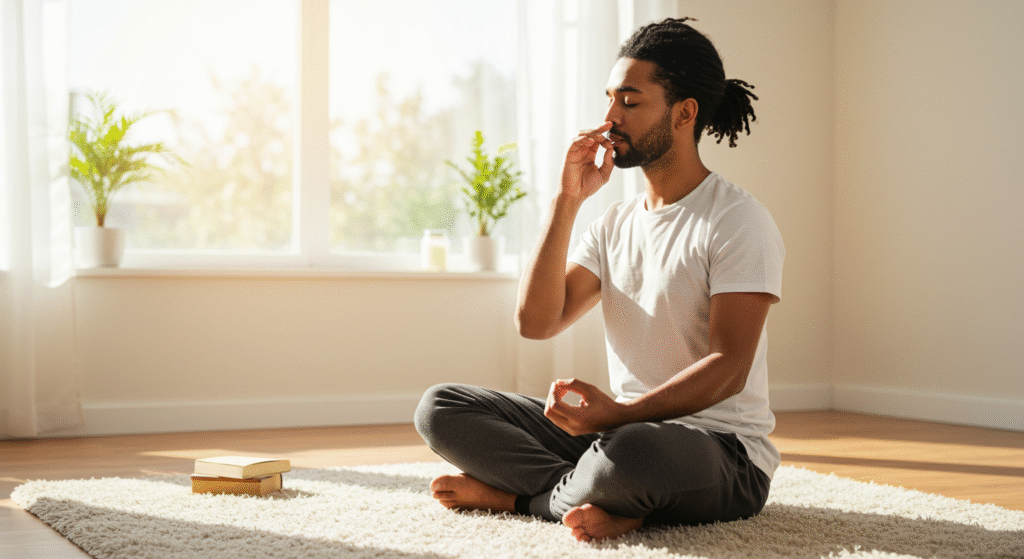
Controlled breathing directly influences your nervous system, making it one of the most effective ways to relax mind from stress. These techniques work by stimulating the vagus nerve, which signals your brain to activate rest-and-digest functions.
Box Breathing
Breathe in for 4 counts, hold for 4, exhale for 4, hold empty for 4. This creates a “box” pattern that regulates your nervous system. Military personnel and first responders use this technique to manage stress in high-pressure situations.
Extended Exhale Breathing
Inhale normally, then extend your exhale to twice the length of your inhale. If you inhale for 4 counts, exhale for 8. This pattern specifically activates your parasympathetic nervous system, creating the physiological conditions necessary for sleep.
Coherent Breathing
Breathe in and out through your nose at a rate of 5 breaths per minute (6 seconds in, 6 seconds out). This creates “heart rate variability coherence,” a state associated with reduced stress hormones and improved sleep quality.
Visualization Methods for Better Sleep
Mental imagery engages your brain’s visual processing centers, redirecting attention from worrying thoughts to peaceful scenes. Effective visualization requires specific, detailed scenarios rather than vague “relaxing” images.

The Beach Visualization
Picture yourself lying on warm sand, feeling the gentle warmth on your skin. Hear the rhythmic sound of waves approaching and receding. Feel a gentle breeze carrying the scent of salt water. Notice the expansive sky above you, perhaps with a few lazy clouds drifting by.
Spend at least 5 minutes developing this scene, adding new sensory details as your mind settles into the imagery.

The Forest Path Technique
Imagine walking slowly along a soft forest path. Notice the filtered sunlight through the trees, the sound of leaves rustling gently, and the earthy scent of the forest floor. Feel your feet sinking slightly into the soft ground with each step.
This technique works particularly well for people who find beach imagery too stimulating, as forest scenes typically evoke deeper calm.

Personal Sanctuary Creation
Develop a detailed mental image of your ideal peaceful space—perhaps a cozy cabin, a garden, or a mountaintop retreat. Include specific details: the texture of furniture, the quality of light, the sounds you’d hear, and the scents present.
Return to this same sanctuary each night, adding new details over time. This consistency helps your brain associate the imagery with sleep preparation.
Creating the Perfect Sleep Environment
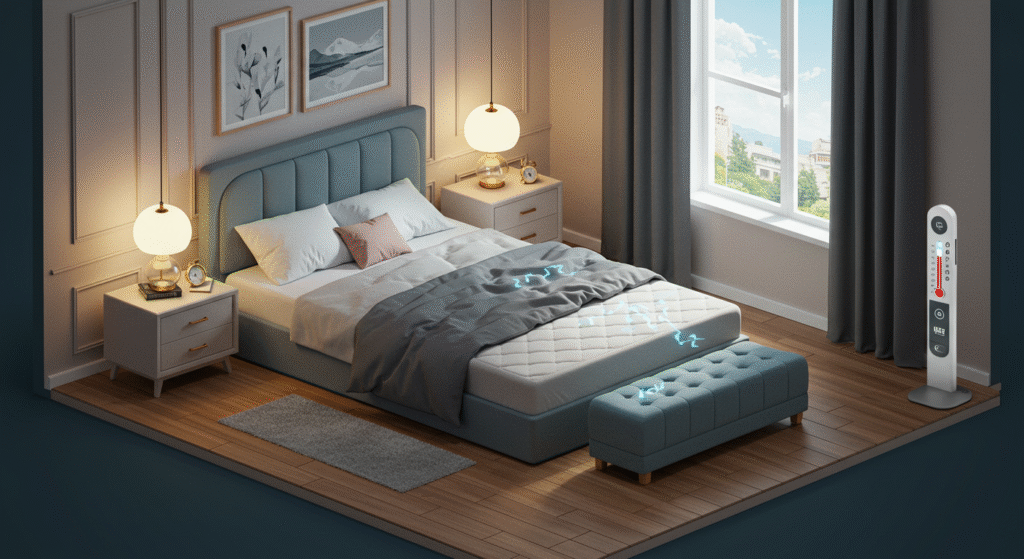
Your physical environment significantly impacts your ability to fall asleep and stay asleep. Small adjustments often produce dramatic improvements in sleep quality.
Temperature Optimization
The ideal bedroom temperature ranges from 65-68°F (18-20°C). Your body’s natural temperature drop signals melatonin production, and a cool room supports this process. Consider using breathable bedding materials like cotton or bamboo rather than synthetic fabrics that trap heat.
Light Management
Blue light from screens interferes with melatonin production for up to 3 hours after exposure. Use blue light filtering glasses if you must use devices before bed, or better yet, establish a technology curfew 1 hour before your intended sleep time.
Blackout curtains or an eye mask can significantly improve sleep quality, as even small amounts of light can disrupt your circadian rhythm.
Sound Control
Consistent, gentle sounds often promote better sleep than complete silence. White noise machines, fans, or apps generating nature sounds can mask disruptive noises while creating a calming audio environment.
If you live in a noisy area, consider using soft foam earplugs specifically designed for sleeping.
Cognitive Strategies to Quiet Racing Thoughts
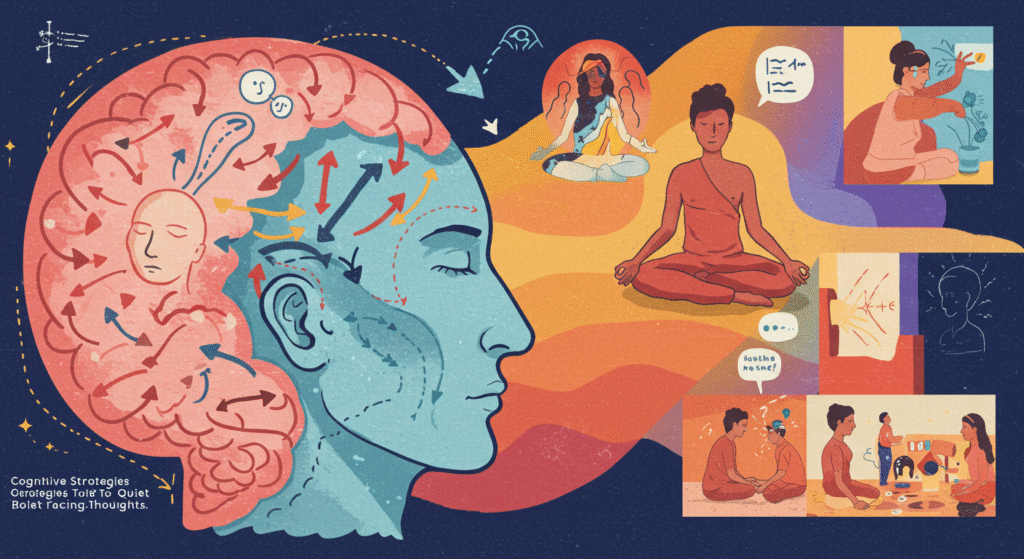
Racing thoughts at bedtime often involve worry about future events or regret about past situations. Cognitive strategies help you recognize and redirect these thought patterns before they prevent sleep.
The Mental Filing System
When a thought arises, categorize it: Is this something I can control? Is it something that needs immediate attention? Most bedtime worries fall into the “cannot control tonight” or “not immediately urgent” categories.
Visualize placing these thoughts in a mental filing cabinet, acknowledging them without engaging in problem-solving. Tell yourself, “I’ve filed this thought and will address it at the appropriate time.”
Thought Defusion Techniques
Instead of fighting anxious thoughts, observe them with curiosity. Think, “I’m having the thought that tomorrow will be stressful” rather than “Tomorrow will be stressful.” This creates psychological distance from the thought, reducing its emotional impact.
The Next Right Step Method
When overwhelmed by complex problems, focus only on the next small step you can take tomorrow. This prevents your mind from trying to solve entire problems at bedtime while maintaining a sense of forward progress.
Building Long-term Relaxation Skills
Developing consistent relaxation skills requires regular practice outside of bedtime situations. Like physical fitness, relaxation skills strengthen with consistent use and atrophy with neglect.
Daily Stress Inoculation
Practice your chosen relaxation technique for 5-10 minutes during the day when you’re not stressed. This builds familiarity and effectiveness, making the techniques more accessible when you need them most.
Mindfulness Integration
Incorporate brief mindfulness moments throughout your day: focus fully on your morning coffee, notice your breathing while walking, or pay attention to physical sensations during routine activities.
These micro-practices develop your ability to shift attention away from stressful thoughts, a skill directly applicable to bedtime relaxation.
Sleep Ritual Development
Create a consistent 30-60 minute bedtime routine that signals your brain to prepare for sleep. This might include gentle stretching, reading, journaling, or practicing relaxation techniques.
Consistency matters more than specific activities—your brain learns to associate your ritual with upcoming sleep.
Technology and Tools for Sleep Enhancement
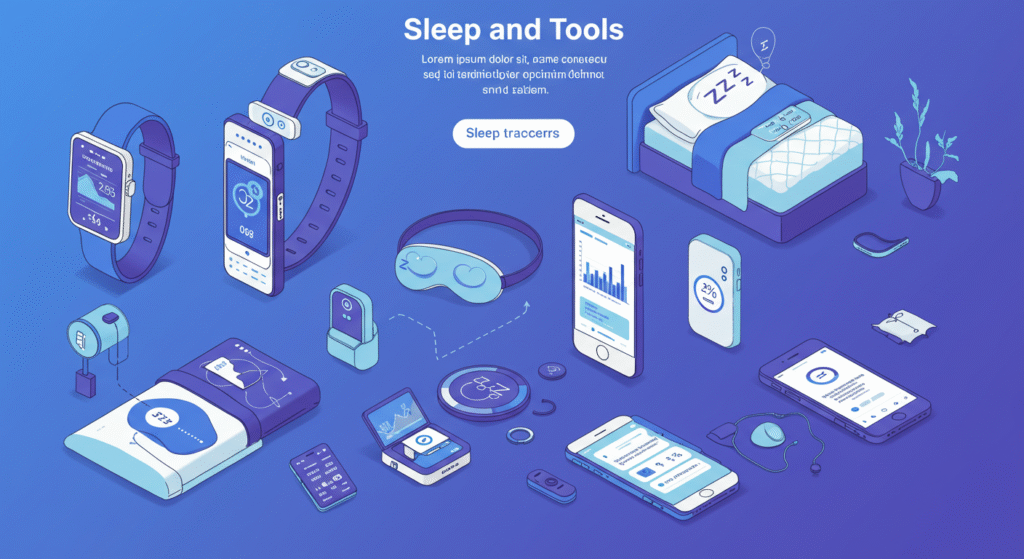
While screens before bedtime can disrupt sleep, specific apps and devices can support your relaxation efforts when used appropriately.
Sleep Apps
Apps like Calm, Headspace, or Insight Timer offer guided meditations, sleep stories, and breathing exercises specifically designed for bedtime use. Choose apps with offline capabilities to avoid the temptation of checking other notifications.
Wearable Sleep Trackers
Devices that monitor sleep patterns can provide valuable insights into what helps or hinders your rest. Look for trackers that monitor heart rate variability, which indicates how effectively you’re recovering from daily stress.
Smart Home Integration
Programmable thermostats, gradual lighting systems, and automated sound machines can create optimal sleep environments without requiring manual adjustments each night.
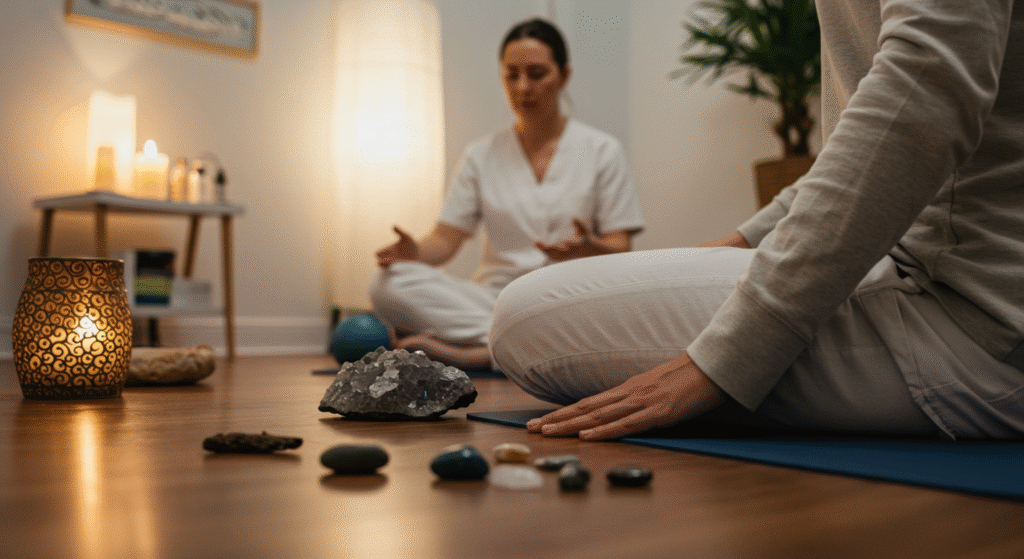
Sleep and Relaxation Techniques Comparison Table
| Technique | Time Required | Best For | Difficulty Level | Effectiveness for Anxiety | Physical vs Mental Focus |
|---|---|---|---|---|---|
| 4-7-8 Breathing | 2-3 minutes | Quick anxiety relief | Beginner | High | Mental |
| Progressive Muscle Relaxation | 15-20 minutes | Physical tension | Beginner | Medium | Physical |
| Body Scan Meditation | 10-15 minutes | Racing thoughts | Intermediate | High | Both |
| Visualization | 5-10 minutes | Overactive imagination | Intermediate | Medium | Mental |
| Box Breathing | 3-5 minutes | General stress | Beginner | High | Mental |
| Gratitude Practice | 5 minutes | Negative thinking patterns | Beginner | Medium | Mental |
| Worry Window | 15 minutes (earlier in day) | Persistent concerns | Advanced | High | Mental |
| 5-4-3-2-1 Grounding | 3-5 minutes | Acute anxiety | Beginner | Very High | Both |
| Alternate Nostril Breathing | 3-5 minutes | Nervous system balance | Intermediate | High | Mental |
| Mindful Movement | 10-15 minutes | Physical restlessness | Intermediate | Medium | Physical |

When to Seek Professional Help
While these techniques help most people improve their sleep quality, persistent insomnia may require professional intervention. Consider consulting a healthcare provider if you experience:
- Difficulty falling asleep most nights for more than 3 weeks
- Waking frequently and struggling to return to sleep
- Morning fatigue despite spending adequate time in bed
- Daytime impairment affecting work, relationships, or safety
Sleep specialists can identify underlying conditions like sleep apnea, restless leg syndrome, or hormonal imbalances that require medical treatment.
Cognitive Behavioral Therapy for Insomnia (CBT-I) has proven highly effective for people with chronic sleep difficulties, often providing lasting improvements without medication.
Frequently Asked Questions
What are 5 relaxation techniques?
Five highly effective relaxation techniques include: 1) Progressive muscle relaxation, which involves systematically tensing and releasing muscle groups; 2) Deep breathing exercises like the 4-7-8 method; 3) Mindfulness meditation focusing on present-moment awareness; 4) Guided imagery or visualization of peaceful scenes; and 5) Body scan meditation, where you mentally examine each part of your body for tension and release.
What helps with sleep and relaxation?
Several factors contribute to better sleep and relaxation: maintaining a consistent sleep schedule, creating a cool, dark, quiet sleep environment, practicing relaxation techniques regularly, limiting caffeine and screens before bedtime, engaging in regular physical activity (but not close to bedtime), and developing a calming bedtime routine. Stress management throughout the day also significantly impacts nighttime relaxation ability.
What is the best relaxation technique for sleep?
The “best” technique varies by individual, but research consistently shows that progressive muscle relaxation and controlled breathing exercises produce the most reliable results for sleep improvement. The 4-7-8 breathing technique is particularly effective because it’s quick to learn, can be done anywhere, and directly activates the parasympathetic nervous system. Many sleep specialists recommend starting with breathing techniques and then exploring other methods.
What are the skills of relaxation?
Key relaxation skills include: breath awareness and control, the ability to recognize physical tension in your body, mental focusing techniques to redirect attention from stressful thoughts, progressive muscle relaxation, mindfulness and present-moment awareness, visualization abilities, stress recognition and early intervention, and the capacity to create mental and physical boundaries between daytime concerns and bedtime rest.
How long does it take for relaxation techniques to work?
Most relaxation techniques provide some immediate benefit, with breathing exercises often creating noticeable calm within 2-3 minutes. However, building proficiency and experiencing consistent results typically requires 2-4 weeks of regular practice. The techniques become more effective over time as your nervous system learns to respond more quickly to relaxation cues.
Can relaxation techniques replace sleep medication?
While relaxation techniques are highly effective for many people, they shouldn’t replace prescribed sleep medications without medical supervision. However, studies show that combining relaxation techniques with medical treatment often allows for reduced medication dosages over time. Always consult your healthcare provider before making changes to sleep medications.
What’s the difference between relaxation and sleep hygiene?
Sleep hygiene refers to environmental and behavioral practices that promote good sleep (consistent bedtime, cool room, comfortable mattress), while relaxation techniques are specific mental and physical exercises that calm your nervous system. Both are important: sleep hygiene creates optimal conditions for rest, while relaxation techniques help your body and mind transition into sleep mode.
Why do some relaxation techniques work better than others?
Individual differences in stress responses, learning styles, and personal preferences affect which techniques work best. People with primarily physical stress symptoms often respond better to progressive muscle relaxation, while those with racing thoughts may prefer breathing exercises or meditation. It’s normal to try several techniques before finding your most effective approach.
Should I practice relaxation techniques during the day?
Yes, daytime practice significantly improves nighttime effectiveness. Practicing relaxation techniques when you’re not stressed builds familiarity and skill, making them more accessible during challenging moments. Even 5-10 minutes of daily practice can substantially improve your ability to relax at bedtime.
How do I know if my relaxation technique is working?
Signs that your relaxation technique is working include: feeling physically calmer or less tense, slower heart rate, deeper breathing, reduced anxiety or worried thoughts, falling asleep more quickly, and improved sleep quality. Keep a simple sleep journal noting which techniques you use and how you feel afterward to identify your most effective methods.
Conclusion
Quality sleep isn’t a luxury—it’s a fundamental requirement for physical health, emotional well-being, and mental clarity. The techniques outlined in this guide offer proven pathways to better rest, but remember that consistency matters more than perfection.
Start with one or two techniques that resonate with you rather than trying to implement everything at once. Most people find breathing exercises or progressive muscle relaxation easiest to begin with, as they provide relatively quick results and require no special equipment.
Track your progress over several weeks, noting which techniques help you fall asleep faster and which improve your overall sleep quality. Your sleep challenges may change over time, and your toolkit of relaxation skills should evolve accordingly.
The investment you make in developing these relaxation techniques for stress and sleep will pay dividends in every area of your life. Better sleep improves your immune system, emotional regulation, cognitive function, and physical recovery. When you sleep well, you’re better equipped to handle whatever challenges the next day brings.
Remember that building these skills takes time and patience. Be gentle with yourself as you develop new habits, and celebrate small improvements along the way. With consistent practice, these techniques will become second nature, transforming your nights from battles with insomnia into peaceful transitions toward restorative rest.