
Are unseen core beliefs and blocks quietly controlling your thoughts, emotions, and actions? These deep-rooted mental patterns shape how you perceive the world and limit your potential, often without your awareness. Understanding and transforming your core beliefs and hidden blocks can unlock a powerful personal transformation, freeing you to live a life aligned with your true purpose and highest aspirations. Dive deep with us into the transformative journey of uncovering these invisible forces and learn how to rewrite your inner narrative for lasting change.
Table of Contents
- What Are Core Beliefs and Why Do They Matter?
- How Hidden Blocks Impact Your Emotions and Actions
- The Origins of Core Beliefs: How They Form and Take Hold
- Identifying Your Own Core Beliefs and Mental Blocks
- The Connection Between Core Beliefs and Cognitive Distortions
- The Role of Schema Therapy and Cognitive Behavioral Therapy (CBT)
- Strategies to Challenge and Change Negative Core Beliefs
- Overcoming Hidden Mental Blocks: Techniques and Practices
- How Emotional Awareness Enhances Core Belief Transformation
- Maintaining Positive Change and Preventing Relapse

1. What Are Core Beliefs and Why Do They Matter?
Core beliefs are deeply held, fundamental assumptions about yourself, others, and the world.
They act as a lens shaping how you interpret life events, govern your feelings, decisions, and behaviors.
These beliefs often operate unconsciously and feel like absolute truths for example, “I’m unworthy,” “People cannot be trusted,” or “The world is dangerous.”
Since core beliefs influence your perceptions and reactions daily, they play a huge role in your emotional wellbeing and life satisfaction.
Why Core Beliefs Matter:
- Shape your worldview and self-perception.
- Influence your emotional reactions and stress levels.
- Guide decisions and behaviors, often automatically.
- Affect relationships, career choices, and personal growth.
- Impact mental health — unhelpful beliefs may fuel anxiety or depression.
Understanding and addressing your core beliefs is essential to break negative cycles and reframe your mental framework for a healthier, empowered life.

2. How Hidden Blocks Impact Your Emotions and Actions
Hidden blocks, or mental blocks, are unconscious barriers created by negative core beliefs.
They act like invisible walls preventing you from moving forward emotionally or psychologically.
These blocks often manifest as self-doubt, fear of failure, procrastination, or avoidance behaviors.
Because they are often automatic reactions, you may not even realize they exist until you’re stuck in patterns of resistance or frustration.
Effects of Hidden Blocks:
- Impede problem-solving and emotional processing.
- Cause repeated self-sabotage or fear of success.
- Limit your capacity to heal from trauma.
- Foster negative inner dialogue reinforcing blocking beliefs.
- Create feelings of helplessness or stagnation.
Recognizing these hidden blocks is a vital step toward dissolving them and reclaiming your emotional freedom.
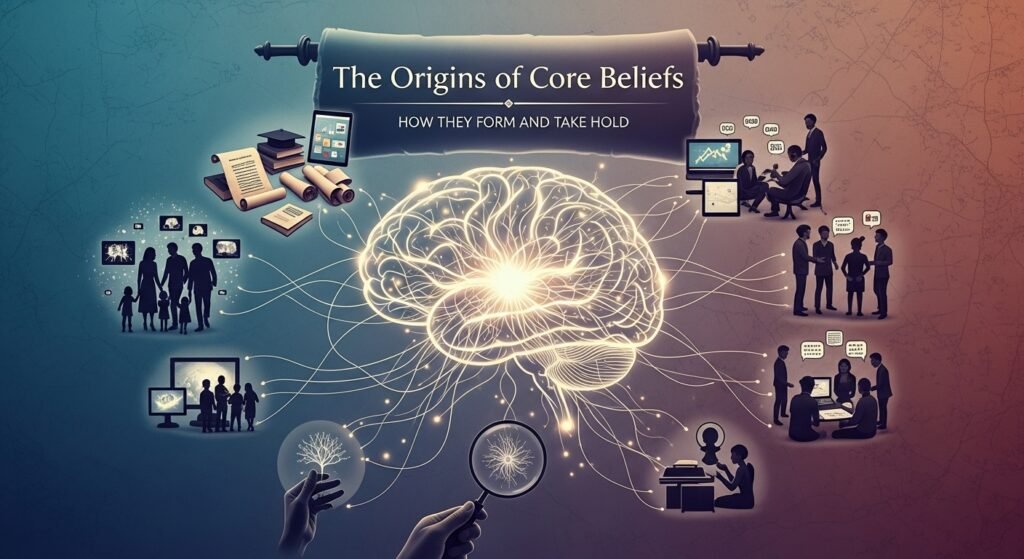
3. The Origins of Core Beliefs: How They Form and Take Hold
Core beliefs typically form early in life, shaped by interactions with caregivers, family environment, cultural messages, and significant experiences.
For example, repeated criticism or neglect may foster beliefs like “I’m unlovable” or “I’m not good enough.”
Even subtle or consistent messages — positive or negative — reinforce these beliefs over time, embedding them deeply within the subconscious.
How Core Beliefs Develop:
- Early childhood experiences and attachment patterns.
- Reinforced through repeated life events and interpretations.
- Cultural and societal norms influencing self-identity.
- Selective attention to confirming evidence (cognitive immunization).
- Often resistant to change because they regulate emotions and expectations.
Knowing how your core beliefs developed can provide insight into their validity and open the possibility for transformation.

4. Identifying Your Own Core Beliefs and Mental Blocks
Self-exploration techniques help uncover your core beliefs and mental blocks.
This process requires curiosity and honesty as many beliefs operate unconsciously.
Tools include journaling, therapy, mindfulness, and specific techniques like the “Downward Arrow” where you ask yourself “What does that mean about me?” repeatedly to dig deeper.
Steps to Identify Core Beliefs:
- Notice recurring automatic thoughts or feelings.
- Reflect on your emotional triggers and patterns.
- Use guided questioning to explore deeper beliefs.
- Observe behaviors that may signal avoidance or fear.
- Seek feedback from trusted others or therapists.
Once identified, these beliefs become the starting point for change.
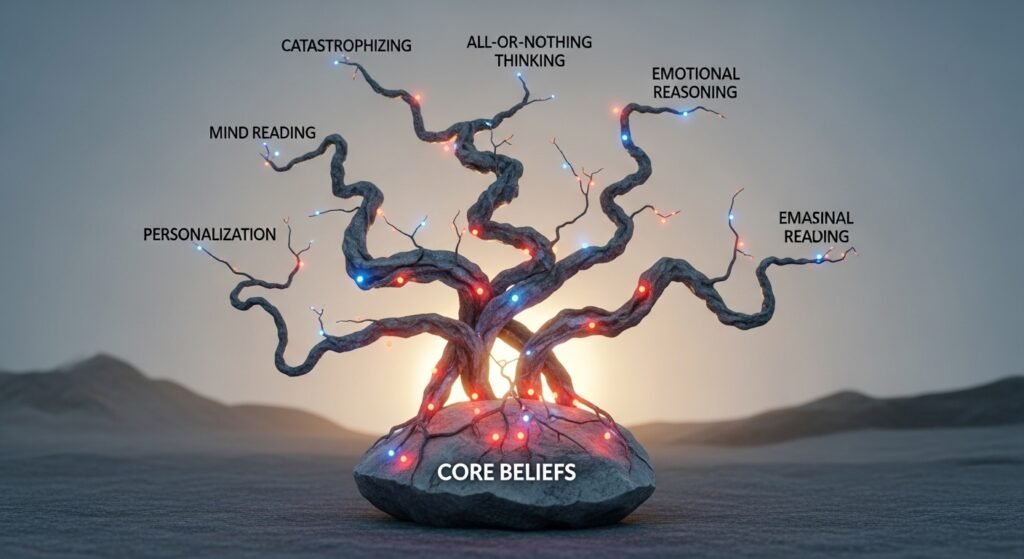
5. The Connection Between Core Beliefs and Cognitive Distortions
Core beliefs often underlie cognitive distortions, biased or irrational thought patterns such as all-or-nothing thinking, catastrophizing, or personalization.
For example, a belief “I’m worthless” can fuel the distortion “I failed this task, so I’m a total failure.”
Understanding this link helps in recognizing faulty thinking and reframing it more realistically.
Common Cognitive Distortions Influenced by Core Beliefs:
- All-or-nothing thinking
- Overgeneralization
- Mental filter (focusing on negatives)
- Jumping to conclusions
- Emotional reasoning
Challenging these distortions is a practical way to weaken harmful core beliefs.
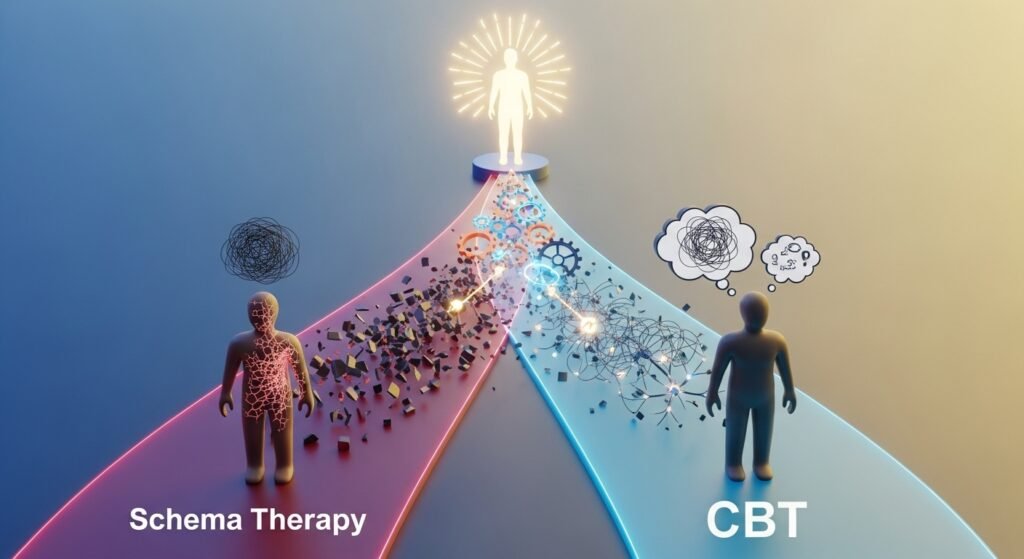
6. The Role of Schema Therapy and Cognitive Behavioral Therapy (CBT)
Schema Therapy and CBT are evidence-based approaches addressing core beliefs and mental blocks.
CBT focuses on identifying and reshaping negative thoughts and behaviors, while Schema Therapy targets deeply entrenched maladaptive schemas or life patterns.
Both emphasize awareness, cognitive restructuring, behavior experiments, and emotional work to create new, healthier beliefs.
Therapy Approaches Involve:
- Identifying core beliefs and schemas.
- Cognitive restructuring techniques.
- Behavioral experiments to test beliefs.
- Emotional processing and healing.
- Developing new adaptive life patterns.
Working with a trained therapist can accelerate overcoming core beliefs and blocks.

7. Strategies to Challenge and Change Negative Core Beliefs
Challenging and changing negative core beliefs is a vital process for transforming your mindset and achieving a healthier, more empowering outlook.
Start by becoming aware of your negative beliefs through journaling or mindfulness to identify recurring patterns that influence your thoughts and behaviors.
Next, question the evidence supporting these beliefs by examining facts and considering alternative perspectives; ask yourself if the belief is entirely true or if there’s evidence to the contrary.
Employ cognitive restructuring techniques by consciously replacing negative beliefs with balanced, positive ones, such as shifting “I am not good enough” to “I am capable and deserving of success.”
Incorporate behavioral experiments to test and reinforce these new beliefs in real-world situations, gradually rewiring your thought patterns.
Practice self-compassion throughout, recognizing that change takes time and setbacks are part of the journey.
Regularly revisit and reinforce your new beliefs daily to solidify lasting transformation.
Consistent effort, patience, and support, whether through therapy, coaching, or self-help strategies, are key to successfully challenging and changing negative core beliefs.
Transforming core beliefs involves sustained effort and practical strategies.
These include:
- Cognitive Restructuring: Actively disputing unrealistic beliefs.
- Mindfulness: Observing thoughts nonjudgmentally to reduce fusion.
- Behavioral Experiments: Testing beliefs in real situations.
- Affirmations: Replacing negative self-talk with supportive statements.
- Self-Compassion Practices: Reducing self-criticism to soften beliefs.
Tips for Changing Core Beliefs:
- Be patient: change is gradual.
- Track progress to reinforce success.
- Seek social support.
- Use professional guidance if needed.
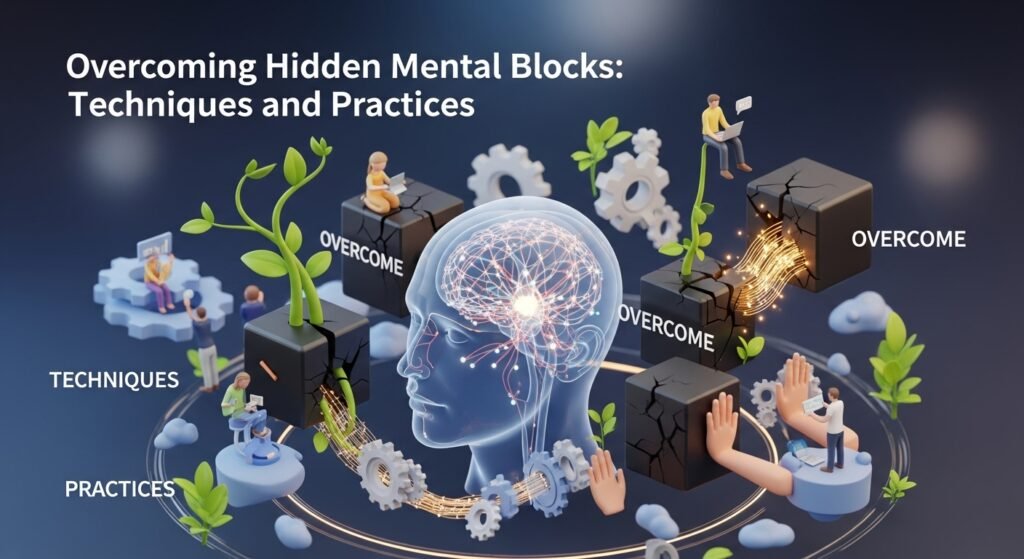
8. Overcoming Hidden Mental Blocks: Techniques and Practices
Overcoming hidden mental blocks requires intentional techniques that address both the mind and body. Start by acknowledging the block without judgment, which helps reduce its power over you.
Use the “2-minute rule” to lower resistance. Commit to working on a task for just two minutes to build momentum.
Movement such as walking or stretching can activate your mind and break stagnation.
Breaking tasks into smaller, manageable steps helps reduce overwhelm and increases motivation.
Changing your environment, like clearing clutter or switching locations can reset your mindset and create fresh energy.
Additionally, talking through your block with a friend or mentor provides new perspectives and emotional relief.
Mindfulness meditation fosters present-moment awareness to quiet distracting thoughts.
Affirmations and positive self-talk help reprogram negative mental patterns.
Finally, improving your skills related to the blocked task can boost confidence and diminish fear of failure.
Rest and sufficient sleep also play critical roles in clearing mental fatigue and enhancing focus.
Consistent application of these practices weakens mental blocks and frees your creativity and productivity.
Mental blocks can be cleared through specific interventions like:
- Journaling: Externalizing blocks and insights.
- EMDR Therapy: Processing trauma-related beliefs.
- Visualization: Imagining overcoming fears.
- Meditation and Relaxation: Calming mind to increase access to insights.
- Exposure Therapy: Gradual facing of avoided situations.
Key Practices:
- Regular practice builds new neural pathways.
- Combining techniques offers synergistic effects.
- Awareness is the first cure.
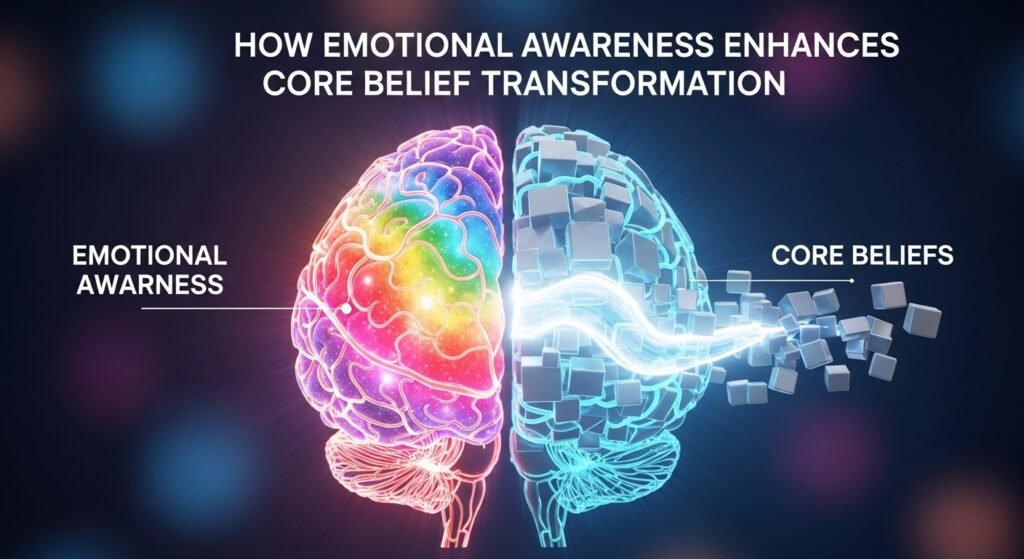
9. How Emotional Awareness Enhances Core Belief Transformation
Emotional awareness plays a crucial role in transforming core beliefs by helping you recognize when those beliefs are activated during emotional experiences.
When you are aware of your feelings, such as shame, fear, or anger, you gain insight into the internal stories your mind is telling itself.
This awareness creates a “pause” between feeling and reaction, enabling more thoughtful and conscious choices rather than automatic responses.
By observing emotions mindfully through journaling, deep breathing, or meditation, you reduce the emotional charge tied to negative beliefs, making them less rigid and easier to challenge.
Emotional awareness allows you to question whether these beliefs are still valid or simply familiar narratives learned long ago.
It also helps in processing buried feelings safely, which otherwise reinforce limiting beliefs.
As emotional resistance diminishes, your mind becomes more receptive to adopting new, empowering perspectives.
In this way, combining emotional awareness with cognitive techniques fosters deeper, lasting transformation of core beliefs.
Practicing regular emotion check-ins builds resilience and self-regulation, essential for ongoing personal growth.
Ultimately, emotional awareness is foundational in shifting ingrained mental patterns and unlocking greater freedom and well-being.
Benefits of Emotional Awareness:
- Increased self-regulation.
- Improved decision making.
- Greater empathy for self and others.
- Enhanced resilience.
- Accelerated belief change.
Develop emotional skills through mindfulness and therapy.

10. Maintaining Positive Change and Preventing Relapse
Maintaining positive change requires ongoing commitment and the development of supportive habits that reinforce new behaviors.
It’s important to continuously connect with your underlying motivations and celebrate small successes to stay engaged.
Building a strong support network and creating an environment that encourages your new habits reduces the chance of slipping back.
Regular self-reflection helps you catch early signs of relapse and adjust strategies as needed.
Lastly, embracing setbacks as learning experiences rather than failures strengthens resilience and keeps you focused on long-term growth.
Sustaining change requires ongoing practice and vigilance.
Relapse into old beliefs or blocks is common but manageable with strategies like:
- Continued self-reflection and journaling.
- Regular mindfulness or meditation.
- Maintaining supportive relationships.
- Setting realistic expectations.
- Seeking therapy booster sessions as needed.
Tips to Maintain Gains:
- Celebrate progress.
- Use setbacks as learning opportunities.
- Remind yourself of new empowered beliefs.
- Stay curious and compassionate.
10 FAQs on Core Beliefs and Hidden Blocks
1. What exactly are core beliefs?
Core beliefs are foundational assumptions about yourself, others, and the world formed mostly in early life and shape your perceptions and behaviors.
2. How can I identify my core beliefs?
Notice recurring inner dialogue, emotional triggers, and use reflective techniques like journaling or the Downward Arrow method.
3. Are all core beliefs negative?
No, core beliefs can be positive, neutral, or negative. Negative or unhelpful beliefs cause distress and block growth.
4. Why is it so hard to change core beliefs?
Because they are deeply ingrained and reinforced over time, acting like cognitive filters that ignore contradictory evidence.
5. What are hidden mental blocks?
They are unconscious barriers formed by negative core beliefs that limit emotional processing and personal progress.
6. Can therapy help change core beliefs?
Yes, therapies like CBT and Schema Therapy specifically target and help transform these beliefs and blocks.
7. What role does mindfulness play?
Mindfulness increases awareness of thoughts and emotions, helping you detach from limiting beliefs.
8. How long does it take to change core beliefs?
It varies but generally requires consistent practice over weeks to months for meaningful change.
9. Can affirmations alone change deep core beliefs?
Affirmations help but work best combined with cognitive and behavioral strategies.
10. What should I do if I feel stuck?
Seek professional guidance, join support groups, and continue self-exploration with patience and self-compassion.
By exploring and transforming your core beliefs and hidden blocks, you step into a life of greater freedom, authenticity, and fulfillment. This journey requires courage and commitment but holds the power to fundamentally transform how you experience yourself and the world.