
Are you looking to boost your wellbeing, reduce stress, and live a more balanced life? Developing daily rituals and routines is the cornerstone of lasting wellness and vibrant health.
This comprehensive guide will teach you how to create effective, personalized wellness routines that support your body, mind, and spirit every day.
From morning rituals to mindful habits, you’ll learn practical strategies to cultivate positive change and sustain it long-term.
Table of Contents
- Understanding the Power of Developing Daily Rituals and Routines for Wellness
- Morning Rituals to Kick-Start Your Day with Energy
- Designing an Evening Routine for Restorative Sleep and Relaxation
- Incorporating Mindfulness and Meditation Into Your Daily Habits
- Nutrition and Hydration Rituals for Sustained Wellness
- Movement and Exercise as a Core Routine for Physical Health
- Creating Boundaries: Digital Detox and Screen-Time Management
- Self-Care Practices to Nourish Mental and Emotional Wellbeing
- Tracking Progress and Adjusting Your Wellness Routine
- Staying Consistent: Overcoming Challenges in Daily Rituals

1. Understanding the Power of Developing Daily Rituals and Routines for Wellness
Developing daily rituals and routines is essential to building a strong foundation for physical, mental, and emotional health.
These repetitive actions become habits that support consistency and balance, helping you manage stress and increase productivity.
Routines provide structure, reduce decision fatigue, and allow intentional living aligned with your wellness goals.
Starting small and gradually building habits tailored to your lifestyle makes it easier to stick with them long-term.
Integrating rituals like hydration, movement, or mindfulness transforms ordinary moments into opportunities for self-care and growth.
Research shows that healthy routines improve sleep, mood, and overall quality of life.
By prioritizing wellness habits daily, you create resilience against setbacks and develop a more mindful connection with your body and mind.
Key benefits:
- Builds consistent, healthy habits
- Enhances mental focus and reduces overwhelm
- Supports emotional and physical wellbeing
- Creates time and space for self-care
- Leads to sustainable, long-term health improvements

2. Morning Rituals to Kick-Start Your Day with Energy
Starting your day with purposeful rituals can set a positive tone, increase energy, and improve focus throughout the day.
Simple habits like drinking water first thing boost hydration and jumpstart metabolism.
Gentle stretches awaken your body and improve circulation.
Incorporating mindful practices like deep breathing or meditation calms the nervous system and centers your mind.
A balanced breakfast with proteins, healthy fats, and complex carbs fuels sustained energy.
Avoiding screens in the first moments allows you to focus inward and reduces stress.
Ideally, waking up at a consistent time stabilizes your circadian rhythm.
These rituals help you transition smoothly from rest to activity, boosting productivity and mood.
Morning ritual tips:
- Hydrate immediately after waking
- Do light stretching or yoga
- Spend 5 minutes in mindful meditation
- Eat a nutrient-rich breakfast
- Set your intention or goals for the day

3. Designing an Evening Routine for Restorative Sleep and Relaxation
A well-crafted evening routine signals your body and mind to wind down, preparing for restorative sleep essential to wellness.
Consistency in bedtime supports healthy circadian rhythms.
Calming activities like reading, journaling, or gentle stretches release daily tension and reduce stress hormones.
Limiting screen time before bed prevents blue light from disrupting melatonin production.
Herbal teas or warm baths can soothe both mind and muscles. Reflecting briefly on gratitudes cultivates positive emotions and peacefulness.
Creating a cozy, dark, and quiet sleep environment enhances comfort and sleep quality.
Prioritizing relaxation in the evening rejuvenates your body, improving immune function and cognitive clarity for the next day.
Evening routine ideas:
- Turn off screens 1 hour before sleep
- Engage in calming self-care rituals
- Practice deep breathing or meditation
- Write a gratitude or reflection journal
- Create a comfortable sleeping space
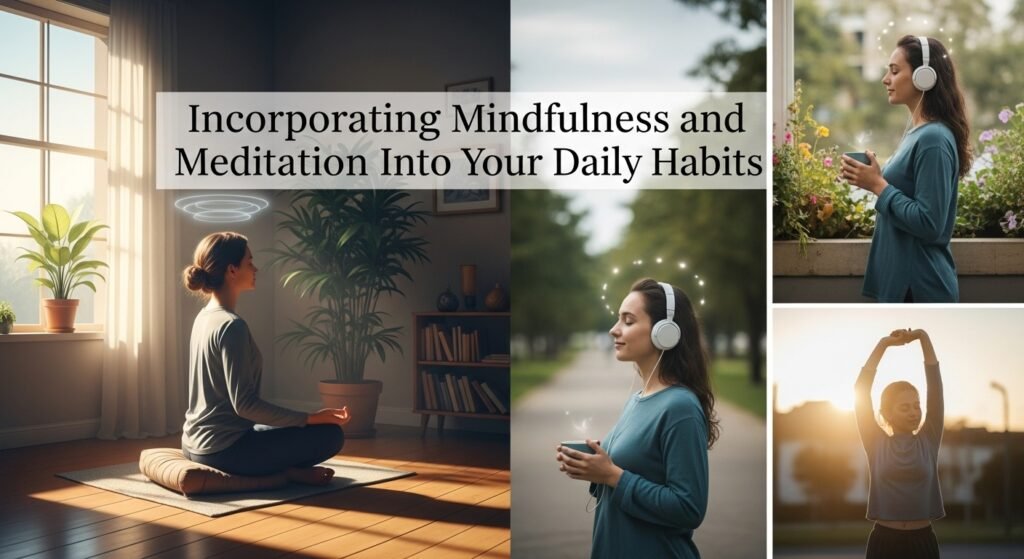
4. Incorporating Mindfulness and Meditation Into Your Daily Habits
Mindfulness and meditation cultivate awareness of the present moment, reduce stress, and improve emotional regulation, forming essential pillars of wellness routines.
Integrating even a few minutes daily helps break automatic, reactive patterns and fosters calm.
Practice mindful breathing during transitions or moments of stress to ground yourself.
Guided meditations or silent sitting sessions develop concentration and clarity.
Mindful activities such as eating, walking, or stretch breaks deepen your connection with sensations and reduce anxiety.
Over time, mindfulness enhances resilience and positive thinking.
Starting small and gradually extending practice times makes meditation accessible and sustainable.
Effective mindfulness practices:
- Focused breath awareness
- Body scan meditation
- Mindful eating and movement
- Journaling about present experiences
- Using apps or recorded guides for support

5. Nutrition and Hydration Rituals for Sustained Wellness
Nutrition and hydration form the foundation of physical and cognitive health within your daily rituals.
Drinking water promptly upon waking and throughout the day maintains essential bodily functions and energy.
Eating balanced meals rich in whole foods, vegetables, lean proteins, and healthy fats fuels sustained vitality and mood stability.
Mindful eating practices encourage awareness of hunger and satiety cues, improving digestion and relationship with food.
Planning meals ahead reduces reliance on processed or fast foods and supports nutritional goals.
Limiting caffeine and sugar intake prevents energy crashes and sleep disturbances.
Adopting small, consistent food and hydration rituals has a cumulative positive impact on long-term wellness.
Nutrition and hydration tips:
- Start your day with a glass of water
- Incorporate a variety of whole foods
- Practice mindful, slow eating
- Plan meals or snacks to avoid unhealthy choices
- Limit stimulants later in the day

6. Movement and Exercise as a Core Routine for Physical Health
Regular physical activity is a cornerstone of wellness, contributing to cardiovascular health, muscle strength, flexibility, and mental wellbeing.
Integrating daily movement, even in short bursts, increases energy, improves mood, and supports longevity.
Whether stretching in the morning, walking during breaks, or structured workouts, consistency matters more than intensity.
Movement helps regulate stress hormones, enhances sleep quality, and sharpens cognitive function.
Choosing activities you enjoy boosts motivation and sustainability.
Alternating between aerobic, strength, and flexibility exercises creates a well-rounded routine.
Movement rituals can also foster social connections when done with others, adding emotional benefits.
Movement routine ideas:
- Morning stretching or yoga
- Short walks or active breaks during work
- Fitness classes or home workouts
- Strength training 2-3 times a week
- Incorporate movement into daily tasks

7. Creating Boundaries: Digital Detox and Screen-Time Management
In our digital age, managing screen time is essential for mental clarity and reducing fatigue.
Developing rituals for digital detoxes helps improve focus, reduces stress, and enhances sleep quality.
Setting boundaries like no devices during meals or an hour before bedtime limits blue light exposure and encourages connection with the present moment.
Scheduled breaks from emails and social media prevent overwhelm and interruptions.
Using tools like app timers or focus modes support discipline and awareness of usage patterns.
Digital boundaries create space for mindful activities, relaxation, and face-to-face interactions that nourish wellbeing.
Digital detox tips:
- Implement tech-free times during the day
- Avoid screens 1 hour before sleep
- Use apps to monitor and limit usage
- Engage in offline hobbies regularly
- Communicate boundaries with family or coworkers

8. Self-Care Practices to Nourish Mental and Emotional Wellbeing
Self-care rituals activities done deliberately to nurture your mental, emotional, and spiritual health are vital components of wellness routines.
This includes practices like journaling, practicing gratitude, taking mindful pauses, connecting with nature, or engaging in creative outlets.
Regular self-care reduces stress, builds resilience, improves mood, and fosters a sense of self-worth.
Developing a personalized set of self-care rituals tailored to your needs and preferences increases adherence.
Prioritizing these acts daily helps balance external demands and supports emotional regulation.
Celebrating small joys and treating yourself kindly are also important aspects of self-care.
Examples of self-care rituals:
- Daily gratitude journaling
- Spending time outdoors
- Practicing breathing exercises
- Creative activities like art or music
- Setting aside quiet reflection time

9. Tracking Progress and Adjusting Your Wellness Routine
Tracking your routines helps maintain motivation, provides feedback on what works, and identifies areas needing adjustment.
Journaling, habit trackers, or apps can record your daily rituals, offering visual evidence of consistency and progress.
Regularly reflecting on your wellness habits allows you to celebrate successes and make mindful changes to better fit your evolving needs.
Flexibility and self-compassion are key routines should serve you, not cause stress.
Adjusting frequency, intensity, or types of practices keeps your wellness journey engaging and sustainable.
Accountability through friends, communities, or mentors can also boost adherence.
Tracking tips:
- Use simple habit-tracking methods
- Reflect weekly on achievements and challenges
- Adjust routines based on feedback
- Celebrate milestones, no matter how small
- Seek supportive peers for motivation
10. Staying Consistent: Overcoming Challenges in Daily Rituals
Consistency is the cornerstone of lasting wellness, but challenges like busy schedules, motivation dips, or unexpected stressors often arise.
Building habits gradually, starting with small, manageable changes increases the chance of success.
Planning for obstacles by creating backup plans or simplifying rituals minimizes disruption.
Practicing self-kindness during setbacks reduces feelings of failure and supports renewed commitment. Incorporating enjoyable elements increases intrinsic motivation.
Setting realistic goals aligned with your lifestyle prevents burnout.
Remember that progress is often non-linear, and flexibility within structure is healthy.
Regularly revisiting your “why” the deep purpose behind your routine reignites dedication during difficult times.
Tips to enhance consistency:
- Start small and build gradually
- Plan for challenges in advance
- Keep rituals enjoyable and meaningful
- Practice self-compassion during lapses
- Connect daily actions with your core motivations
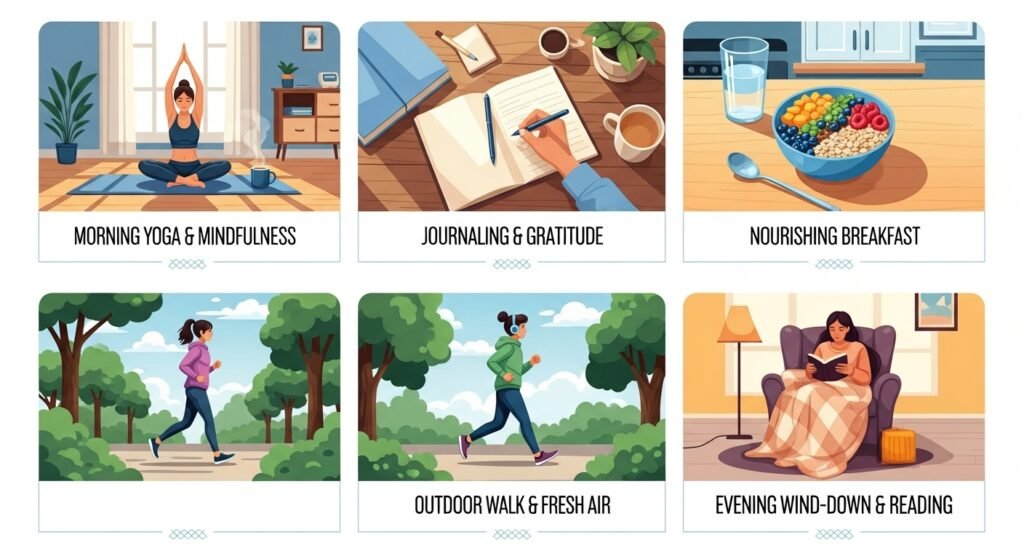
Table: Sample Daily Wellness Rituals and Routines
| Time of Day | Rituals and Routines | Benefits |
|---|---|---|
| Morning | Hydrate, stretch, meditate, healthy breakfast | Boosts energy, focus, balance |
| Midday | Mindful lunch, short walk, deep breaths | Reduces stress, boosts digestion |
| Afternoon | Movement break, hydration check, light snack | Improves circulation, endurance |
| Evening | Digital detox, light stretching, gratitude journaling | Enhances relaxation, preps for sleep |
| Night | Reading, calming bath, consistent bedtime | Supports restorative, quality sleep |
This structured routine balances physical, mental, and emotional wellness to nurture your whole self.
10 FAQs on Developing Daily Rituals and Routines for Wellness
1. Why are daily routines important for wellness?
Daily routines provide structure that supports consistency, reduces stress, and encourages healthy habits for a balanced life.
2. How do I start developing my own wellness routine?
Begin with small, manageable habits that fit your lifestyle and gradually build upon them for sustainable change.
3. Can wellness rituals be personalized?
Absolutely; rituals should align with your preferences, goals, and unique needs to be effective and enjoyable.
4. How long does it take to form a new habit?
It varies, but consistent practice over 21 to 66 days typically helps solidify new habits.
5. What if I miss a day or break my routine?
Be kind to yourself; setbacks are normal. Reflect, adjust, and recommit without judgment.
6. Which wellness practices are most effective?
Practices addressing physical, mental, and emotional health combined—like hydration, movement, mindfulness, and self-care—offer comprehensive benefits.
7. How can I stay motivated?
Track progress, celebrate small wins, vary routines, and connect with supportive communities for encouragement.
8. Is it necessary to wake up early to have a wellness routine?
Not necessarily; routines should fit your biological rhythms and daily schedule for best results.
9. How do I know if a routine is working?
Notice improvements in mood, energy, stress levels, and overall wellbeing as positive indicators.
10. Can technology help with wellness routines?
Yes, tracking apps, reminders, and guided meditation tools can support consistency and engagement.
Conclusion
Developing daily rituals and routines is a powerful and transformative practice that underpins lasting wellness across body, mind, and spirit.
By intentionally creating consistent habits whether it’s morning hydration, mindful meditation, nourishing meals, regular movement, or digital boundaries you create a structured yet flexible framework that supports holistic health and resilience.
These rituals reduce stress, boost energy, enhance emotional balance, and foster a deeper connection with yourself, leading to greater clarity and fulfillment.
The key to sustainable change lies in starting small, tailoring routines to your unique lifestyle, and embracing flexibility with self-compassion during challenges.
Over time, these daily wellness rituals become anchors of stability and growth, empowering you to navigate life’s ups and downs with grace and vitality.
Commit to nurturing your wellbeing a little each day, and watch your life transform through the cumulative power of consistent, mindful choices.
This ultimate guide aims to inspire and equip you to build dynamic, personalized wellness routines that enhance every aspect of your life, creating a foundation for vibrant, balanced living.