
Digital and Community Safety are critical concerns in today’s evolving wellness industry, where both online platforms and in-person group interactions play significant roles.
Without clear, thoughtfully implemented boundaries, wellness practitioners, clients, and communities risk breaches of privacy, emotional harm, and erosion of trust.
Imagine having ten essential boundaries established that protect your personal information, create respectful community spaces, and foster trust and authenticity for everyone involved.
This blog reveals 10 essential boundaries that safeguard digital and community wellness environments, helping practitioners and clients confidently navigate sensitive communications and group dynamics.
Whether you manage online forums, virtual sessions, or physical community groups, these best practices ensure respectful, secure, and supportive wellness work.
Harness these boundaries to build lasting safety, inclusivity, and integrity into your projects and relationships.
- Digital and community safety protect emotional and informational wellbeing.
- Clear boundaries build trust and prevent harm.
- Wellness work involves sensitive personal sharing.
- Online and in-person settings carry unique risks.
- Boundaries create respectful space for healing.
- Transparency and communication are foundational.
- Inclusivity enhances community cohesion.
- Safety supports honest expression and connection.
Table of Content
- 1. Understanding Digital and Community Safety in Wellness Work
- 2. Boundary 1: Protect Client Privacy and Data Security
- 3. Boundary 2: Set Clear Communication Guidelines
- 4. Boundary 3: Maintain Confidentiality in Group Settings
- 5. Boundary 4: Define Respectful Conduct and Conflict Resolution Policies
- 6. Boundary 5: Use Secure Platforms and Tools for Digital Wellness
- 7. Boundary 6: Establish Boundaries Around Social Media Interactions
- 8. Boundary 7: Clarify Professional Roles and Limits
- 9. Boundary 8: Encourage Consent and Autonomy
- 10. Boundary 9: Monitor Group Dynamics and Address Harm Promptly
- 11. Boundary 10: Provide Access to Support and Resources
- Summary Table of Essential Boundaries for Digital and Community Safety
- Inspirational Quotes on Safety and Respect in Wellness
- Frequently Asked Questions (FAQs)
- Conclusion

1. Understanding Digital and Community Safety in Wellness Work
Digital and community safety in wellness work protect participants’ emotional, psychological, and informational wellbeing in both virtual and in-person environments.
As wellness increasingly incorporates technology and group facilitation, risks such as data breaches, misinformation, boundary violations, and interpersonal conflicts rise.
Establishing essential boundaries addresses these risks by setting clear expectations, securing sensitive information, fostering respectful communication, and supporting ethical group management.
These practices build trust and psychological safety, encouraging vulnerable sharing and genuine connection.
Safety frameworks also empower participants with autonomy and clarity, reducing confusion and harm.
Prioritizing these boundaries is essential for sustaining thriving, impactful wellness communities and digital programs with reputations for respect and care.
- Protects emotional, mental, and informational safety in all settings.
- Responds to rising risks with technology use in wellness.
- Builds frameworks for trust and psychological safety.
- Supports autonomy and clear participant expectations.
- Prevents exploitation and boundary crossings.
- Encourages meaningful community engagement.
- Addresses challenges in virtual and physical spaces.
- Vital for long-term wellness program success.

2. Boundary 1: Protect Client Privacy and Data Security
Client privacy must be guarded vigilantly through safe data collection, storage, and sharing practices compliant with relevant privacy laws (HIPAA, GDPR, etc.).
Use encrypted communication methods and secure digital platforms.
Educate all involved parties on confidentiality and data protection protocols.
Clearly inform clients about what data is collected, how it is used, and their rights to opt out or delete their information.
Limit access to personal data strictly to authorized personnel.
Taking proactive security measures builds client trust and prevents legal risks associated with data breaches or misuse.
- Comply with relevant privacy laws in all jurisdictions.
- Use encrypted platforms for communication and record-keeping.
- Educate clients and staff on privacy rights and protocols.
- Obtain clear consent for data collection and use.
- Limit personal data access to essential personnel only.
- Offer opt-out or data deletion options to clients.
- Establish incident response plans for breaches.
- Regularly update security measures and training.

3. Boundary 2: Set Clear Communication Guidelines
Establishing transparent communication policies clarifies acceptable channels, response times, and professional tone.
Define rules around direct messaging, group chats, and email interaction.
Encourage respectful, constructive dialogue and discourage any form of harassment or discrimination.
Clear guidelines help prevent misunderstandings and set expectations that foster safe and supportive interactions online and offline.
Regularly review and update communication norms to adapt to community needs.
- Specify approved communication methods and platforms.
- Set clear expectations for response times and availability.
- Promote respectful and positive language in all interactions.
- Prohibit harassment, bullying, and discriminatory behaviors.
- Provide channels for reporting violations safely.
- Reinforce norms through regular reminders and enforcement.
- Adapt communication guidelines based on feedback.
- Foster transparency and mutual respect.
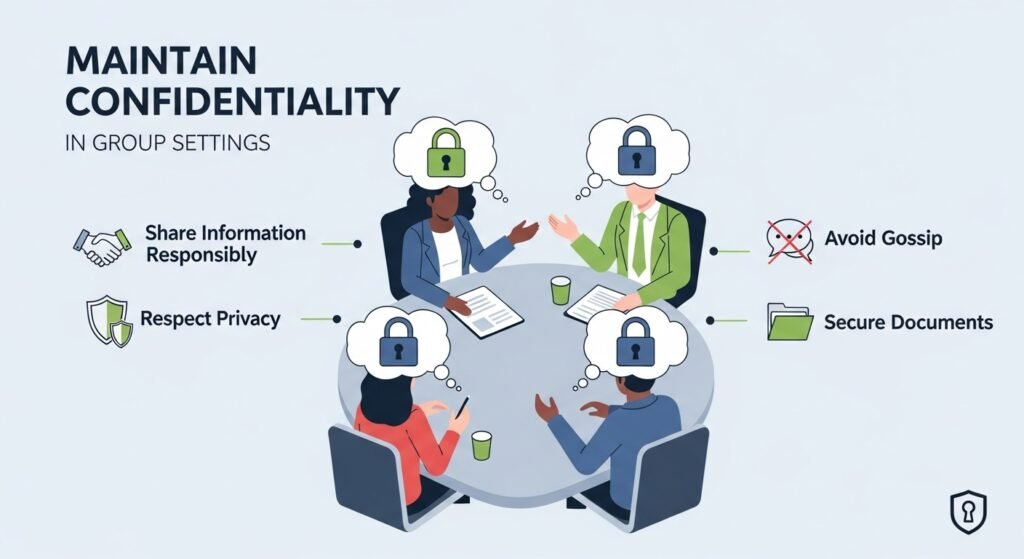
4. Boundary 3: Maintain Confidentiality in Group Settings
In group wellness sessions, confidentiality boundaries protect all participants’ privacy.
Clarify that sharing group discussions outside is prohibited unless explicit consent is given.
Emphasize respect for personal experiences being shared and model confidentiality in your behavior.
This creates a psychologically safe space where members feel comfortable expressing vulnerabilities without fear of exposure or judgment, essential for authentic healing and connection.
- Clearly explain confidentiality expectations at the outset.
- Encourage respect for privacy among participants.
- Prohibit unauthorized recording or sharing of sessions.
- Model confidentiality in facilitator behavior.
- Provide consequences for breaches transparently.
- Reinforce that trust is foundational to group safety.
- Offer private channels for sensitive disclosures.
- Support emotional safety and vulnerability.

5. Boundary 4: Define Respectful Conduct and Conflict Resolution Policies
Articulate codes of conduct outlining respectful behaviors and zero tolerance for bullying, aggression, or discrimination.
Provide clear protocols for addressing conflicts or breaches, including step-by-step resolution processes.
Encourage open dialogue, active listening, and empathetic responses.
Well-defined policies enable timely and fair intervention to maintain the community’s healthy atmosphere and prevent escalation of issues.
- Develop comprehensive conduct guidelines tailored to the community.
- Communicate codes clearly to all participants.
- Train moderators or facilitators to enforce conduct standards.
- Encourage constructive conflict resolution strategies.
- Provide safe reporting options for violations.
- Use mediation or restorative practices where appropriate.
- Review policies regularly to remain relevant.
- Foster an inclusive and supportive culture.

6. Boundary 5: Use Secure Platforms and Tools for Digital Wellness
Select technology platforms that meet high-security standards, including end-to-end encryption and privacy controls.
Avoid using unsecured or public networks for confidential sessions.
Train practitioners and participants on platform safety features and cyber hygiene.
Implement multi-factor authentication and regular software updates.
Using secure tools safeguards sensitive information and access, building confidence in digital wellness offerings.
- Evaluate platforms for encryption and data protection.
- Avoid unsecured Wi-Fi for sensitive interactions.
- Provide training on cybersecurity practices.
- Implement strong authentication methods.
- Keep software and apps updated regularly.
- Restrict access based on roles and needs.
- Conduct periodic digital safety audits.
- Educate clients on their own cybersecurity responsibilities.

7. Boundary 6: Establish Boundaries Around Social Media Interactions
Maintain professional boundaries by distinguishing personal from community accounts. Set policies limiting direct social media interacting to prevent over-familiarity or boundary blurring. Advocate for privacy settings, and discourage sharing private community details on social media. Such boundaries help preserve trust, professionalism, and safety across digital and real-world contexts.
- Use separate profiles for professional and personal social media.
- Limit accepting connection requests from clients on personal accounts.
- Encourage discretion about community participation sharing.
- Maintain confidentiality in all posts and comments.
- Provide guidelines on appropriate social media conduct.
- Discourage private messaging outside approved channels.
- Educate about digital footprint implications.
- Support professional reputation and client trust.
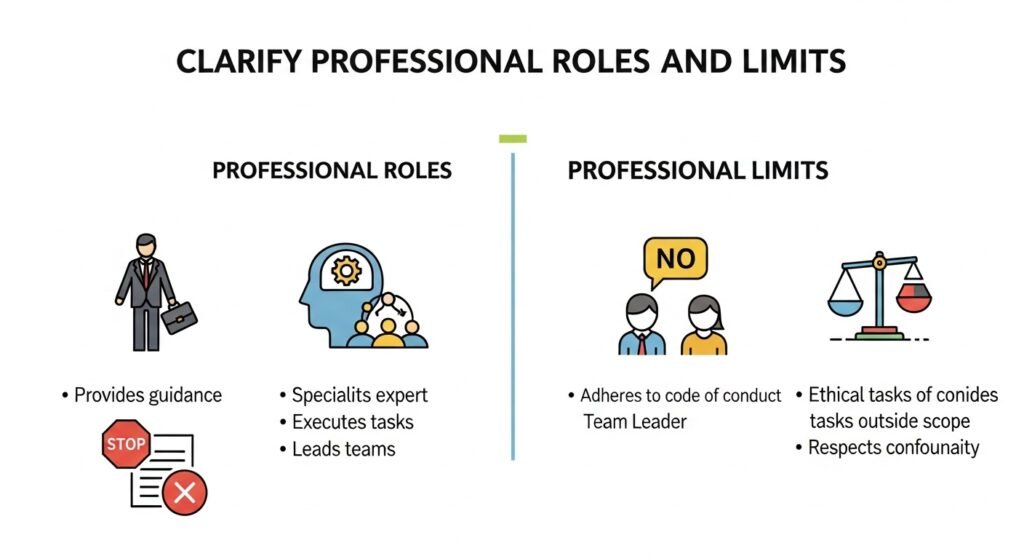
8. Boundary 7: Clarify Professional Roles and Limits
Define and communicate practitioners’ roles, scope of practice, and limits transparently to prevent confusion or misuse of authority.
Clarify expectations about availability, confidentiality, and session boundaries.
Encourage questions and discussions regarding boundaries to reinforce clarity and client empowerment.
Clear professional boundaries protect against ethical breaches and enhance therapeutic effectiveness.
- Specify qualifications and areas of expertise.
- Outline session types and permitted interventions.
- Clarify availability and communication protocols.
- Educate clients on roles and responsibilities.
- Avoid dual roles that conflict with professionalism.
- Use written agreements outlining boundaries.
- Revisit and adjust boundaries as needed.
- Reinforce ethical standards regularly.

9. Boundary 8: Encourage Consent and Autonomy
Prioritize informed consent for all wellness interventions and data use.
Empower participants to express preferences or decline participation without pressure.
Use consent as an ongoing dialogue rather than a one-time event.
Respecting autonomy builds trust and ensures active participation in wellness processes, fostering ethical and safe community interactions.
- Obtain clear consent before starting any activity.
- Explain procedures, risks, and benefits transparently.
- Encourage questions and provide informed answers.
- Reinforce that consent can be revoked anytime.
- Respect clients’ choices and comfort levels.
- Document consents appropriately.
- Promote client empowerment and ownership.
- Foster safe and respectful interactions.

10. Boundary 9: Monitor Group Dynamics and Address Harm Promptly
Continuously observe group interactions for signs of exclusion, conflict, or harm.
Act swiftly and transparently to address harmful behaviors or boundary violations.
Use mediation or restorative practices when appropriate.
Protecting vulnerable members and maintaining a culture of respect supports emotional safety and sustainability of wellness communities.
- Assign moderators to oversee group discussions.
- Watch for bullying, exclusion, or hostile behavior.
- Respond promptly to reports of harm.
- Use fair, transparent conflict resolution strategies.
- Communicate clearly about consequences and enforcement.
- Encourage open, respectful dialogue.
- Support healing and restoration for affected members.
- Maintain community trust and safety.

11. Boundary 10: Provide Access to Support and Resources
Ensure participants have information on how to access additional support, including crisis resources, mental health professionals, or ethical complaint mechanisms.
Transparent resource pathways enhance safety, help participants navigate challenges, and demonstrate responsible care commitment by wellness providers.
- Share trusted crisis hotline and support contacts.
- Provide referrals to licensed mental health professionals.
- Offer information on group, ethical, and legal complaint processes.
- Encourage use of external resources when needed.
- Foster a culture of accountability and care.
- Educate participants about self-care tools.
- Maintain openness about available supports.
- Strengthen overall community resilience.
Summary Table of Essential Boundaries for Digital and Community Safety
| Boundary | Purpose | Benefits |
|---|---|---|
| Protect Client Privacy | Secure personal data and confidentiality | Trust, legal compliance |
| Set Communication Guidelines | Clarify interaction modes and tone | Reduce misunderstandings, build safety |
| Maintain Group Confidentiality | Protect personal disclosures | Psychological safety, openness |
| Define Respectful Conduct | Promote positive behavior and conflict management | Healthy group environment |
| Use Secure Digital Tools | Safeguard platform and data integrity | Prevent cyber risks |
| Social Media Interaction Limits | Protect professional boundaries | Preserve trust and professionalism |
| Clarify Roles and Limits | Define scope of practice | Prevent misuse, empower clients |
| Encourage Ongoing Consent | Support informed participation | Client empowerment and respect |
| Monitor Dynamics and Address Harm | Maintain respectful community | Emotional safety and conflict resolution |
| Provide Support and Resources | Ensure access to additional help | Promote holistic wellbeing |
Inspirational Quotes on Safety and Respect in Wellness
- “Safety and respect are the foundations of trust.” — Unknown
- “Boundaries protect what is valuable and sacred.” — Brené Brown
- “Respect is born from honoring privacy and autonomy.” — Anonymous
- “True wellness blends care with clear ethical boundaries.” — Unknown
- “A community that respects safety thrives in love and growth.” — Unknown
Frequently Asked Questions (FAQs)
1. What is digital and community safety in wellness?
It is protecting emotional, informational, and physical wellbeing in virtual and group wellness environments.
2. How can I protect client privacy online?
Use secure platforms, encryption, and transparent data policies aligned with privacy laws.
3. Why are communication guidelines important?
They set respectful, clear rules that prevent misunderstandings and unsafe interactions.
4. How do I maintain confidentiality in group settings?
Clarify sharing boundaries and model confidentiality to build psychological safety.
5. What should a respectful conduct policy cover?
It should define acceptable behaviors, zero tolerance for harassment, and conflict resolution processes.
6. Which digital tools are safest for wellness work?
Use platforms with strong encryption, access control, and privacy features.
7. Why limit social media interactions?
To preserve professionalism, trust, and client privacy.
8. How do I communicate professional boundaries?
Clearly explain roles, scope, and limits at the outset, and revisit as needed.
9. What is the role of consent in wellness communities?
Consent ensures participants control their involvement, fostering respect and safety.
10. How do I handle harmful group dynamics?
Monitor actively, intervene transparently, and apply conflict resolution or restorative practices.
Conclusion
Establishing and maintaining 10 essential boundaries is key to creating safe, resilient digital and community spaces in wellness work. Protecting privacy, clarifying communication and professional roles, fostering respectful conduct, and providing access to support all contribute to secure, trusting environments where true healing and connection flourish. By embedding these boundaries into your digital and community wellness practices, you promote ethical integrity, participant empowerment, and strong, supportive relationships. Commit to these boundaries to ensure your wellness work thrives sustainably and safely, benefiting all participants profoundly.