
Physical fitness isn’t just about looking good in a mirror. It’s your body’s passport to a life filled with energy, confidence, and vitality. Whether you’re taking your first steps toward wellness or looking to understand the difference between physical fitness and movement skills, this guide cuts through the noise to deliver practical, science-backed insights.
The World Health Organization reports that physical inactivity causes 3.2 million deaths annually. Yet, understanding the concept of physical fitness remains cloudy for many beginners. This comprehensive guide transforms confusion into clarity, helping you build a sustainable physical fitness program that enhances both your physical fitness and health.
Table of Contents
- Understanding the Concept of Physical Fitness
- The Five Essential Types of Physical Fitness
- Qualities of Physical Fitness Explained
- Physical Fitness and Wellness: The Complete Connection
- Movement Skills vs Physical Fitness: Key Differences
- The Seven Core Physical Skills
- Building Your First Physical Fitness Program
- Physical Fitness and Health Benefits
- Common Beginner Mistakes to Avoid
- Creating Sustainable Fitness Habits
- Measuring Your Progress
- Equipment and Resources for Beginners
Understanding the Concept of Physical Fitness
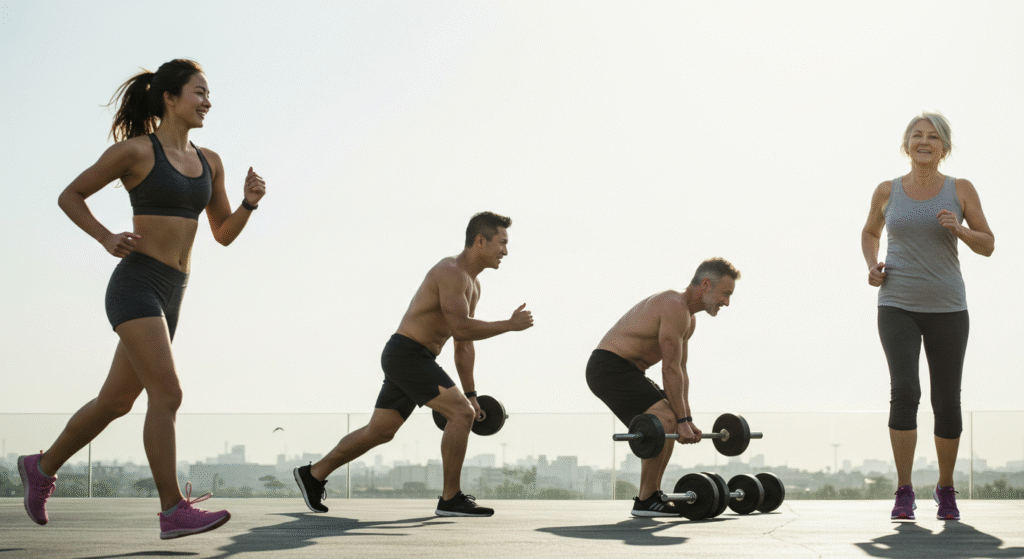
The concept of physical fitness extends far beyond bench pressing your body weight or running a marathon. Physical fitness represents your body’s ability to perform daily activities efficiently while maintaining enough energy reserves for recreational pursuits and unexpected physical demands.
Think of physical fitness as your body’s operating system. Just as your smartphone needs regular updates to function optimally, your body requires consistent physical activity to maintain peak performance. The American College of Sports Medicine defines physical fitness as “a set of attributes that people have or achieve relating to their ability to perform physical activity.”
Physical fitness encompasses multiple dimensions working together harmoniously. Your cardiovascular system pumps oxygen-rich blood to working muscles. Your muscular system generates force and maintains posture. Your nervous system coordinates movement patterns. When these systems function efficiently together, you experience true physical fitness.
Research from Harvard Medical School shows that physically fit individuals have 40% lower risk of developing chronic diseases compared to sedentary counterparts. This statistic alone demonstrates why understanding physical fitness concepts matters for your long-term health strategy.

The Five Essential Types of Physical Fitness
Physical fitness breaks down into five distinct types, each serving unique functions in your overall wellness equation:
| Type of Fitness | Definition | Benefits | Example Activities |
|---|---|---|---|
| Cardiovascular Endurance | Heart and lung efficiency during sustained activity | Improved heart health, increased stamina | Running, cycling, swimming |
| Muscular Strength | Maximum force muscles can generate | Better functional movement, injury prevention | Weightlifting, resistance training |
| Muscular Endurance | Muscle’s ability to perform repeated contractions | Sustained performance, reduced fatigue | Push-ups, planks, circuit training |
| Flexibility | Range of motion around joints | Better mobility, reduced stiffness | Yoga, stretching, tai chi |
| Body Composition | Ratio of fat to lean muscle mass | Improved metabolism, better health markers | Strength training, proper nutrition |
Cardiovascular endurance forms the foundation of physical fitness. Your heart acts as the engine driving all other fitness components. When you improve cardiovascular fitness, every other aspect of your physical performance benefits. Studies show that just 150 minutes of moderate cardiorespiratory exercise weekly reduces heart disease risk by 30%.
Muscular strength and endurance work as complementary partners. Strength provides the raw power for lifting, pushing, and pulling movements. Endurance ensures you can repeat these movements without rapid fatigue. Together, they enable you to carry groceries, climb stairs, and play with children without experiencing undue stress.
Flexibility often gets overlooked, but it’s crucial for maintaining joint health and preventing injury. Tight muscles create imbalances that lead to pain and dysfunction. Regular flexibility work keeps your body moving smoothly through its full range of motion.
Body composition represents the most misunderstood fitness type. It’s not about achieving a specific weight on the scale. Instead, focus on improving the ratio of lean muscle to body fat. This shift improves metabolism, enhances physical appearance, and reduces disease risk.

Qualities of Physical Fitness Explained
The qualities of physical fitness extend beyond the five types, encompassing specific attributes that define truly fit individuals. These qualities represent measurable characteristics that improve through consistent training.
Strength manifests as your muscles’ ability to generate force against resistance. You demonstrate strength when lifting heavy objects, opening tight jars, or pushing a stalled car. Strength training doesn’t require expensive gym memberships. Bodyweight exercises like squats, push-ups, and lunges build functional strength effectively.
Power combines strength and speed, creating explosive movement capability. You use power when jumping over puddles, sprinting to catch a bus, or quickly standing from a chair. Power training involves exercises like jump squats, medicine ball throws, and plyometric movements.
Speed refers to how quickly you can move your body through space. While most people associate speed with sprinting, it also applies to reaction time and movement efficiency. Speed training improves coordination and neural pathways between brain and muscles.
Agility represents your ability to change direction quickly while maintaining balance and control. This quality proves valuable in sports, but also in everyday situations like navigating crowded sidewalks or avoiding obstacles. Ladder drills, cone exercises, and direction-change activities develop agility.
Balance keeps you upright and stable during static and dynamic movements. Poor balance increases fall risk, especially as you age. Balance training through single-leg exercises, stability balls, and yoga poses strengthens stabilizing muscles and improves proprioception.
Coordination involves multiple body parts working together smoothly to accomplish tasks. Good coordination makes movements appear effortless and reduces energy expenditure. Dancing, martial arts, and multi-limb exercises enhance coordination.
Physical Fitness and Wellness: The Complete Connection
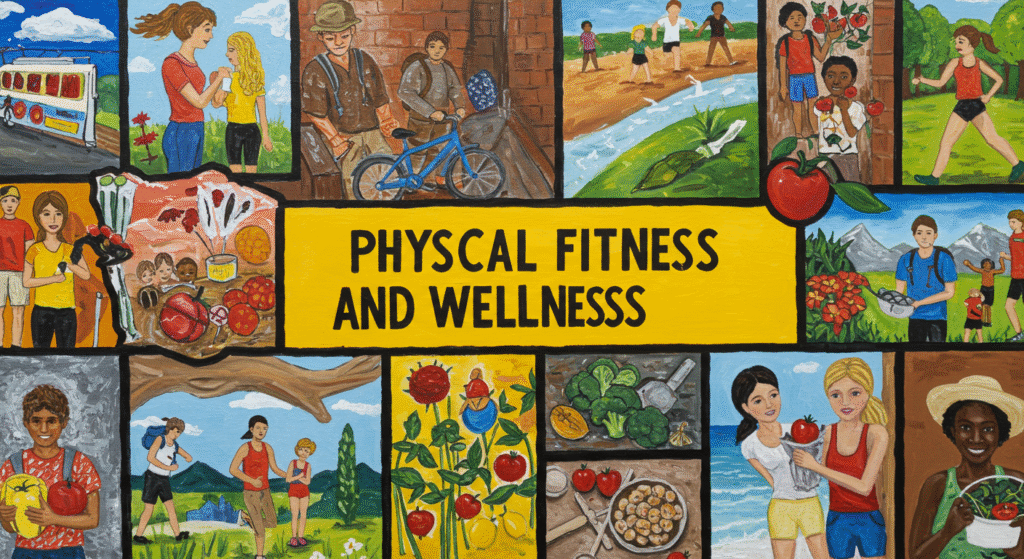
Physical fitness and wellness share an intricate relationship that extends well beyond physical health markers. While physical fitness focuses on measurable physical capabilities, wellness encompasses your complete state of well-being across multiple dimensions.
The wellness wheel includes physical, mental, emotional, social, spiritual, occupational, and environmental components. Physical fitness serves as a catalyst that positively influences every wellness dimension. When you exercise regularly, you’re not just building stronger muscles or improving cardiovascular health. You’re investing in comprehensive life enhancement.
Mental wellness receives significant boosts from physical activity. Exercise stimulates brain-derived neurotrophic factor (BDNF) production, which promotes new neural connections and protects existing brain cells. Research from the University of Georgia shows that 20 minutes of moderate exercise can improve cognitive function for up to 12 hours post-workout.
Emotional wellness benefits through exercise-induced endorphin release. These “feel-good” chemicals naturally elevate mood and reduce stress hormones like cortisol. Regular physical activity proves as effective as medication for treating mild to moderate depression, according to studies published in the Journal of Clinical Psychiatry.
Social wellness improves when physical fitness activities involve others. Group fitness classes, recreational sports leagues, and workout partners create social connections while pursuing health goals. These relationships provide accountability, motivation, and enjoyment that sustain long-term fitness commitment.
The key difference between physical fitness and wellness lies in scope. Physical fitness represents one component of overall wellness, but wellness encompasses your entire life experience. You can be physically fit but struggle with emotional or social wellness. Conversely, someone with lower physical fitness levels might excel in other wellness dimensions.
Movement Skills vs Physical Fitness: Key Differences
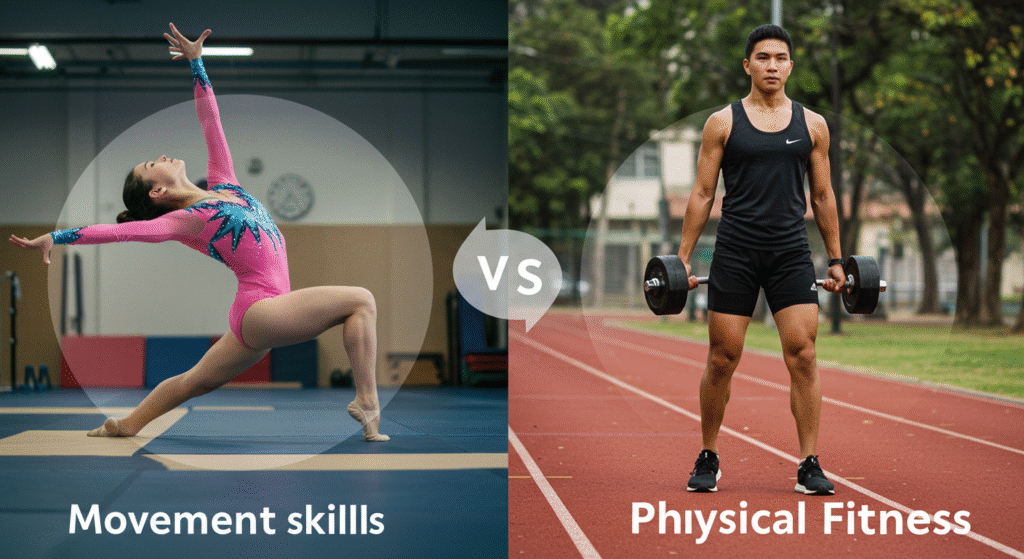
Understanding the difference between physical fitness and movement skills helps you design more effective training programs. While closely related, these concepts serve distinct functions in human performance and development.
Movement skills represent learned patterns of motion that accomplish specific tasks. These skills range from basic locomotor movements like walking and running to complex sport-specific techniques like golf swings or gymnastics routines. Movement skills are acquired through practice, repetition, and refinement.
Physical fitness provides the foundation that supports movement skill execution. Think of physical fitness as your body’s hardware and movement skills as the software programs running on that hardware. You need adequate processing power (fitness) to run complex programs (skills) effectively.
Movement Skills Characteristics:
- Learned through practice and instruction
- Task-specific patterns
- Require coordination and timing
- Improve through repetition and feedback
- Transfer varies between similar movements
Physical Fitness Characteristics:
- Developed through progressive overload
- General physical capabilities
- Measurable through standardized tests
- Improve through consistent training
- Transfer broadly across activities
A basketball player might possess excellent movement skills for shooting, dribbling, and defensive positioning. However, without adequate cardiovascular fitness, these skills deteriorate as fatigue sets in during games. Conversely, a marathon runner might have exceptional cardiovascular fitness but struggle with basketball-specific movement skills like ball handling or quick direction changes.
The optimal approach combines movement skill development with physical fitness training. This integration ensures you have both the capability (fitness) and technique (skills) to perform activities safely and effectively.

The Seven Core Physical Skills
Physical education and sports science identify seven fundamental physical skills that form the building blocks of human movement. These skills develop throughout childhood and continue evolving with proper training and practice.
1. Agility enables rapid direction changes while maintaining balance and control. Sports like soccer, basketball, and tennis demand high agility levels. Training methods include cone drills, ladder exercises, and reactive movement patterns.
2. Balance maintains stability during static positions and dynamic movements. Balance improves through single-leg exercises, stability ball training, and proprioceptive challenges. Better balance reduces injury risk and enhances performance in all activities.
3. Coordination synchronizes multiple body parts to create smooth, efficient movement. Hand-eye coordination helps in racquet sports, while whole-body coordination benefits dance and gymnastics. Juggling, dancing, and complex movement patterns develop coordination.
4. Power generates maximum force in minimum time. Explosive movements like jumping, throwing, and sprinting require power development. Plyometric training, Olympic lifts, and medicine ball exercises build power effectively.
5. Reaction Time measures the delay between stimulus recognition and movement initiation. Faster reaction times provide advantages in sports and daily activities requiring quick responses. Training includes visual and auditory stimulus-response drills.
6. Speed represents maximum velocity achievement during movement. Sprint training, proper running mechanics, and neural activation exercises develop speed. Speed benefits extend beyond athletics to emergency situations and functional activities.
7. Flexibility allows joints to move through their full range of motion. Adequate flexibility prevents injury, reduces muscle tension, and improves movement efficiency. Dynamic stretching, yoga, and mobility work enhance flexibility.
These seven skills interact synergistically. Improving one skill often benefits others. For example, better balance contributes to agility, while enhanced flexibility supports power development through increased range of motion.

Building Your First Physical Fitness Program
Creating your first physical fitness program feels overwhelming without proper guidance. However, successful programs follow basic principles that any beginner can implement immediately.
Start with baseline assessments to understand your current fitness level. Simple tests like counting push-ups performed in one minute, measuring how long you can hold a plank, or timing a one-mile walk provide starting points for program design.
The FITT principle guides program structure:
- Frequency: How often you exercise
- Intensity: How hard you work during exercise
- Time: Duration of each exercise session
- Type: Specific activities you choose
Beginners should exercise 3-4 days weekly, allowing recovery days between sessions. Intensity should feel challenging but sustainable—you should be able to hold a conversation during cardio activities. Start with 20-30 minute sessions and gradually increase duration as fitness improves.
Include all five fitness types in your program. A sample weekly schedule might look like:
- Monday: 30 minutes moderate cardio + flexibility
- Tuesday: Full-body strength training
- Wednesday: Rest or light activity
- Thursday: 30 minutes moderate cardio + flexibility
- Friday: Full-body strength training
- Saturday: Recreational activity (hiking, sports, dancing)
- Sunday: Rest or gentle yoga
Progress gradually using the 10% rule. Increase exercise volume (frequency, intensity, or time) by no more than 10% weekly. This approach minimizes injury risk while ensuring steady improvement.
Listen to your body throughout the process. Muscle soreness is normal, especially initially. Sharp pain, persistent fatigue, or decreased performance signal the need for additional rest or program modification.

Physical Fitness and Health Benefits
The relationship between physical fitness and health extends far beyond weight management or muscle building. Research consistently demonstrates that regular physical activity serves as preventive medicine against numerous chronic conditions while enhancing quality of life across all ages.
Cardiovascular health receives tremendous benefits from consistent exercise. The American Heart Association reports that regular physical activity can reduce blood pressure by 5-7 mmHg in hypertensive individuals. Exercise strengthens the heart muscle, improving its efficiency at pumping blood throughout the body. This adaptation reduces resting heart rate and blood pressure while increasing stroke volume.
Mental health improvements occur rapidly with exercise initiation. A single workout session can reduce anxiety and improve mood for several hours. Long-term exercise participation significantly reduces depression and anxiety disorder symptoms. The mechanism involves multiple pathways including endorphin release, improved sleep quality, increased self-efficacy, and social interaction opportunities.
Metabolic health markers improve dramatically through regular physical activity. Exercise increases insulin sensitivity, helping cells utilize glucose more effectively. This improvement reduces type 2 diabetes risk by 30-40% in high-risk populations. Additionally, exercise boosts metabolic rate both during activity and for hours afterward, supporting healthy weight management.
Bone health benefits significantly from weight-bearing activities and resistance training. Exercise stimulates bone formation while reducing bone breakdown, increasing bone mineral density. This adaptation proves crucial for preventing osteoporosis, especially in postmenopausal women and older adults.
Immune system function receives enhancement through moderate exercise. Regular physical activity increases circulation of immune cells, improving the body’s ability to detect and eliminate pathogens. However, excessive exercise can temporarily suppress immune function, highlighting the importance of appropriate training intensity.
Sleep quality improves markedly in physically active individuals. Exercise helps regulate circadian rhythms, reduces stress hormones, and increases deep sleep duration. Better sleep quality enhances recovery, cognitive function, and overall well-being.

Common Beginner Mistakes to Avoid
New fitness enthusiasts often make predictable mistakes that lead to frustration, injury, or program abandonment. Recognizing these pitfalls helps you navigate your fitness journey more successfully.
Doing too much too soon tops the list of beginner errors. Enthusiasm drives people to exercise daily at high intensities, leading to rapid burnout or overuse injuries. Your body needs time to adapt to increased physical demands. Start conservatively and progress gradually.
Ignoring proper form in favor of heavier weights or faster speeds compromises safety and effectiveness. Poor exercise form creates muscle imbalances, increases injury risk, and reduces training benefits. Master movement patterns with light weights before increasing intensity.
Expecting immediate results creates unrealistic expectations that lead to disappointment. Significant fitness improvements require weeks or months of consistent effort. Focus on process goals (exercising regularly) rather than outcome goals (losing specific amounts of weight).
Neglecting rest and recovery undermines training adaptations. Your body improves during rest periods between workouts, not during the actual exercise sessions. Include planned rest days and prioritize adequate sleep for optimal results.
Following inappropriate programs designed for advanced exercisers leads to frustration and potential injury. Social media fitness influencers often promote advanced routines unsuitable for beginners. Choose programs specifically designed for your fitness level and goals.
Inconsistent effort produces minimal results. Exercising sporadically provides fewer benefits than consistent moderate activity. Establish realistic exercise schedules you can maintain long-term rather than aggressive programs you’ll abandon.
Ignoring nutrition limits fitness gains regardless of exercise quality. Proper nutrition provides energy for workouts and nutrients for recovery. You don’t need perfect eating habits, but basic nutritional awareness supports your fitness goals.
Creating Sustainable Fitness Habits
Long-term fitness success depends more on habit formation than motivation or willpower. Motivation fluctuates daily, but strong habits carry you through challenging periods when enthusiasm wanes.
Start with habit stacking, linking new fitness behaviors to existing routines. For example, do ten squats immediately after brushing your teeth each morning. This technique leverages established neural pathways to build new habits more easily.
Environment design significantly influences habit formation. Lay out workout clothes the night before. Keep a water bottle visible as a hydration reminder. Remove obstacles that make healthy choices more difficult while adding friction to unhealthy alternatives.
The two-minute rule helps establish consistency without overwhelming commitment. Can’t motivate for a full workout? Commit to just two minutes of activity. Often, starting leads to continuing beyond the minimum commitment. Even when you stop at two minutes, you’ve reinforced the habit pattern.
Track your progress to maintain motivation and identify patterns. Simple tracking methods like calendar checkmarks or smartphone apps provide visual feedback on consistency. Celebrate small wins along the way rather than waiting for major milestones.
Find activities you genuinely enjoy rather than forcing yourself through miserable workouts. Fitness should enhance your life, not feel like punishment. Experiment with different activities until you discover ones that bring satisfaction and energy.
Build social support systems through workout partners, fitness groups, or online communities. Social accountability significantly improves adherence rates while making fitness more enjoyable. Share goals with supportive friends and family members.
Measuring Your Progress
Progress measurement keeps you motivated and helps identify when program adjustments are needed. However, the scale weight represents just one metric among many more meaningful indicators of fitness improvement.
Body composition changes provide more accurate health assessments than weight alone. Muscle tissue weighs more than fat tissue, so strength training might maintain or increase scale weight while dramatically improving body composition. Progress photos, clothing fit, and body measurements offer better insights than daily weigh-ins.
Performance improvements demonstrate functional fitness gains. Track metrics like:
- Number of push-ups completed without stopping
- Plank hold duration
- Walking/running pace and distance
- Flexibility measurements
- Balance challenges completed
- Strength training weights and repetitions
Energy levels throughout the day often improve before measurable physical changes occur. Notice whether you climb stairs more easily, feel less winded during daily activities, or experience more consistent energy levels. These subjective improvements matter as much as objective measurements.
Sleep quality frequently improves with regular exercise. Track sleep duration, how quickly you fall asleep, and how rested you feel upon waking. Many fitness trackers monitor sleep patterns automatically.
Mood and stress levels typically improve with consistent physical activity. Keep a simple daily mood rating or note stress levels to identify patterns related to your exercise routine.
Recovery indicators help prevent overtraining while optimizing workout intensity. Monitor resting heart rate, muscle soreness duration, and overall fatigue levels. Elevated resting heart rate or persistent fatigue may signal the need for additional recovery time.
Equipment and Resources for Beginners
Starting a fitness journey doesn’t require expensive equipment or gym memberships. Many effective workouts use minimal equipment while providing excellent results.
Essential Equipment for Home Fitness:
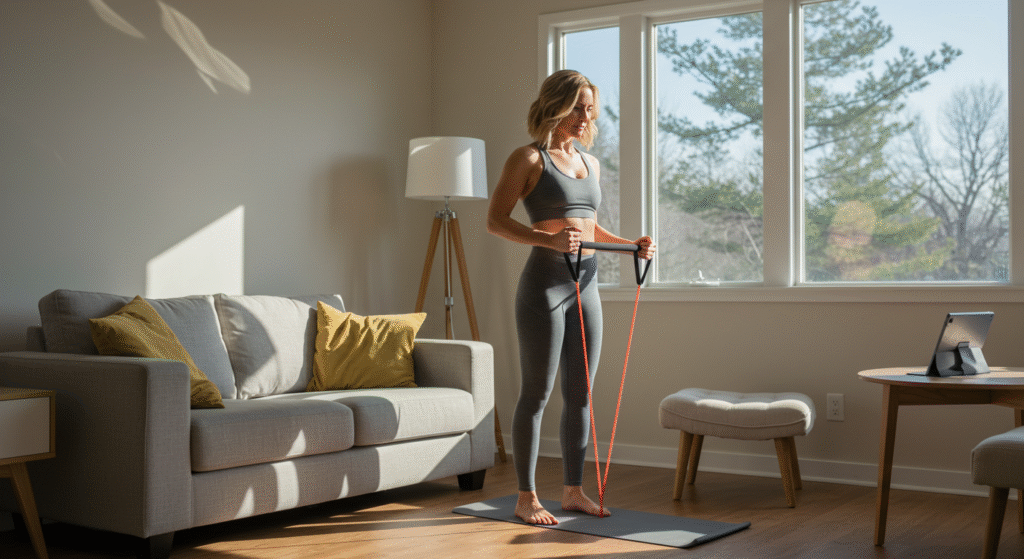
- Resistance bands: Versatile, portable, and affordable strength training tools
- Adjustable dumbbells: Space-efficient option for progressive strength training
- Yoga mat: Provides cushioning and stability for floor exercises
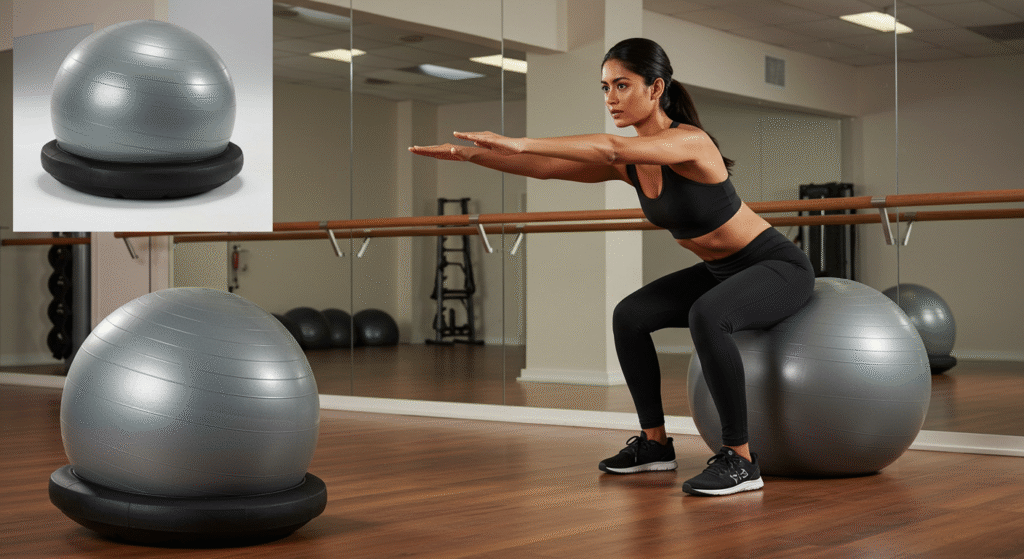
- Stability ball: Enhances core training and balance challenges
- Jump rope: Excellent cardiovascular training in minimal space
Bodyweight Training Advantages:
Bodyweight exercises require zero equipment while providing comprehensive fitness benefits. Push-ups, squats, lunges, planks, and mountain climbers create effective full-body workouts. Bodyweight training improves functional strength patterns you use daily.
Technology Resources:
Fitness apps provide structured workouts, progress tracking, and motivation. Many offer beginner-friendly programs with video demonstrations. Popular options include Nike Training Club, Seven, and Sworkit.
Wearable fitness trackers monitor daily activity, heart rate, and sleep patterns. While not essential, these devices provide helpful feedback and motivation for many users.
Professional Guidance Options:
Personal trainers offer customized programs and ensure proper form, especially valuable for beginners. Many gyms provide complimentary sessions with membership or offer affordable package deals.
Group fitness classes create social support while providing structured workouts. Classes like yoga, Pilates, or circuit training accommodate various fitness levels with instructor modifications.
Online fitness programs provide professional guidance at lower costs than personal training. Reputable programs offer progressive training plans with video instruction and community support.
Frequently Asked Questions
What are physical movement skills?
Physical movement skills are learned patterns of motion that enable you to perform specific tasks effectively. These skills range from basic movements like walking, running, and jumping to complex sport-specific techniques like golf swings or dance choreography. Movement skills develop through practice, repetition, and proper instruction. Unlike physical fitness, which represents your body’s general capabilities, movement skills are task-specific abilities that improve through deliberate practice and motor learning principles.
What are the 7 physical skills?
The seven fundamental physical skills include agility, balance, coordination, power, reaction time, speed, and flexibility. Agility enables quick direction changes while maintaining control. Balance keeps you stable during static and dynamic movements. Coordination synchronizes multiple body parts for smooth motion. Power generates maximum force quickly. Reaction time measures how quickly you respond to stimuli. Speed represents your maximum movement velocity. Flexibility allows joints to move through their full range of motion. These skills work together to support all physical activities and sports performance.
What is skill in physical fitness?
Skill in physical fitness refers to the technical proficiency and movement quality you demonstrate while performing exercises or activities. This includes proper exercise form, efficient movement patterns, and the ability to coordinate complex movements effectively. Physical fitness skills develop through practice and instruction, improving your ability to perform exercises safely and effectively. Good fitness skills reduce injury risk, maximize training benefits, and enhance overall movement quality in both exercise and daily activities.
What are the 5 types of physical fitness?
The five types of physical fitness are cardiovascular endurance, muscular strength, muscular endurance, flexibility, and body composition. Cardiovascular endurance measures your heart and lungs’ efficiency during sustained activity. Muscular strength represents the maximum force your muscles can generate. Muscular endurance indicates how long muscles can perform repeated contractions. Flexibility measures the range of motion around your joints. Body composition refers to the ratio of fat to lean muscle mass in your body. All five types work together to create comprehensive physical fitness and optimal health outcomes.
How can I improve my cardiovascular endurance?
Improving cardiovascular endurance involves engaging in aerobic activities like running, cycling, swimming, or brisk walking. Consistency and gradually increasing the intensity or duration of your workouts are key to building endurance.
What are some ways to enhance muscular strength?
To enhance muscular strength, focus on resistance training exercises such as weightlifting, push-ups, and squats. Incorporating progressive overload — gradually increasing the weight or resistance — helps boost strength over time.
Why is flexibility important, and how can I improve it?
Flexibility is important because it enhances the range of motion, reduces the risk of injury, and improves overall mobility. Stretching exercises like yoga, dynamic stretches, or gentle static stretching routines can help improve flexibility.
How often should I work on muscular endurance?
Muscular endurance can be improved by performing exercises such as plank holds, cycling, or bodyweight exercises multiple times per week. Aim for at least 2-3 sessions that focus on high reps with lower weights or resistance.
Final Thought
Physical fitness and movement skills form the foundation for a vibrant, healthy life. This guide provides the knowledge and tools needed to begin your journey confidently. Remember that consistency beats perfection, and small daily actions create remarkable long-term transformations. Start where you are, use what you have, and do what you can. Your future self will thank you for taking the first step today.
The path to better physical fitness and health doesn’t require perfection—it requires commitment to showing up consistently and making gradual improvements over time. Whether you’re following a structured physical fitness program or simply incorporating more movement into your daily routine, every step forward contributes to your overall wellness journey.