
Ready to release negative energy and restore your inner balance? Discover the power of safe detox and cleansing rituals that renew your body, clear your mind, and elevate your spirit—naturally and mindfully.
Unlock a gentler path to emotional clarity with safe, evidence-informed detox and cleansing rituals designed to release heaviness, restore balance, and foster resilience. These rituals honor your nervous system, respect boundaries, and support sustainable well-being.
Table of Contents
- Introduction: Why Safe Detox for Emotions Matters
- Ritual 1: Gentle Breathwork for Emotional Drainage
- Ritual 2: Grounding Practices to Release Stress
- Ritual 3: Nature-Based Detox: Fresh Air and Plant Allies
- Ritual 4: Journaling with Compassion: Release and Reframe
- Ritual 5: Movement Detox: Slow Flow and Boundaries
- Ritual 6: Sensory Detox: Sound, Touch, and Temperature
- Ritual 7: Digital and Social Detox: Create Space to Heal
- Ritual 8: Sleep Hygiene as Emotional Cleanse
- Ritual 9: Mindful Eating and Hydration for Emotional Balance
- Creating a Personal Detox Plan: Safety, Boundaries, and Self-Compassion
- Quotations to Inspire Safe Detox
- Frequently Asked Questions (FAQs)
- Conclusion
- Detailed Comparative Table: Ritual Features, Benefits, and Considerations

Introduction: Why Safe Detox for Emotions Matters
Detoxing emotions is not about erasing experiences but about processing inner experiences with safety and care.
A safe emotional detox helps reduce reactivity, improve mood, and strengthen coping skills.
This approach emphasizes pacing, consent from your nervous system, and practical routines that you can sustain.
A mindful detox supports healthier relationships with self and others, fosters emotional literacy, and reduces the risk of burnout.
The goal is to create space for clarity, not to suppress feelings or rely on extreme measures.

Ritual 1: Gentle Breathwork for Emotional Drainage
Breath is a powerful ally for releasing emotional tension.
Slow, deliberate breathing can calm the nervous system, reduce cortisol, and create a sense of safety in the body.
- Begin with box breathing: inhale 4 counts, hold 4, exhale 4, hold 4. Repeat 6–8 cycles.
- Practice diaphragmatic breathing to engage the lower lungs and calm the vagal tone.
- Integrate a gentle exhale sigh at the end of each cycle to signal release.
- Use a 5-minute session daily, increasing duration as comfort grows.
- Pair with a hand on the chest to notice interoceptive signals.
- Add a soft visualization of releasing tension with each exhale.
- Create a ritual cue, such as lighting a candle, to signal start.
- Record a brief journaling note after practice to track mood shifts.
- This breathwork supports the parasympathetic system, reducing alertness and enabling clearer processing.
- It can be done seated, lying down, or during a short walk.
- Consistency matters more than intensity for durable emotional change.
- If you feel dizzy, pause and resume at a gentler pace.
- For beginners, start with 2 minutes and gradually extend.
- Avoid forcing emotions; allow gradual unfolding instead.
Quote: “Breath is the bridge which connects life to consciousness.” — Thich Nhat Hanh
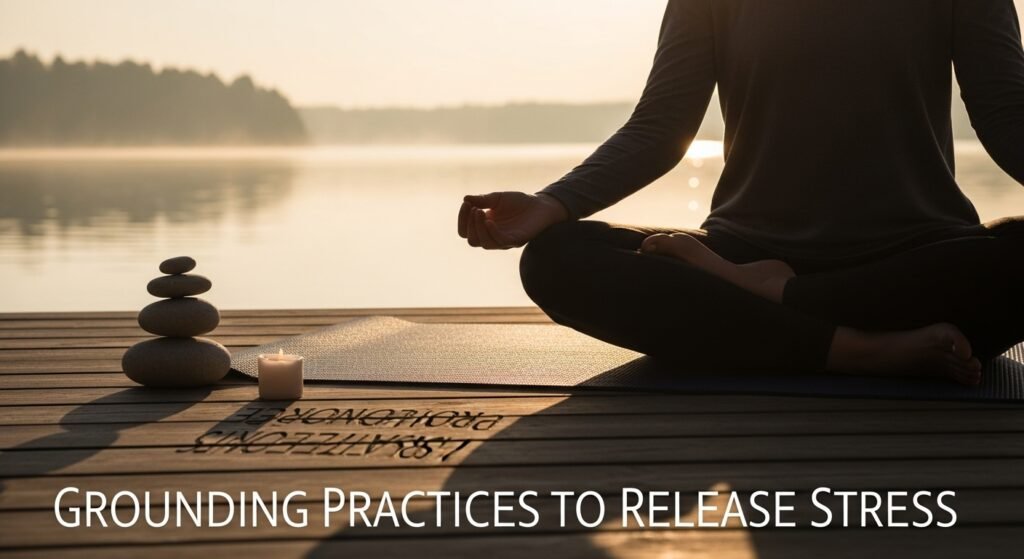
Ritual 2: Grounding Practices to Release Stress
Grounding helps tether you to the present moment, reducing flood in emotions and thoughts.
- Practice 5-4-3-2-1 sensory awareness: name 5 things you see, 4 feel, 3 sounds, 2 smells, 1 taste.
- Stand barefoot on natural ground for 2–5 minutes.
- Visualize roots growing from your feet into the earth.
- Hold a small grounding object, like a smooth stone.
- Create a micro-routine you can use anywhere: pause, breathe, name, reset.
- Use progressive muscle relaxation from toes to head.
- Hydrate and step into natural light to reset circadian cues.
- Keep a grounding journal noting what shifts after practice.
- Grounding reduces physiological arousal and enhances cognitive control over emotional responses.
- It’s adaptable for public or private spaces.
- Combined with breathwork, it becomes a powerful two-pronged reset.
- If overwhelmed, shorten the ritual and return later.
- Gentle movement can deepen the effect for some people.
- Grounding is safe for most individuals and requires no equipment.
- It supports better sleep and reduces rumination.
Quote: “The present moment is a powerful antidote to needless suffering.” — Anonymous

Ritual 3: Nature-Based Detox: Fresh Air and Plant Allies
Nature has a soothing, regenerative impact on emotion and cognition.
A nature-based detox connects you to the world beyond screens.
- 15–20 minutes of outdoor time daily, ideally in green or blue spaces.
- Mindful walking: notice textures, sounds, and scents without judgment.
- Grounding with a tree or rock; place hands on its surface and breathe deeply.
- Create a small nature altar with leaves, flowers, or seeds.
- Bring indoor elements outdoors: plants, sunlight, fresh air, and birdsong.
- Use herbal allies like chamomile or lavender tea after outdoor rituals (if appropriate).
- Keep a nature journal to record observations, moods, and insights.
- Practice “nature checking” to assess how you feel before and after.
- Exposure to nature reduces stress hormones and can improve mood and attention.
- It supports emotional processing by slowing pace and expanding viewpoint.
- Seasonal changes offer different opportunities for cleansing practices.
- Sunlight exposure boosts vitamin D and circadian alignment.
- Be mindful of allergies and environmental conditions.
Quote: “In every walk with nature, one receives far more than he seeks.” — John Muir

Ritual 4: Journaling with Compassion: Release and Reframe
Journaling creates a safe space to express, examine, and reframe emotions.
- Write a “Dear Emotions” letter to name feelings without judgment.
- Use prompts: What am I feeling? What needs are unmet? What would support relief?
- Practice a 5-minute rapid stream-of-consciousness entry daily.
- After writing, identify a small action you can take to honor your needs.
- End with a gratitude note and a reframe that centers growth.
- Include a short list of “triggers” and “coping responses” for quick reference.
- Track patterns across weeks to identify durable changes.
- Use colored pens or emojis to differentiate emotions visually.
- Journaling supports emotional clarity and reduces rumination.
- It fosters self-compassion by validating feelings without shame.
- It can reveal hidden patterns and opportunities for change.
- It complements other rituals by anchoring insights in words.
- Don’t censor yourself; the page is a safe container.
Quote: “We write to taste life twice, in the moment and in retrospect.” — Anaïs Nin

Ritual 5: Movement Detox: Slow Flow and Boundaries
Movement helps release stored tension and reorient the nervous system toward safety.
- Practice a 15–20 minute slow-flow yoga or mindful movement routine.
- Emphasize breath-synchronized movements with attention to pauses.
- Include gentle twists and forward folds to release chest tension.
- Set clear boundaries for tempo and intensity; stop if overwhelmed.
- Use boundaries as a form of self-care: consent to rest when needed.
- Add a short walk to integrate physical feel with environmental cues.
- Hydrate mindfully before and after movement.
- End with a short grounding exercise and a note of appreciation.
- Movement detox supports emotional regulation and body awareness.
- It reduces muscle tension that often accompanies stress.
- It’s scalable from beginner to advanced with mindful pacing.
- Movement plus breath creates a holistic reset for mood and energy.
- Listen to your body and respect limits to avoid injury or overwhelm.
Quote: “Movement is a medicine for creating change in a person’s physical, emotional, and mental states.” — Carol Welch

Ritual 6: Sensory Detox: Sound, Touch, and Temperature
Sensory modulation can recalibrate arousal and shift emotional states.
- Create a 10–15 minute sensory session: alternate between warm and cool temps, soft textures, and soothing sounds.
- Listen to 432 Hz or nature sounds, or choose instrumental music with smooth dynamics.
- Use a weighted blanket or soft fabric to increase proprioceptive input.
- Gently massage hands, neck, or shoulders with a soothing lotion.
- Practice a brief aromatherapy routine if safe and familiar with scents.
- Limit overstimulating stimuli; design quiet spaces with control over noise and light.
- Ground yourself with a cold splash or a cool breeze to reset.
- Journal any insights after the session.
- Sensory detox helps regulate the autonomic nervous system.
- It can be particularly helpful during emotional spikes or after intense experiences.
- Choose safe, non-irritating stimuli and avoid overstimulation.
- This ritual pairs well with breathing and grounding techniques.
Quote: “Sound is the punctuation of the heart.” — Rumi

Ritual 7: Digital and Social Detox: Create Space to Heal
Reducing digital exposure helps calm the mind and protect emotional energy.
- Designate tech-free zones and times (e.g., first hour after waking, last hour before bed).
- Unsubscribe from non-essential notifications and curate feeds to reduce stress.
- Use a timer for social media use; keep sessions brief and intentional.
- Replace scrolling with a short, enriching activity (reading, journaling, walking).
- Create a support network: share boundaries with trusted friends or family.
- Document experiences and mood changes during the detox period.
- Pair digital detox with nature exposure for compounded benefits.
- Assess progress weekly and adjust boundaries as needed.
- Digital boundaries protect mental bandwidth and emotional health.
- Reducing stimuli helps improve sleep and mood.
- Boundaries should be compassionate and realistic to sustain.
Quote: “Almost everything will work again if you unplug and recharge your soul.” — Anne Lamott

Ritual 8: Sleep Hygiene as Emotional Cleanse
Quality sleep is a cornerstone of emotional regulation and detox.
- Establish a consistent sleep schedule, aiming for 7–9 hours.
- Create a calming pre-sleep routine: dim lights, gentle stretching, and breathwork.
- Limit caffeine and heavy meals close to bedtime.
- Keep the sleeping environment cool, dark, and quiet.
- Use a white-noise machine or earplugs if needed.
- Journaling a quick reflection before bed can clear the mind.
- Avoid screens for at least 60 minutes before sleep.
- If sleep is disrupted, practice a brief 5-minute reset and return to bed.
- Sleep quality directly influences mood and resilience.
- Consistent routines reduce morning grogginess and emotional reactivity.
- Good sleep supports memory consolidation and emotional processing.
Quote: “Sleep is the best meditation.” — Dalai Lama

Ritual 9: Mindful Eating and Hydration for Emotional Balance
Nourishment anchors energy and mood; mindful eating supports emotional release.
- Eat at regular times and include balanced meals with protein, fiber, and healthy fats.
- Practice mindful tasting: slow down, notice textures and flavors.
- Hydrate consistently; carry a water bottle and sip regularly.
- Notice emotional cues around meals: do you eat due to stress or hunger?
- Create a “quiet eating” ritual: no screens, plenty of gratitude.
- Use soothing herbal teas to support calm digestion.
- Keep a simple food-m mood diary to identify connections.
- Plan a weekly nourishing meal that supports mental clarity.
- Proper nourishment feeds brain function and emotional regulation.
- Mindful eating reduces impulsive snacking and guilt cycles.
- Hydration supports cognitive performance and mood stability.
Quote: “The food you eat can be either the safest and most powerful form of medicine or the slowest form of poison.” — Ann Wigmore

Creating a Personal Detox Plan: Safety, Boundaries, and Self-Compassion
A personal detox plan is a living document that adapts to your needs.
Start with a baseline assessment of your current stress levels, sleep quality, nutrition, and digital usage.
Set clear, compassionate boundaries and define small, achievable goals for each ritual.
Use a weekly check-in to track mood, energy, and sense of safety.
Prioritize consent from your nervous system; if a ritual feels overwhelming, dial it back or skip it for that day.
Consider consulting a healthcare professional if you have chronic health conditions, psychiatric concerns, or are pregnant or breastfeeding.
- Start small: choose 2 rituals to begin with and expand gradually.
- Use a daily 5-minute reset or a weekly longer session.
- Maintain a simple journal to monitor emotions and progress.
- Respect your body’s limits and adjust intensity accordingly.
- Build a supportive container with trusted friends or a therapist if needed.
- Reassess goals monthly and adjust practices accordingly.
- Celebrate small wins to reinforce consistency.
- Create a personal ritual name that feels meaningful to you.
Quotations to Inspire Safe Detox
- “The greatest wealth is health.” — Virgil
- “Self-care is giving the world the best of you, not what’s left of you.” — Katie Reed
- “Healing takes time, and you are exactly where you need to be.” — Unknown
- “You don’t have to control your thoughts; you just have to stop letting them control you.” — Dan Millman
- “To cleanse the emotional body is to invite ease into the nervous system.” — Anonymous
- “Emotional resilience is built through small, consistent acts of courage.” — Brené Brown
- “Nature does not hurry, yet everything is accomplished.” — Lao Tzu
- “Breath is the bridge between your body and mind.” — Arianna Arise
- “Sleep is the best medicine for the mind.” — Anonymous
- “Food and mood are intimately linked; nourishment shapes clarity.” — Julia Moss
FAQs
- Are these rituals safe for everyone?
Most rituals are safe for healthy adults. If you have medical conditions, consult your healthcare provider before starting breathwork, intense movements, or herbal exposures. - How long should I practice these rituals?
Start with 5–10 minutes per day and gradually increase to 20–30 minutes as you feel comfortable. Some rituals can be done multiple times daily. - Can I combine rituals?
Yes. Pair breathwork with grounding or journaling, and combine nature time with light movement for a broader effect. - What if I experience overwhelm?
Pause, breathe, and reduce intensity. It’s okay to skip a day and resume when ready. Consider seeking support from a therapist or counselor. - How do I measure progress?
Track mood ratings, sleep quality, energy levels, and stress indicators weekly. Note any patterns or triggers. - Is digital detox necessary every day?
Not necessarily. Start with scheduled times and gradually expand. The goal is sustainable balance, not perfection. - Can children or teens use these rituals?
With supervision and age-appropriate adaptations, some rituals can be suitable. Always prioritize safety and developmentally appropriate practices. - How long before I notice changes?
Some people notice mood improvements within days; for others, it may take several weeks of consistency. - Is herbal assistance recommended?
Herbal teas or scents can help, but avoid allergies and interactions with medications. When in doubt, consult a professional. - How do I maintain long-term practice?
Schedule rituals like appointments, rotate activities to prevent boredom, and maintain a flexible but consistent routine.
Conclusion
A safe detox for emotions centers on compassionate, gradual steps that honor your nervous system.
By integrating breathwork, grounding, nature time, journaling, movement, sensory modulation, digital boundaries, sleep hygiene, and mindful nourishment, you create a cohesive framework for emotional release and resilience.
The goal is sustainable balance, not quick fixes. Start where you are, honor your pace, and build a personal routine that fosters clarity, calm, and compassionate self-care.
Detailed Table: Ritual Features, Benefits, and Considerations
Detailed Table: Ritual Features, Benefits, and Considerations
| Ritual | Core Activity | Primary Benefits | Suggested Duration | Safety Considerations | Suitable For |
|---|---|---|---|---|---|
| Ritual 1 | Gentle Breathwork | Calms nervous system; reduces cortisol | 5–20 minutes | Dizziness; adjust pace | Most adults; beginners |
| Ritual 2 | Grounding Practices | Present-moment awareness; reduces arousal | 5–15 minutes | None | All ages; adaptable |
| Ritual 3 | Nature-Based Detox | Stress reduction; mood lift | 15–20 minutes daily | Allergies; weather | Urban and rural dwellers |
| Ritual 4 | Journaling | Emotional clarity; self-compassion | 5–15 minutes | Requires honesty; safe space | Anyone seeking insight |
| Ritual 5 | Movement Detox | Tension release; body awareness | 15–20 minutes | Avoid overexertion | All fitness levels |
| Ritual 6 | Sensory Detox | Arousal regulation; grounding | 10–15 minutes | Sensitivities to stimuli | Sensitive individuals |
| Ritual 7 | Digital Detox | Reduced cognitive load; sleep improvement | 1–2 hours daily | Social implications | Heavy screen users |
| Ritual 8 | Sleep Hygiene | Emotional regulation; recovery | 7–9 hours sleep | Night awakenings | All adults |
| Ritual 9 | Mindful Eating | Energy balance; mood stability | Ongoing with meals | Dietary restrictions | Everyone |